
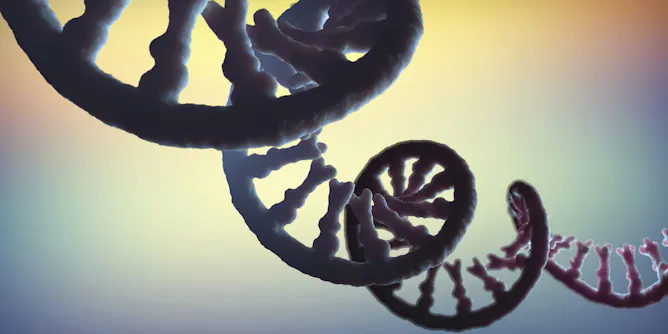
Researchers are embarking on the RNA equivalent of the Human Genome Project, including sequencing all the chemical modifications that make cells unique.
Articles on Epigenome
Displaying all articles
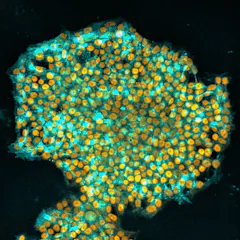
Stem cells could help regenerate diseased or damaged parts of the body – but first, scientists need to make the cells forget their own histories.
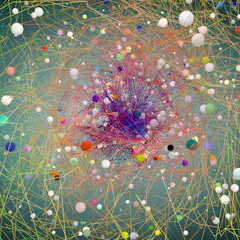
An epigenetic model of cancer that incorporates the concept of stochasticity could also explain why cancer risk increases with age and how biological development can be reversible.

Our study in mice shows epigenetic changes in the mother can be passed to her offspring to influence a critical time in how the spine develops.
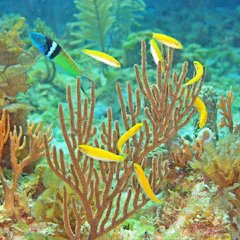
When a male bluehead wrasse is removed from the group he dominates, the largest female changes sex, rapidly transforming ovaries into sperm-producing testes. Molecular research shows how.

The marine creature amphioxus allows scientists to explore some of the steps that took place as simple creatures evolved to become complex animals.

Humans, and indeed pet dogs, are more than just products of genes – even before the moment of conception, environments play a vital role in shaping us.
The older we get, the higher our risk of cancer. With age, we accumulate exposure to environments and chemicals that increase the risk of acquiring cancer-causing mutations. But the danger doesn’t increase…

Thanks to the Human Genome Project we now have a complete genomic map. But, simply having a map doesn’t give you all the information. For a map to be useful, you still need know where to go, the best way…
Top contributors
-

Professor of evolutionary biology, UNSW
-
PhD student, University of Buckingham
-
Senior Lecturer, University of Edinburgh
-
Lab Head-Developmental Epigenomics and Senior Research Fellow, Garvan Institute
-
Senior Lecturer, Nutrition and Food Science, Australian Catholic University
-
PhD Student, Epigenetics and Development Division, WEHI (Walter and Eliza Hall Institute of Medical Research)
-
Professor of Biomedical Engineering, Johns Hopkins University
-
Lecturer, Deakin University
-
Head, Molecular Medicine Laboratory, WEHI (Walter and Eliza Hall Institute of Medical Research)
-
Jenny Graves is a Friend of The Conversation.
Distinguished Professor of Genetics and Vice Chancellor's Fellow, La Trobe University
-
Sesquicentennial Distinguished Professor, University of Otago
-
Head, Epigenetics, The Kids Research Institute Australia; The University of Western Australia
-
Professor of Biological Sciences, Senior Advisor of The RNA Institute, University at Albany, State University of New York
-
Professor of Biological Sciences, Associate Director of The RNA Institute, University at Albany, State University of New York