
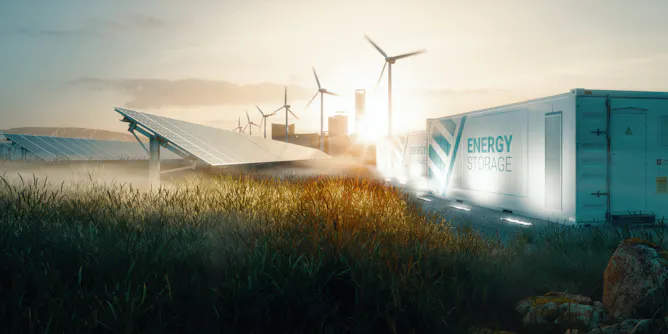
The new federal government wants to supercharge state renewable targets. But financial headwinds pose real challenges to the rapid rollout.
Articles on Energy storage
Displaying 41 - 60 of 111 articles
Sometimes wind and solar power produce more electricity than the local grid can handle. Better energy storage and transmission could move extra energy to where it’s needed instead of shutting it off.
The largest category of power plants applying to connect to the US grid are now solar, and over a third of those are hybrids that include battery storage.
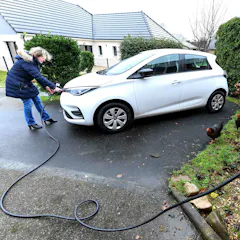
Bidirectional charging is the next big stage for electric vehicles. But storing power in your car and sending it back to your house involves more than flipping a switch.
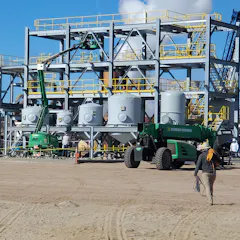
Lithium is essential for batteries that power electric vehicles and store energy from solar and wind farms. A new U.S. source could provide 10 times more lithium than the country uses today.
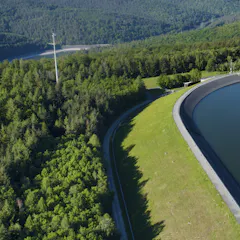
A team of researchers found 35,000 pairs of existing reservoirs, lakes and old mines in the US that could be turned into long-term energy storage – and they don’t need dams on rivers.

Renewable energy is expanding at a record pace, but still not fast enough. Here are the key areas to watch for progress in bringing more wind and solar into the power grid in 2022.
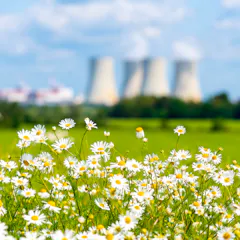
The UK government sees a reliable and low-carbon solution to future energy crises in nuclear power.
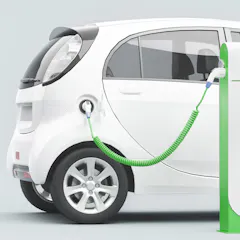
Electric cars are still more resilient to price shocks than vehicles running on fossil fuels.
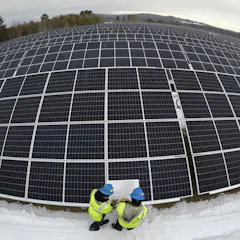
The US is generating more electricity than ever from wind and solar power – but often it’s not needed at the time it’s produced. Advanced energy storage technologies make that power available 24/7.
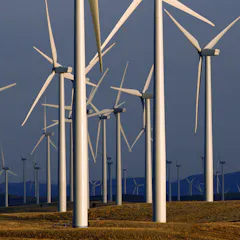
Fifteen years ago electric power generation was the largest source of US greenhouse gas emissions. Now the power sector is leading the shift to a clean energy economy.
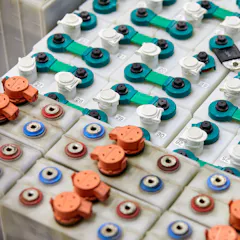
Britain’s electricity sector continues to decarbonise, but its capacity to store energy lags far behind.
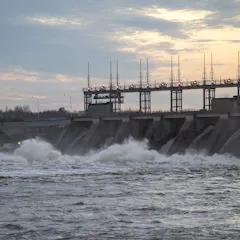
The electricity sector is expected to play a key role in Canada’s push to net-zero emissions. Enhancing long-distance transmission can be lower the cost of providing clean and reliable electricity.
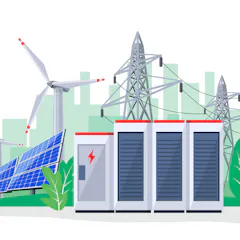
A planned battery project in Essex will be ten times larger than the UK’s current biggest battery.
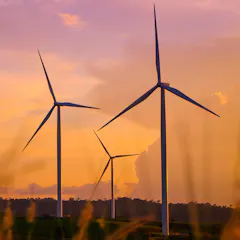
While much of the world moves towards zero-carbon economies, a NSW mega-plan for new renewables may set up the state as an energy superpower.

Hydrogen is feted as the key to a dynamic green economy. But is it the best choice for decarbonisation in all cases?
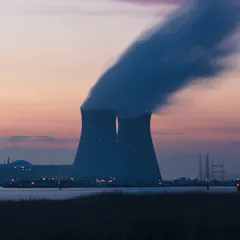
Don’t count nuclear energy out – it may be our best hope of reaching net-zero emissions within the time we have left.

Batteries power much of modern life, from electric and hybrid cars to computers, medical devices and cellphones. But unless they’re made easier and cheaper to recycle, a battery waste crisis looms.

The blocks can be used to run steam turbines at power stations as a clean alternative to burning coal, and at a fraction of the price of storing energy in batteries.

Bricks turn out to be useful for storing electricity thanks to their porousness and red pigment.
Top contributors
-

Professor of Engineering, Australian National University
-
Assoc Prof. Renewable Energy, Monash University
-
Senior Research Fellow in Renewable Energy, Australian National University
-
Professor of Sustainability, Curtin University
-
Adjunct Professor in Sustainability, The University of Western Australia
-
Affiliate, Electricity Markets & Policy Group, Lawrence Berkeley National Laboratory
-
Professor and Director, Victoria Energy Policy Centre, Victoria University
-
Energy Advisor, formerly, The University of Melbourne
-
Research Fellow, ANU College of Engineering and Computer Science, Australian National University
-
Professor of Energy Technology, University of Southampton
-
Professor of Sustainability, Rochester Institute of Technology
-
Emeritus professor, Australian National University
-
Principal and Vice Chancellor, Heriot-Watt University
-
Reader in Energy Systems and Innovation, University of Birmingham
-
Graduate Student Researcher in Electricity Markets and Policy, Lawrence Berkeley National Laboratory