

Once thought to be an unhealthy experience, researchers now know that feelings of nostalgia can promote greater social connectedness and a deeper sense of meaning and purpose.
Articles on Empathy
Displaying 21 - 40 of 194 articles
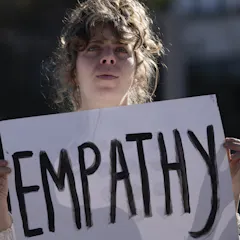
Empathy affords us a more accurate understanding of others’ experiences and emotions. Just like pain, it can be hard to bear – but that’s also the source of its strength.
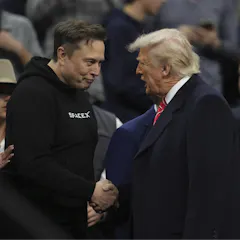
MAGA’s distaste for empathy is less a well-meaning critique than an all-out war as figures like Elon Musk and Jordan Peterson incorrectly — and dangerously — dismiss it as weakness.
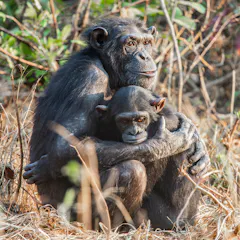
It may be time to move on from species stereotypes.

Researchers found that when salespeople perceived their leaders as ethical, they felt more committed to the organization.
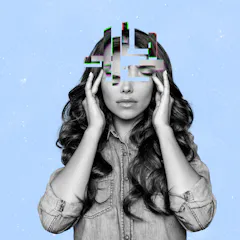
Psychopaths seem to break a sweat without feeling the pain.

Does virtual reality improve empathy? Findings from one study imply that Survivors’ meaningful stories don’t require sophisticated technology like virtual reality to have impact.
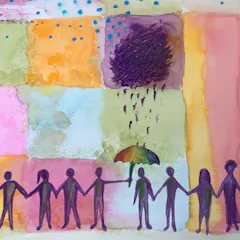
Compassion starts with the individual – self-care and personal wellness. It then radiates out to the wider community in the form of action and engagement.

Virtual reality’s ability to place audiences at the centre of stories has been shown to have positive effects on learning, information retention and the transfer of knowledge.

When doctors feel unable to provide the care they believe is best for their patients, they may experience what bioethicists call ‘moral distress.’

Despite pressure for students to choose STEM over the humanities, classes in literature, art and history can provide students with vital life skills and help combat the current epidemic of loneliness.
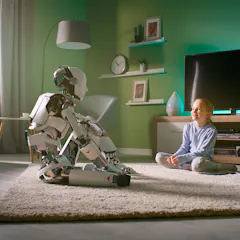
Chatbots want you to think you’re talking to a human, but AI-generated emotion is essentially a linguistic sleight of hand.

Evidence suggests that high-school students visiting Auschwitz-Birkenau may increase their empathy towards Jewish people.
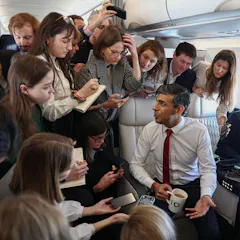
People with higher power and status are less good at reading others – and there’s an unexpected explanation.

These endeavors end up turning the complexity of Black life into a stunt.

Role-playing games that take players into the lives of their characters can help us empathize with the very real suffering of others experiencing war and other disasters.

People who spend time with those who are different often get better at empathy.
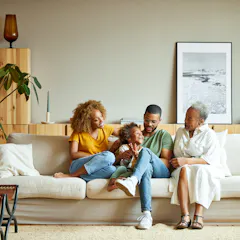
Everyone wants to raise kind children, but telling kids to be nice gets you only so far − young people need to practice those skills with their peers.
The applications of artificial intelligence in mental health care are growing. To employ them ethically, we need to reconsider human-AI relations.

Artificial Intelligence’s capacity to mimic and identify emotions is worlds away from the human one to feel.
Top contributors
-

Professor and Director of the Stoneygate Centre for Excellence in Empathic Healthcare, University of Leicester
-
Professor, Canada Research Chair in Determinants of Child Development, Owerko Centre at the Alberta Children’s Hospital Research Institute, University of Calgary
-
Lecturer in Psychology, King's College London
-
Senior Lecturer in Psychology, Leeds Beckett University
-
Associate Professor of Psychology, University of Bath
-
Associate lecturer, University of Sussex
-
Reader in Leadership, School of Business and Creative Industries, University of the West of Scotland
-
Assistant Professor of Psychology, Pomona College
-
Honarary Research Fellow in Psychology, Australian Catholic University
-
Associate Professor of Psychology, University at Albany, State University of New York
-
Atkinson Chair of Early Child Development and Education and Director of the Atkinson Centre, University of Toronto
-
Associate Professor at the Institute for Social Neuroscience in Melbourne, Australia, The University of Melbourne
-
Professor of Developmental Psychopathology, University of Cambridge
-
Associate Professor of Psychology and Senior Research Associate in the Rock Ethics Institute, Penn State
-
Adjuct Faculty University of Guelph, Former Chair, Early Childhood Studies and Founder of The Love Model Inc.