

When you’re stuck at home during social distancing, it’s only natural to feel on edge at times. So how do you listen to a loved one who’s on edge, too?
Articles on Empathy
Displaying 101 - 120 of 194 articles

Our relationships with characters from books and screen – called parasocial relationships – serve many of the same functions as our friendships with real people, minus the infection risks.

The coronavirus pandemic is a stressful time for everyone. Here are some ways employers can help their employees through this crisis.

People have changed over time, growing ever more distant and isolated from others – while at the same time finding new ways and technologies that let individuals connect and feel with others.

The ‘tough guy’ is a cultural archetype that political leaders have long adopted. But during crises, Americans tend to look for a different kind of hero.

Power is linked to selfishness.

Stories like ‘Romeo and Juliet,’ ‘Alice’s Adventures in Wonderland’ and ‘Jane Eyre’ are still relevant today.

The link between testosterone and empathy is complicated. We don’t have all the answers yet.

You’ve no one to blame but yourself, according to science.
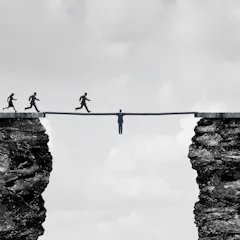
Self-sacrifice isn’t all about selfish genes.

Imagining how to increase water managers’ empathy for others in a holistic way is critical for our human and planetary future.

A more egalitarian power structure is possible.

Attributes of autism can have a hugely positive role in society.
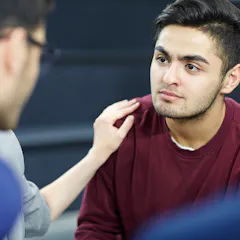
Millions of people suffer traumatic brain injuries, and many lose the ability to emotionally connect with others. A new study suggests there’s a way to help them regain their ability to connect.

Evidence for the benefits of empathy in healthcare is mounting.

Ramadan is one of the five pillars of Islam – acts that denote the obligations of living a good Muslim life.

Part memoir, part investigation, Leigh Sales’s recent book Any Ordinary Day provides rare insight into the journalistic craft.

After the Christchurch mosque shootings, New Zealand’s prime minister didn’t start a war on terror. She covered her head, cried, paid for funerals and passed gun control. Is it because she’s a woman?
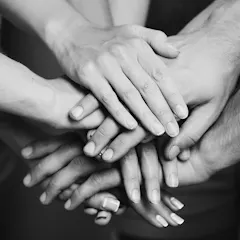
Where do the cooperative skills that hold together human societies come from and why don’t our selfish instincts overwhelm them? Evolutionary game theory suggests that empathy is a crucial contributor.

We know being nice is good for friendships. But we wanted to find out why some antisocial people are socially successful. So we looked at whether rebels had more friends in high school than nice kids.
Top contributors
-

Professor and Director of the Stoneygate Centre for Excellence in Empathic Healthcare, University of Leicester
-
Professor, Canada Research Chair in Determinants of Child Development, Owerko Centre at the Alberta Children’s Hospital Research Institute, University of Calgary
-
Lecturer in Psychology, King's College London
-
Senior Lecturer in Psychology, Leeds Beckett University
-
Associate Professor of Psychology, University of Bath
-
Associate lecturer, University of Sussex
-
Reader in Leadership, School of Business and Creative Industries, University of the West of Scotland
-
Assistant Professor of Psychology, Pomona College
-
Honarary Research Fellow in Psychology, Australian Catholic University
-
Associate Professor of Psychology, University at Albany, State University of New York
-
Atkinson Chair of Early Child Development and Education and Director of the Atkinson Centre, University of Toronto
-
Associate Professor at the Institute for Social Neuroscience in Melbourne, Australia, The University of Melbourne
-
Professor of Developmental Psychopathology, University of Cambridge
-
Associate Professor of Psychology and Senior Research Associate in the Rock Ethics Institute, Penn State
-
Adjuct Faculty University of Guelph, Former Chair, Early Childhood Studies and Founder of The Love Model Inc.