

Compassion is an underrated leadership strength among both men and women, and research shows it is an asset that is key to efficient team management, particularly in challenging times.
Articles on Compassion
Displaying 1 - 20 of 65 articles

All five African countries surveyed – Nigeria, Egypt, Kenya, South Africa and Tanzania – were ranked in the top six most forgiving nations.

“Compassion fatigue” wrongly explains public hostility toward homelessness, masking a failure to recognize shared vulnerability, responsibility and justice in a shared world.

Philosophers from Aristotle to Nietzsche have debated whether being virtuous only helps others, or if it benefits the virtuous person, too.

The practice of this meditation often involves quietly reciting to oneself several phrases that evoke and visualize the beings who will receive loving-kindness.

Those driven by both heart and mind help the most people, even far beyond their own circle.

Self-compassion can be a tool for resilience in times of stress, illness or failure.

A scholar of Buddhism explains why creating a digital afterlife for loved ones may cause us to miss critical moments for genuine transformation and connection.

The author of the new book ‘Attention and Alienation’ wonders if the online world can ever become a place where kindness and human flourishing are the prevailing ethos.

Can well-being practices can truly thrive under capitalism, where profit and efficiency often take precedence over well-being?
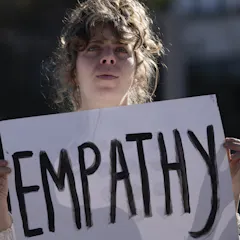
Empathy affords us a more accurate understanding of others’ experiences and emotions. Just like pain, it can be hard to bear – but that’s also the source of its strength.

The Catholic Church opposes assisted suicide and euthanasia, but it also doesn’t support treatments that prolong suffering in the face of unavoidable death.

As pets increasingly become integral to our emotional lives, acknowledging the relevance of this relationship is fundamental
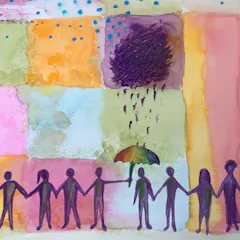
Compassion starts with the individual – self-care and personal wellness. It then radiates out to the wider community in the form of action and engagement.

Philosophers have always wrestled with how love can be so morally important, yet so personal and even arbitrary.

Conversations don’t immediately change people’s minds, but they can eventually. And in the meantime, they help forge real connections across a diverse and complex society.

If we considered people on the other side of a disagreement as not ‘evil’ but ‘mistaken’ or ‘ill-informed,’ it might create more room for dialogue, writes a scholar of mindfulness.

Most people feel connected to each other, which makes compassion instinctive.
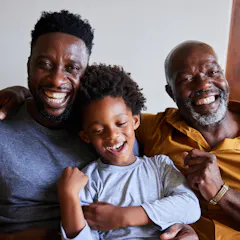
The fear of becoming a father is not a sign of weakness. Rather, it shows you understand that it’s a big role.

When it feels like so many people are in need of compassion, how do we decide where to direct it?
Top contributors
-

Associate Professor of Religious Studies, Rhodes College
-
Liberal Arts Endowed Professor of Communication, Penn State
-
Professor of Asian History & Health Humanities, Penn State
-
Professor, Canada Research Chair in Determinants of Child Development, Owerko Centre at the Alberta Children’s Hospital Research Institute, University of Calgary
-
Lecturer, Advertising and Media, Western Sydney University
-
Associate Professor, Ecology, Northumbria University, Newcastle
-
Assistant Professor of Informatics, University of California, Irvine
-
Chancellor's Professor of Medicine, Liberal Arts, and Philanthropy, Indiana University
-
Lecturer, American Politics, University of Pittsburgh
-
Associate Professor of Psychology and Senior Research Associate in the Rock Ethics Institute, Penn State
-
Professor of Psychology, University of Toronto
-
UNESCO Chair in AI Ethics & Governance, IE University
-
Assistant Professor of Psychology, Arizona State University
-
Assistant Professor of Social Psychology, University of Utah
-
Emeritus Professor, National Centre for Epidemiology and Population Health, Australian National University