
As AI ‘companions’ permeate our most intimate spheres, we risk diminishing our own human essence by falsely attributing human qualities to them.
Articles on Emotional empathy
Displaying all articles

Teenagers develop empathy over time, but those who feel safe and connected with their families may have a head start.

A simple introduction from care providers can be a good start towards a truly patient-centred approach to health services.

We need to educate ourselves daily if we aspire to live peacefully in a multicultural society.

Trolls tend to know the impact they’ll have, but don’t seem to care. So, how do we use our new findings to help stop this seemingly pointless, harmful behaviour?

How do you teach empathy? Can it be in a way that foregrounds ancient, indigenous knowledge and practices? Design thinking might hold the answers.

Research shows empathy itself does not have any limits. If it appears limited, it is because of people’s goals, values and choices.
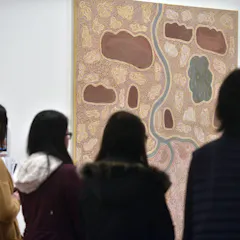
Can empathy be taught to students in the healthcare professions? A groundbreaking project is using visual art to ensure they pay attention to the whole person, not just the disease.

If police officers are sent to museums to train observational skills, shouldn’t literary texts be used to teach empathy?

After such a difficult political experience, empathy is the key not only to feeling connected, but feeling understood – and understanding others.

Children feel sympathy for others from an early age. Two development psychologists explain how children can learn, based on feelings of sympathy, how to act more thoughtfully.
Top contributors
-

Human Centred Design Consultant: Honorary Research Associate, University of Cape Town
-
Professor of Psychology, Management, University of Toronto
-
Associate Professor of Psychology, University of Toronto
-
Associate Professor of Psychology and Senior Research Associate in the Rock Ethics Institute, Penn State
-
Senior Academic Programs Curator, Museums and Collections Department, University of Melbourne, The University of Melbourne
-
Assistant Professor of Informatics, University of California, Irvine
-
Professor of English, College of Liberal Arts Dean, Honors College, UMass Boston
-
PhD in Intercultural Communication and Education,, University of Bath
-
Professor of Psychology, University of Toronto
-
Associate Professor, Federation University Australia
-
Post Doctoral Fellow, California State University, Dominguez Hills
-
Associate Professor of Health Policy and Systems Research, Memorial University of Newfoundland
-
PhD student, Faculty of Medicine, Memorial University of Newfoundland
-
Assistant Professor of Psychology, Pomona College
-
MD candidate, Memorial University of Newfoundland