
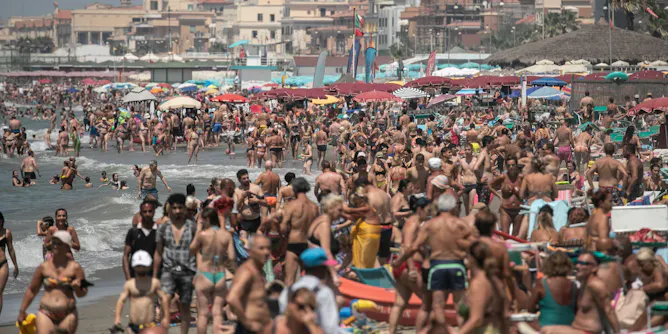
The predicted El Niño is a worry, but it doesn’t guarantee the record-breaking heat we’re seeing in parts of the Northern Hemisphere.
Articles on El Nino
Displaying 101 - 120 of 258 articles
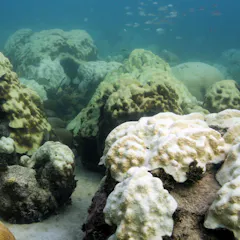
Water temperatures in the 90s off Florida in July are alarming, a NOAA coral scientist writes. Scientists in several North American countries have already spotted coral bleaching off their coasts.

Climate change is relentless and largely predictable, but it is influenced by natural variability. This means the largest temperature rise usually comes at the end of an El Niño event.

The Pacific Ocean is entering the hot phase of its temperature cycle, an event that will turbo-charge global warming.

The El Niño is a reminder that bushfires are part of Australian life. But whether or not this fire season is a bad one, Australia must find a better way to manage bushfires.
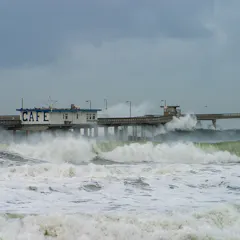
An El Niño weather-warming phase is underway in the Pacific – but what does this mean for the weather in Europe?
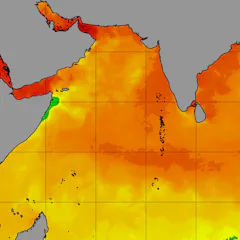
Drought in Europe, dwindling Arctic sea ice, a slow start to the Indian monsoon – unusually hot ocean temperatures can disrupt climate patterns around the world, as an ocean scientist explains.
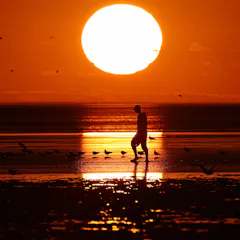
Over the past three years, Earth’s climate system has accumulated an average of 11 Hiroshima bombs’ worth of excess energy per second. And it’s showing in the current surge in ocean temperature.
2016 was the world’s warmest year on record, due in part to a very strong El Niño event. But 2023 (and 2024) could beat that record – what should we expect?
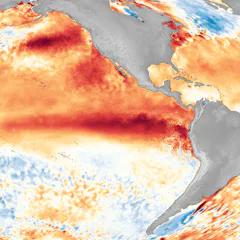
The official forecast calls for a strong El Niño by winter, but other models suggest it might dip in and out. An atmospheric scientist explains.
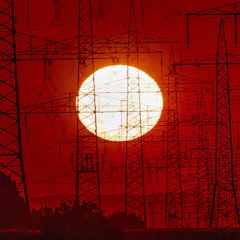
The likely El Niño is bad timing for the electricity sector, and means Australians may face supply disruptions and volatile prices.

The scale of climate threat is beyond the tools we have to manage the Great Barrier Reef. New measures and sustained effort are needed.
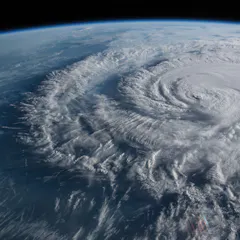
Current forecasts suggest a warm tropical Pacific will be interfering with what could otherwise be a ferocious Atlantic hurricane season.
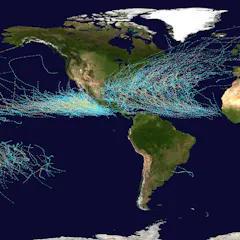
El Niño years put Hawaii and the Mexican Riviera on alert for destructive tropical storms and hurricanes.
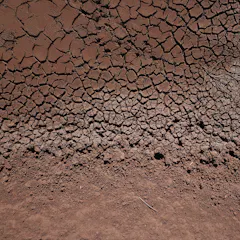
The research help us understand how El Niño and La Niña will change as the world warms in the future.
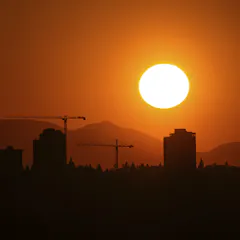
There’s a 98% chance of a record hot year by 2028, and a 66% chance of exceeding the 1.5°C threshold for at least that year, according to the latest World Meteorological Organization update.
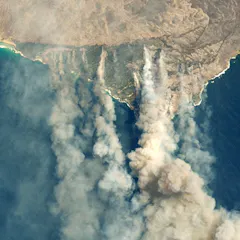
Where there’s fire, there’s smoke – could plumes from the Black Summer of fire have cooled regions of the Pacific and triggered a La Niña? New research suggests it’s possible.
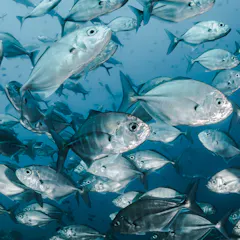
El Niño can trigger intense and widespread periods of extreme ocean warming known as marine heat waves. They can devastate marine life.
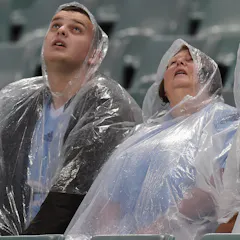
Not all La Niñas are wet, nor El Niños dry – especially if you live in Sydney. So here’s how to interpret what an El Niño forecast means for you.

After three long years of rainy weather, La Niña is over. But that doesn’t mean El Niño is a certainty. Here’s why.
Top contributors
-

ARC Future Fellow and Associate Professor in Climate Science, ARC Centre of Excellence for 21st Century Weather, The University of Melbourne
-
Adjunct Professor (Practice) in the School of Earth, Atmosphere and Environment, Monash University
-
Senior Research Associate, UNSW
-
Senior Climatologist, Australian Bureau of Meteorology
-
Postdoctoral Research Fellow in Atmospheric Sciences, The University of Melbourne
-
Distinguished Scholar, National Center for Atmospheric Research; Affiliate Faculty, University of Auckland, Waipapa Taumata Rau
-
Chief Research Scientist, Oceans and Atmosphere, CSIRO, CSIRO
-
Principal Research Scientist, CSIRO
-
Climate Scientist, Australian Bureau of Meteorology
-
Climate scientist, Australian Bureau of Meteorology
-
Lecturer, School of Agriculture, Food and Ecosystem Sciences, The University of Melbourne
-
Director of the ARC Centre of Excellence for Our Future Oceans and Scientia Professor in Oceanography, UNSW
-
Lecturer, Climate Science Geography, The University of Melbourne
-
Director of the Climate Hazards Center, University of California, Santa Barbara
-
Senior Research Scientist, CSIRO