
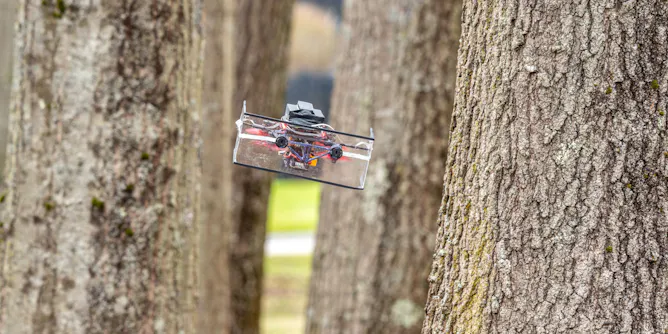
Inspired by bats, a new ultra-low-power sensing system enables tiny drones to navigate through darkness, smoke and dust, where cameras and other light-based sensors fail.
Articles on Echolocation
Displaying all articles

The scarcity of bat fossils is more than a palaeontological puzzle: it has implications for bat conservation strategies today.
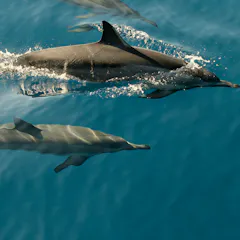
Let’s delve into the three super-senses of dolphins: magnetic perception, electrical perception and echolocation.
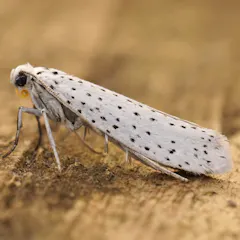
The ermine moth’s wing structures are fascinating because they rely on a mechanism we teach our engineering students to avoid
Humans often look to nature for the solutions to complex problems – here are five times where biological processes have inspired innovation.

Brush turkeys, bats, and cockroaches are crucial for the environment – including our gardens. Each have fascinating ways of coping in wet weather.
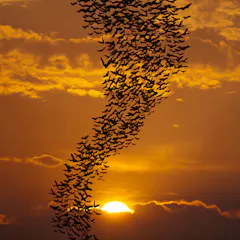
Humans have long struggled to understand the nocturnal world. As environmental change becomes increasingly acute, understanding their lives has never been more critical.
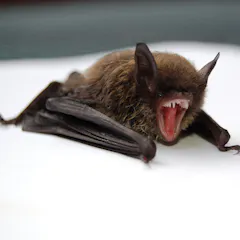
Research has revealed how earless moths manage to avoid bat attacks - by evolving sophisticated acoustic tricks.
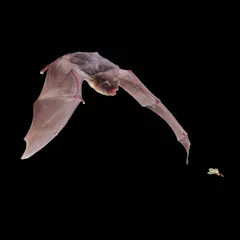
These nocturnal insects have amassed an impressive defensive arsenal against bats’ echolocation.
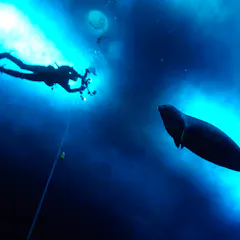
Microphones on the seafloor recorded life under the Antarctic ice for two years – inadvertently catching seal trills and chirps that are above the range of human hearing. Could they be for navigation?
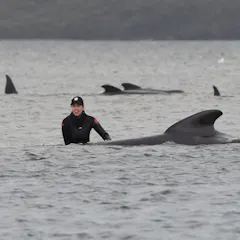
More than 450 long-finned pilot whales are stranded in Tasmania. Saving them is a race against time.
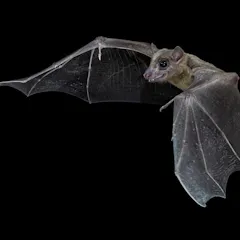
This important discovery demonstrates that cognitive maps are not the exclusive domain of humans and a few other species.
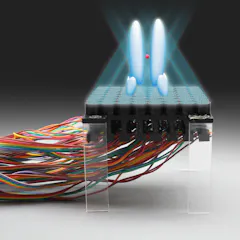
From acoustic holograms to tractor beams.
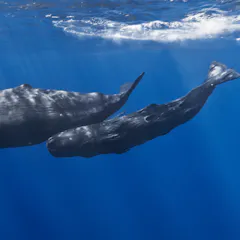
We tend to think of the oceans as quiet, when in fact they’re anything but. Noise is the “forgotten pollutant”, but the good news is that unlike many other pollutants it can be switched off if we try.
Top contributors
-

Postdoctoral Research Associate in Biological Sciences, University of Bristol
-
Professor in Sensory Biology, University of Bristol
-
Senior Lecturer in Digital Engineering of Structures, University of Bristol
-
Senior Lecturer in Modern and Environmental History, University of Bristol
-
Professor of Nonlinear Structural Mechanics, University of Bristol
-
PhD Candidate, University of Sydney
-
Emeritus Professor of Biology, Western University
-
Lecturer in Imperial and Environmental History, University of Bristol
-
PhD student, University of Sydney
-
Research Fellow in Marine Science and Manager Whales & Climate Program, Griffith University
-
Instructor of Natural Sciences, University of Oregon
-
Enseignante chercheuse en éthologie, Université Paris Nanterre
-
Professor of Intelligent Engineering Systems, Nottingham Trent University
-
Casual Academic, University of Sydney
-
Lecturer, School of Life and Environmental Sciences, University of Sydney