
Environmentalism is undergoing a radical transformation. New science has shown how long-held notions about trying to “save the planet” and preserve the life we have today no longer apply. Instead, a growing…
Articles on Earth science
Displaying 81 - 100 of 105 articles
AUSTRALIA 2025: How will science address the challenges of the future? In collaboration with Australia’s chief scientist Ian Chubb, we’re asking how each science discipline will contribute to Australia…
The analysis of microscopic zircon crystals from Western Australia’s Jack Hills region has strengthened the theory of a “cool…
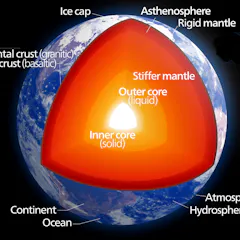
Our planet’s interior is complex and has many layers. Their formation and structure contain many unsolved mysteries. But new research is providing some clues about how Earth’s internal structure may have…
Injecting fluids into the Earth, whether to recover natural gas or to obtain thermal energy from the planet, can cause earthquakes. New reports that look at American fracking, deep waste-water injection…
New research shows it’s common for swarms of earthquakes to precede a volcano eruption, creating an harmonic tremor resembling…
Clouds caused by air pollution have been overestimated in their ability to to reflect sunlight back into space, thus helping…
The earth’s core spins at a different speed to the outer layer, new research from the Australian National University has…
For centuries, the shallow parts of the earth’s crust have provided us with fuels to burn in our fireplaces, foundries and generators. Now, as we try to break free from our reliance on some of the dirtier…
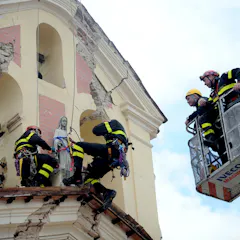
You’ll know by now that six scientists and a government official have been found guilty of manslaughter (as reported yesterday) and sentenced to six years in prison for how they assessed and communicated…
Significant changes in the motion of Earth’s tectonic plates has been found to occur less frequently than was previously…
The site of a 700,033 year old landslide that followed a volcanic eruption has been discovered on the Canarain island of…
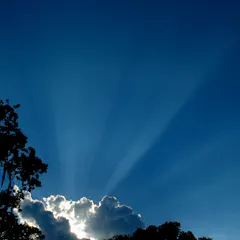
A hole in the Arctic ozone layer grew at unprecedented levels this year, a new study has found, exposing densely populated northern hemisphere countries to potentially harmful levels of UV radiation. The…
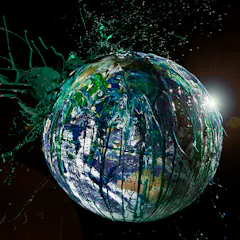
We know a lot about how humans evolved. But when it comes to our planet, we’re on shakier ground. Inert (nonreactive) gases, such as helium, neon and argon, trapped inside the mantle (Earth’s thickest…
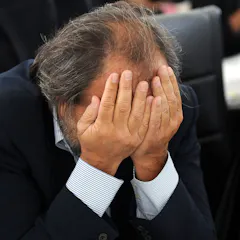
This week, a committee of six scientists (including Dr Enzo Boschi, formerly president of Italy’s National Institute of Geophysics and Volcanology) and one government official, whose role was to advise…
Exposure to second-hand tobacco smoke nearly doubles the risk of hearing loss in teenagers, according to US university researchers…
A magnitude 4.4 earthquake felt in Melbourne on Tuesday morning is the third largest in a series of 300 quakes that have been gently shaking regional Victoria since January 2009, a seismologist said. The…
Western Victoria and South Australia are overdue for a volcanic eruption, according to researchers from the University of…
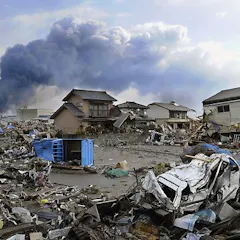
The magnitude 9 earthquake that occurred in Japan in March this year caused a 400km long land rupture, releasing centuries of pent up energy caused by two tectonic plates pushing slowly against each other…
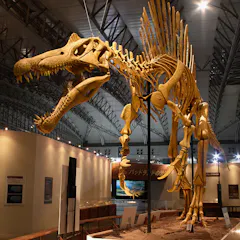
Paleontologists think it had the snout of a crocodile, the claws of a bear and a taste for seafood. But what’s most interesting about the discovery of Australia’s first fish-eating dinosaur is its similarities…
Top contributors
-

Harold T. Stearns Professor of Earth Science, Wesleyan University
-
Professor in Earth Sciences, Nanyang Technological University, Singapore, and Emeritus Professor of Mineral Physics, University of Cambridge
-
Professor of Earthquake Science, The University of Melbourne
-
Associate Professor, School of Geosciences, University of Sydney
-
Earthquake Scientist, Monash University
-
Professor of Palaeobiology, University of Leicester
-
Lecturer in Geosciences, University of Montana
-
Assistant Director of the Global Systems Institute, University of Exeter
-
Senior Research Fellow, Future Industries Institute, Adelaide University
-
ARC Future Fellow and Associate Professor in Igneous Petrology/Volcanology, The University of Queensland
-
Associate Professor of Tectonics, University of Sydney
-
Professor of Earth Sciences and Environmental Studies, USC Dornsife College of Letters, Arts and Sciences
-
Associate Professor, Connected Waters Initiative, UNSW
-
Professor of Practice in Meteorology, Professor of International Affairs & Director Center for Solutions to Weather and Climate Risk, Penn State
-
Royal Society University Research Fellow & Associate Professor of Geophysics, University of Oxford