
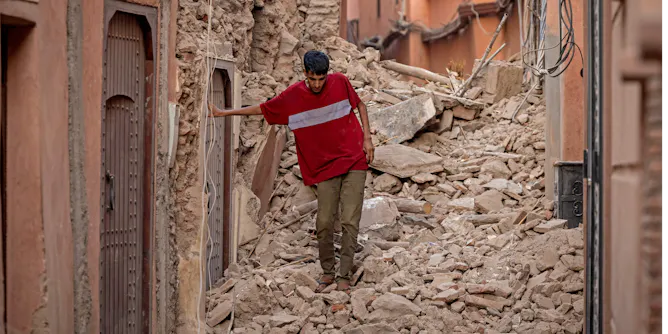
A deadly earthquake in Afghanistan, following one in Morocco, highlights the risks in the region.
Articles on Earth science
Displaying 21 - 40 of 105 articles

For some people, it’s a choice based on cultural beliefs or economic opportunities provided by the volcano. Other times it’s less a choice than the only option.
Some rocks will burn, and others will melt, depending on how they were formed and what minerals they contain.
To us, Earth’s landscapes might change very little. But over millions of years, our planet’s surface has shifted in innumerable ways.
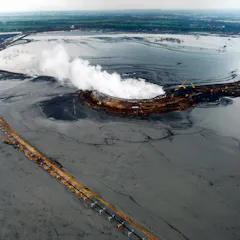
When mud, fluids and gases erupt at the Earth’s surface, they hint at what’s happening underground, allowing scientists to build a more comprehensive 3D view of what’s going on inside our planet.

Earth has liquid rock inside. Here’s what happens to that rock to make lava happen.

From capillary forces to sand grain shape, the simple mix of sand and water hides the complexity within.
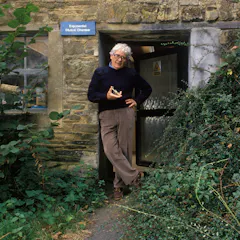
Lovelock’s Gaia hypothesis suggested that Earth could be considered a single, self-regulating organism.
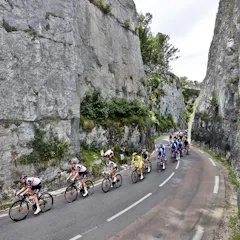
The world’s biggest cycling race is a great way to teach people about geology – and test our own ideas.
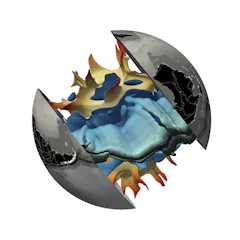
Ancient blobs deep inside the Earth gather together and break apart like continents, according to new research.
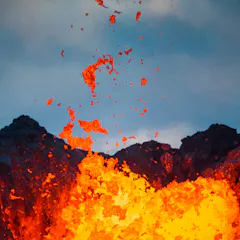
Volcanoes might seem like nature’s incinerators, but using them to burn up trash would be dangerous and disrespectful to indigenous people who view them as sacred.
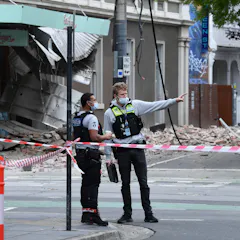
A largely hidden fault beneath the Victorian Alps has triggered a magnitude 5.8 quake that was felt as far afield as Sydney, Adelaide and Launceston. Here’s what we know so far.
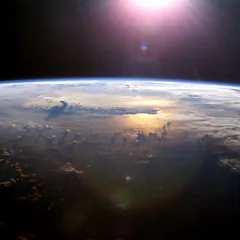
When heat in doesn’t equal heat out, Earth sees changes.
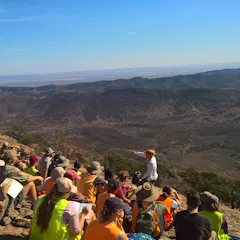
Earth scientists are on the skilled occupation list for immigration even as universities cut back in this area. The problem lies with a funding model that offers no incentive to lift graduate numbers.
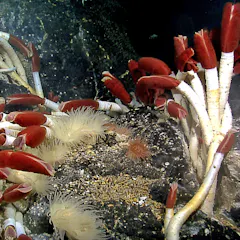
Oceanographer Robert D. Ballard, who is best known for finding the wreck of Titanic, has written a memoir recounting his biggest discoveries and calling for more ocean exploration.

When sea sediment melts inside the Earth, it helps tectonic plates slide over one another smoothly.
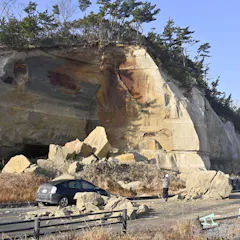
Aftershocks of a major earthquake can continue for years or even decades.
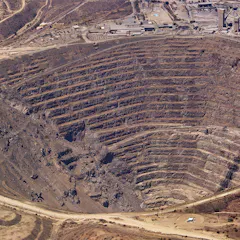
It seems the production of Earth science knowledge in Africa is simply not progressing, despite the world’s interest in (and exploitation of) the continent’s mineral wealth.
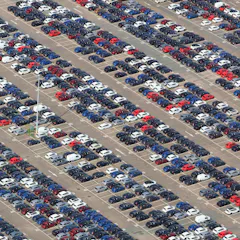
The science-fiction scenario of an engineered planet is already here.
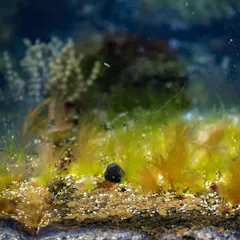
Ancient fatty molecules, once believed to be traces of some of the first animals to live on Earth, may have been produced by algae instead.
Top contributors
-

Harold T. Stearns Professor of Earth Science, Wesleyan University
-
Professor in Earth Sciences, Nanyang Technological University, Singapore, and Emeritus Professor of Mineral Physics, University of Cambridge
-
Professor of Earthquake Science, The University of Melbourne
-
Associate Professor, School of Geosciences, University of Sydney
-
Earthquake Scientist, Monash University
-
Professor of Palaeobiology, University of Leicester
-
Lecturer in Geosciences, University of Montana
-
Assistant Director of the Global Systems Institute, University of Exeter
-
Senior Research Fellow, Future Industries Institute, Adelaide University
-
ARC Future Fellow and Associate Professor in Igneous Petrology/Volcanology, The University of Queensland
-
Associate Professor of Tectonics, University of Sydney
-
Professor of Earth Sciences and Environmental Studies, USC Dornsife College of Letters, Arts and Sciences
-
Associate Professor, Connected Waters Initiative, UNSW
-
Professor of Practice in Meteorology, Professor of International Affairs & Director Center for Solutions to Weather and Climate Risk, Penn State
-
Royal Society University Research Fellow & Associate Professor of Geophysics, University of Oxford