
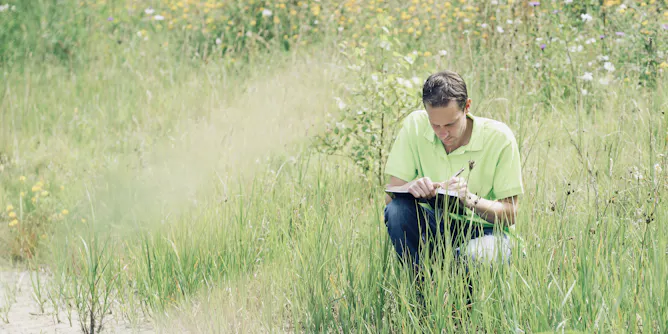
It’s one of the largest funding cuts to any university course, and will leave Australia ill-equipped to deal with the environmental challenges of the future.
Articles on Earth science
Displaying 41 - 60 of 105 articles

Born on July 30, 1920, geologist and cartographer Tharp changed scientific thinking about what lay at the bottom of the ocean – not a featureless flat, but rugged and varied terrain.
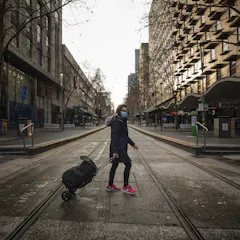
A network of sensitive instruments in schools around Australia is recording the eerie silence of the coronavirus pandemic — and tiny earthquakes that would otherwise be undetectable.

New research suggests that Earth’s oxygenation didn’t require difficult and complex evolutionary leaps forward.
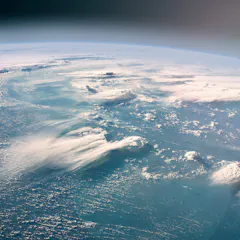
Oxygen flooded the atmosphere for the first time and then … nothing. Or so we thought.
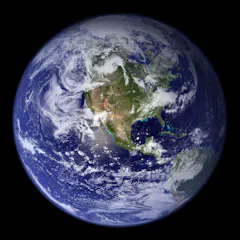
All the buildings and the cars and the restaurants, and the phones and even everything that’s inside of you… it all started with an exploding star, billions of years ago.
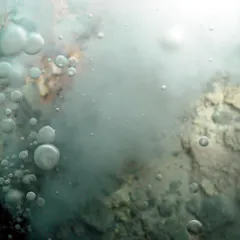
Thousands of years ago, carbon gases trapped on the seafloor escaped, causing drastic warming that helped end the last ice age. A scientist says climate change could cause this process to repeat.

A paleooceanographer describes her ninth sea expedition, this time retrieving cylindrical ‘cores’ of the sediment and rock that’s as much as two miles down at the ocean floor.
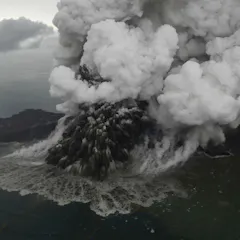
Research into volcanic activity in the waters off Indonesia shows how active this region is and how destructive landslide-caused tsunamis can be.
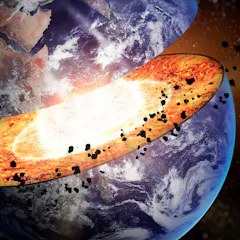
The Earth’s core is cooling down, and one day it will be completely solid – when that happens, Earth might look a lot like Mars.
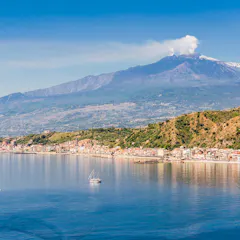
Gravity, not magma, is forcing Etna to move, increasing the chances of collapse.
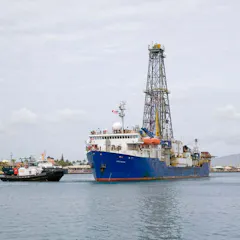
The ocean floor holds unique information about Earth’s history. Scientific ocean drilling, which started 50 years ago, has yielded insights into climate change, geohazards and the key conditions for life.
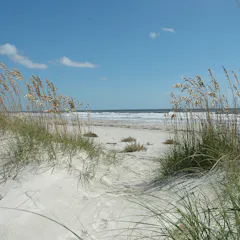
How do the narrow ribbons of sand that line the Atlantic and Gulf coasts withstand the force of hurricanes? The answer lies in their shape-shifting abilities.
We’re still not sure whether the “hothouse” is speculation – or destiny.
A new array of seismometers provides a glimpse of what’s happening deep beneath this geologic fault. New data help explain why the north and south of the region are more seismically active than the middle.
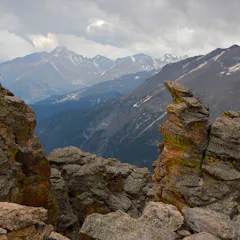
Scientists have long thought most nitrogen in Earth’s ecosystems comes from the air, but new research shows it also is released as rocks weather. This could boost plant growth and help sequester carbon – but not fast enough to avert climate change, as some pundits have claimed.
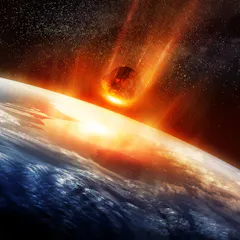
Research suggests a new threat to life on Earth from the meteorite’s crash: Via seismic waves, the impact triggered massive undersea eruptions, as big as any ever seen in our planet’s history.
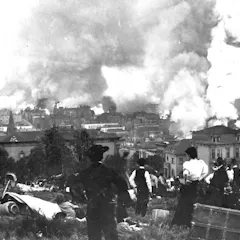
According to current forecasts, California has a 93 percent chance of an earthquake with magnitude 7 or greater occurring by 2045. Early warning systems, now in development, could limit casualties and damage.
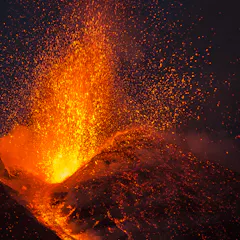
A new study has found a way to predict eruptions at Mount Etna within two weeks.

While the Montecito, California mudslides took 20 lives, landslides kill far more people in developing countries. Tighter construction standards and early warning systems could help reduce their toll.
Top contributors
-

Harold T. Stearns Professor of Earth Science, Wesleyan University
-
Professor in Earth Sciences, Nanyang Technological University, Singapore, and Emeritus Professor of Mineral Physics, University of Cambridge
-
Professor of Earthquake Science, The University of Melbourne
-
Associate Professor, School of Geosciences, University of Sydney
-
Earthquake Scientist, Monash University
-
Professor of Palaeobiology, University of Leicester
-
Lecturer in Geosciences, University of Montana
-
Assistant Director of the Global Systems Institute, University of Exeter
-
Senior Research Fellow, Future Industries Institute, Adelaide University
-
ARC Future Fellow and Associate Professor in Igneous Petrology/Volcanology, The University of Queensland
-
Associate Professor of Tectonics, University of Sydney
-
Professor of Earth Sciences and Environmental Studies, USC Dornsife College of Letters, Arts and Sciences
-
Associate Professor, Connected Waters Initiative, UNSW
-
Professor of Practice in Meteorology, Professor of International Affairs & Director Center for Solutions to Weather and Climate Risk, Penn State
-
Royal Society University Research Fellow & Associate Professor of Geophysics, University of Oxford