
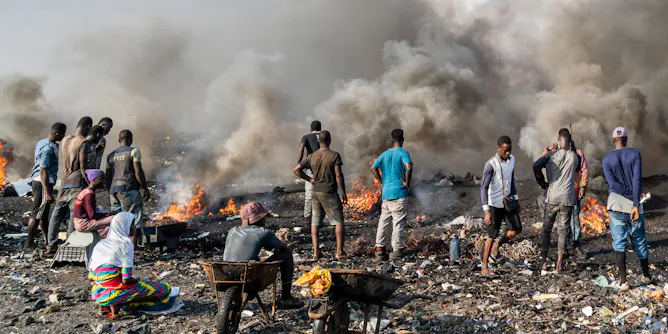
In Agbogbloshie, Ghana, thousands of young women and men burn electronic waste to extract minerals at a cost to their health. They need more protection.
Articles on Electronic waste
Displaying all articles

Schools should provide students with the know-how to challenge our throw-away culture and empower them to become conscious consumers.
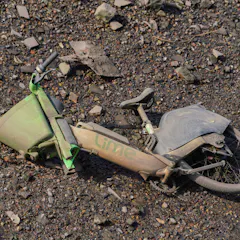
Electric bike batteries can be particularly dangerous and tricky to dispose of.

The PFAS in lithium-ion batteries is a major obstacle to recycling or disposing of these batteries safely. But we have a way to fix this problem.

The most common vapes on the market are single-use, disposable ones. They contain valuable resources, yet aren’t designed to be recycled.
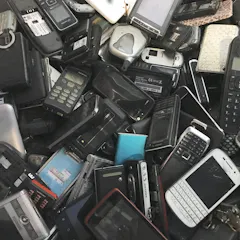
Mining precious metals is expensive and environmentally destructive. As an alternative, researchers are increasingly eyeing recycling old smartphones, computers and other electronics.
Electronic waste is one of the fastest growing waste streams in the world – there are things you can do to minimise your role in it.
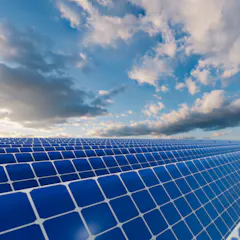
Re-using elements from solar panels is essential to mitigate climate change, says an expert

Maine and Oregon have enacted laws that require makers of consumer product packaging to pay for recycling or disposing of it. Will other states follow?
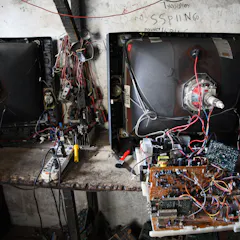
There is an urgent need for legislation dealing specifically with electronic waste in Nigeria.
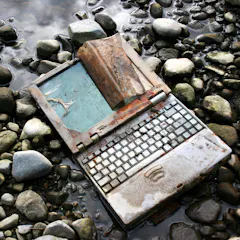
Technical advances are reducing the volume of e-waste generated in the US as lighter, more compact products enter the market. But those goods can be harder to reuse and recycle.
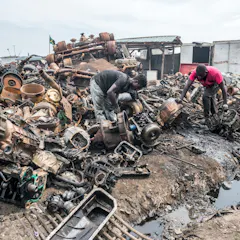
Despite knowing how harmful it can be, companies and businesses (primarily those in Europe and the US) target countries in the Gulf of Guinea as a dump for their toxic waste.

Apple’s newest release comes without a wall charger and earpods. While the shift could reduce the company’s carbon footprint, users shifting to wireless charging will use more energy.
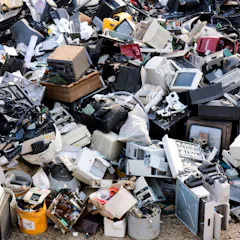
Within the growing mountains of electronic waste, precious metals lie waiting to be recovered.
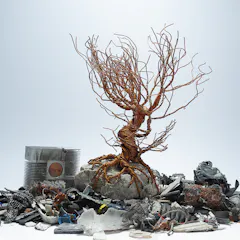
Demand for electric and electronic products is fuelling the meteoric rise in e-waste.
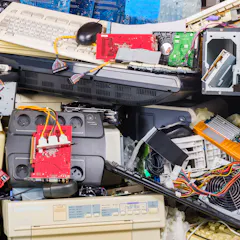
There is an urgent need for greater awareness of the dangerous substances found in the environment.
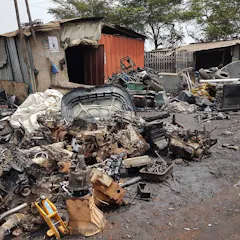
Sites like Agbogbloshie provides a valuable service. They offer opportunities for job creation, profit and cleaning up environments littered with waste.
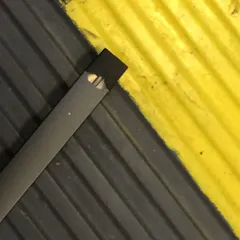
E-cigarettes are hotly debated because of the uncertainty of whether they are a gateway to cigarette smoking for teens, or an aid to smoking cessation. One thing is clear: They are not biodegradable.
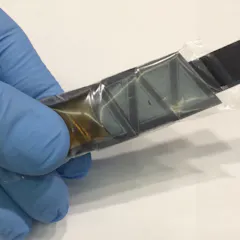
Paper-based devices with foldable, biodegradable batteries provide a new way to reduce electronic waste. But how would these new gadgets work?
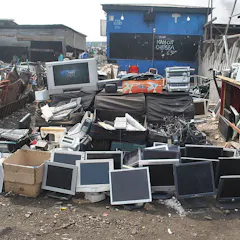
Design-for-recycling and take-back laws – not just more recycling – are needed to address the sprawling e-waste problem.
Top contributors
-

Research associate, Environmental Health Initiative, Erasmus University Rotterdam
-
Full Professor of Geography, Memorial University of Newfoundland
-
Associate Professor of Electrical and Computer Engineering, Binghamton University, State University of New York
-
Professor of Sustainability, Rochester Institute of Technology
-
Professor of Applied Environmental Science, University of Southampton
-
PhD Candidate, University of Wollongong
-
Professor of Global Environmental Politics, University of California, Berkeley
-
Programme Associate at Sustainable Cycles (UNU-ViE-SCYCLE), United Nations University
-
Professor & Director, Hub for Apple Platform Innovation (HAPI), School of Computing Technologies, RMIT University
-
Associate professor in Ecological Transition and Social Entrepreneurship, EM Lyon Business School
-
Professor, Information and Communications Technology, CQUniversity Australia
-
Lecturer at Lancaster University Management School, and Associate Director of the Pentland Centre for Sustainability in Business Research Centre., Lancaster University
-
Lecturer in Sustainable Futures, University of St Andrews
-
Associate Professor, Swansea University
-
PhD Candidate in Environmental Science, Policy, and Management, University of California, Berkeley