
Can the new owner of GEDmatch ,a genealogy database preserve its original purpose while allowing a seamless service to law enforcement?
Articles on DNA testing
Displaying 21 - 40 of 42 articles

Genetic apps claim to reveal fundamental insights about your health, well-being, and even intellect. But it’s not just spurious science - believing these traits are genetic can have harmful consequences.
A US judge has allowed police access to the major DNA database without users’ consent (including Australian users). It’s a timely reminder that we urgently need genetic privacy legislation.

DNA testing gives limited information about whether people are likely to be related. But even if we overcame the many practical and legal hurdles to implementing it, what’s the point?
We asked five experts if DNA testing was worthwhile. Four out of five said yes.
Most common chronic diseases are the outcome of complex interactions between genetic, environmental and social risk factors, so a genetic risk score, on its own, isn’t much help.

Before the advent of genetic testing, definitions of paternity were primarily social and legal. Science has destabilized these older definitions, but it has not replaced them.
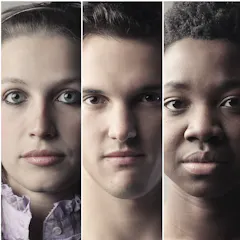
Estimating our ancestry is hard – because our backgrounds are much more mixed up than we thought. So don’t take your DNA ancestry test results literally: they’re just a prediction.
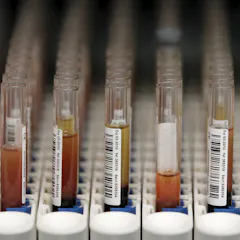
Why is Elizabeth Warren’s DNA test so controversial with Native American groups? Two Indigenous geneticists explain the history and science behind the debate.
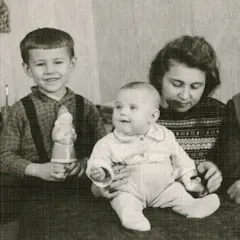
The results of genetic ancestry tests are grossly over-simplified. A new study shows the tests reinforce what you want to believe rather than offering objective, scientific proof of who you are.
Genetics is influencing more and more of our decisions, but we can’t make the right choices if we don’t understand it.

We now have the capacity to quickly and cheaply sequence an individual’s genome and scour it for disease-causing genes. But how much, and what type, of information does a parent-to-be want to know?
Data and privacy issues are tangled up in the DNA reports consumers get from big genetic testing companies – and the third-party sites they turn to in order to glean more from their raw DNA.

More people are sending off saliva samples to find out about their genetic roots. But the raw DNA results go way beyond genealogical data – and could deliver unintended consequences.
The rapid growth of genetic testing and data-gathering could revolutionize health and medicine if governments work to protect people against privacy and societal risks.

Converting a DNA sequence into an audio could help us learn something useful about it, like where mutations occur.
The most important lesson? Always read the small print.
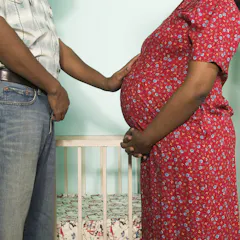
When men deny the paternity of children, many South African women feel like they have no recourse. Making DNA tests affordable and accessible could change this.
Rapid changes in technology are transforming the contributions ordinary citizens can make to scientific research.
Forensic science has revolutionised justice, but we may have too much faith in it.
Top contributors
-

Ethical, Legal & Social Adviser in Public Health Genomics, Monash University
-
PhD Candidate in Law, Queen's University, Ontario
-
Associate Professor in Law, University of Leicester; University of Oxford
-
Professor of Criminal Jurisprudence, University of Nottingham
-
Senior Lecturer in Molecular Biology, Western Sydney University
-
Visiting Scholar, School of Human and Community Development, University of the Witwatersrand
-
Professor of molecular and medical genetics, Oregon Health & Science University
-
Director, Queensland Bioethics Centre, Australian Catholic University
-
Assistant Professor in Human Genetics, Cold Spring Harbor Laboratory
-
Director of Bruce Lefroy Centre for Genetic Health Research, Murdoch Children's Research Institute
-
Assistant Professor of Microbiology, The Ohio State University
-
AIR Teaching Fellow, Goldsmiths, University of London
-
Emeritus Professor of Ecology, University of Salford
-
Associate Professor of Sociology, University of British Columbia
-
Professor, Murdoch Children's Research Institute