
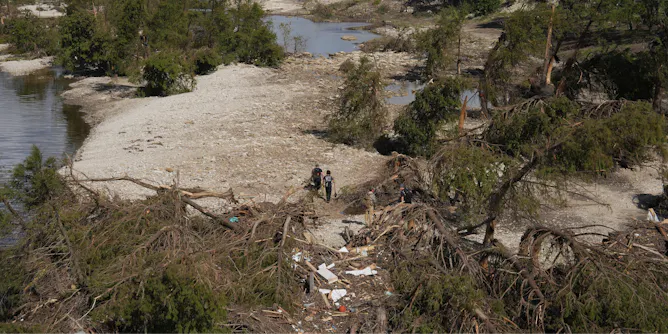
Flash floods are increasing in frequency, severity and impact. The Canadian government needs to learn from the Texas tragedy and co-ordinate weather information and warning systems.
Articles on Disaster mitigation
Displaying all articles
The US experiences violent earthquakes, but the damage and death toll is much lower than in many countries because of the work of federal seismologists and engineers.
Two decades of post-disaster and conflict learning should be enough to remind us of the importance of meaningful access and participation for Acehnese women. The facts are yet to reflect this.

Too much pavement and old drainage systems are just two of the problems communities face.

Canada’s first National Day Against Gun Violence paves the way forward to help mitigate gun violence and promote healing for survivors.
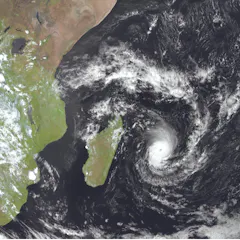
The record-breaking Cyclone Freddy was a wake-up call to prepare for the storms of the future.

Indonesia government has a nationwide seismic hazard map but without an operational map for seismic mitigation
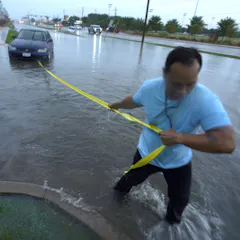
Flood risks are rising as the climate warms. The risks are complex, as a levee or new roadway in one place can worsen flooding somewhere else.
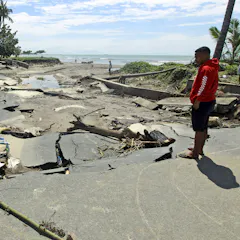
Overlooking people with disability in disaster preparations and responses makes them even more vulnerable. A new partnership has shown they can play meaningful and active roles.
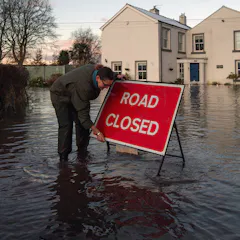
Clear messaging is crucial when dealing with multiple disasters.
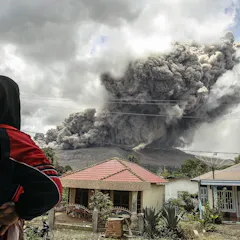
What is political will or political commitment to disaster risk reduction? Why is it important to measure political commitment? And how to measure it?
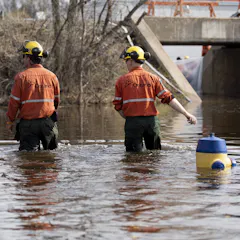
Canadian history and international relations theory gives us perspective on why co-ordinating flood management has proven so difficult in Canada and what can be done about it.
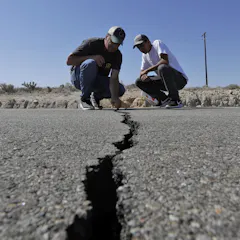
Engineers know how and where to build to minimize earthquake damage. But laws don’t always reflect that wisdom. A new study suggests it’s because of a mismatch between risk perceptions and reality.
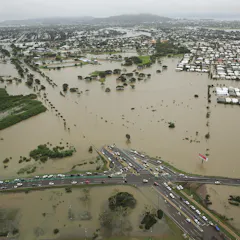
Disaster information needs to come from all sections of a community at risk, and we need to leave nobody marginalised.
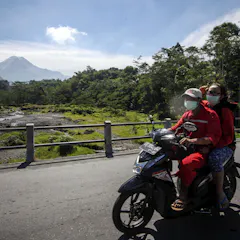
Whether in direct response to these events or as a way of coping with their consequences, many Indonesians react to the unpredictability of the natural world with a “wait and see” attitude.
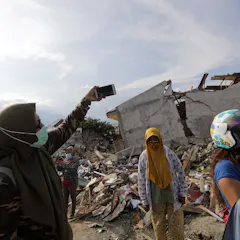
Earthquakes and tsunami in Indonesia this year did not only leave a deep sorrow. It made us rethink the relationship between humans, technology and nature in Indonesia.
Top contributors
-

Senior Scientist in Disaster and Climate Risk at Earth Sciences NZ & Senior Research Fellow (adjunct), Humanitarian Emergency and Disaster Management, Charles Darwin University
-
Professor Emeritus of Climate and Space Sciences and Engineering, University of Michigan
-
Associate Professor, University of Sydney
-
Professor of Communication Science and the Director of the Centre for Southeast Asian Social Studies (CESASS), Universitas Gadjah Mada
-
Lecturer in Politics and Government, Universitas Gadjah Mada
-
PhD Candidate in Political Science and International Relations, Queen's University, Ontario
-
Lecturer in Indonesian, University of California, Los Angeles
-
Associate Professor of Disaster and Emergency Management, York University, Canada
-
Lecturer, Universitas Gadjah Mada
-
Associate Professor of Health Law, Policy and Management, Boston University
-
Senior Lecturer in Humanitarian Engineering, University of Sydney
-
Professor of Crisis & Disaster Management, Bournemouth University
-
Research scientist, Universitas Gadjah Mada
-
Honorary Research Fellow, La Trobe University
-
Managing Director, Institute for Catastrophic Loss Reduction, Western University