
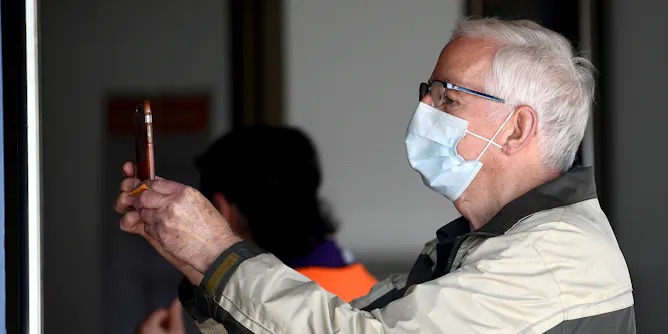
Models show at least 60% of the population would need to use the COVID-19 tracer app to have enough data to control an outbreak without a lockdown – but only about 10% of New Zealand adults scan in.
Articles on COVID-19 pandemic
Displaying 141 - 160 of 362 articles
How you respond to a risk depends on how you weigh the costs and benefits of an action. The problem is you’re not just a logical computer, and emotions bias your interpretation of the facts.

Many interactions between teacher and student may appear insignificant or random, but they are important for learning and building relationships.
How does a writer, former political detainee and health practitioner confront the prospect of the collapse of his country’s health system?

Online learning during the pandemic gives students more autonomy. For high-achieving students, especially those in academically mixed classes, that’s an advantage, whereas others might struggle.

We need to understand the student activities and movements that are spreading the Delta variant of the virus in the latest Brisbane outbreak.
International student demand for places in Australia has fallen by a third over the course of the pandemic, while for our key competitors demand has remained stable or even increased.

Demand for professional development has grown but the pandemic has forced it online. Decades of evidence from online education tells us how to ensure professional development remains effective.
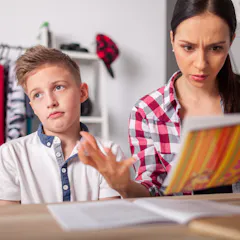
While parents in lockdown might have gained a greater appreciation of what it takes to teach children at home, they haven’t been ‘home schooling’. But 5 tips drawn from home schooling may help them.

People living outside our big cities face many obstacles to going to university, but the innovations during lockdowns have opened a door to permanently improving their access and experience of study.
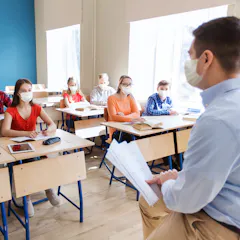
Effective education depends on good communication and relationships, but face masks hinder visual and verbal cues and can be unsettling. So how can teachers and students overcome these issues?

Digital technology and COVID-19 have transformed the ways universities are delivering courses. But some are taking a minimalist low-cost approach, while others are aiming higher.

Universities can best prepare students by teaching them in ways that reflect the realities of how professionals and the wider community now operate.
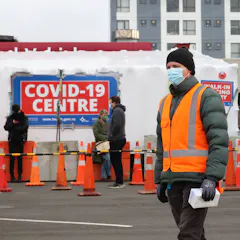
New Zealand health authorities were quick to react to the threat of a COVID-19 outbreak and managed to avoid community transmission, but the unique nature of how the virus spreads also played a role.
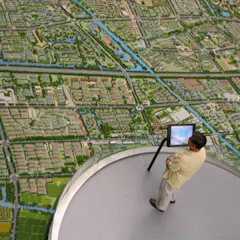
The pandemic has accelerated some urban trends and reversed others, while focusing attention on the vulnerabilities of cities. The old planning certainties will have to be revisited.
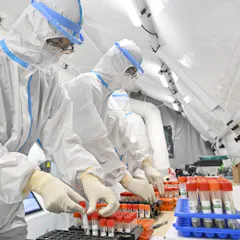
There are several earlier examples of people studying infectious pathogens being infected in the laboratory, even while working under strict biosafety conditions.
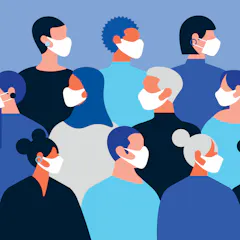
The course offers a model for teaching about complex problems, and underlines the critical role of university learning, research and outreach in understanding and addressing them.
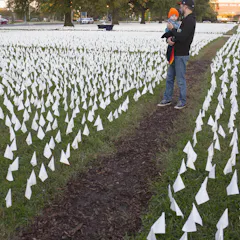
Record-keepers have a pretty good sense of how many people have died. But figuring out the cause of those deaths is a lot trickier – and that’s why reasonable modelers can disagree.
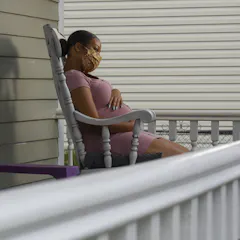
Pregnant women’s experiences can affect their babies’ health, even into adulthood. Researchers know societywide stresses can lead to these long-term consequences – and the pandemic likely fits the bill.

The trans-Tasman travel bubble has come to a temporary regional halt three times now, highlighting the challenges in tracking the risk of an outbreak across jurisdictions with different systems.
Top contributors
-

Professor in Applied Mathematics, University of Canterbury
-
Professor of Public Health, University of Otago
-
Adjunct professor, Te Herenga Waka — Victoria University of Wellington
-
Associate professor, University of Canterbury
-
Professor of Public Health, University of Otago
-
Research assistant, University of Auckland, Waipapa Taumata Rau
-
Research Associate Professor of Public Health, University of Otago
-
Senior Lecturer, University of Auckland, Waipapa Taumata Rau
-
Professor and Director, Mitchell Institute, Victoria University
-
Associate Professor, Epidemiology and Environmental Health, University of Canterbury
-
Assistant Professor of History, University of Pittsburgh
-
University Professor of Sociology, Syracuse University
-
Professor of Biostatistics and Epidemiology, Adelaide University
-
Research scientist in mathematical modelling, Manaaki Whenua - Landcare Research
-
Research scientist, Manaaki Whenua - Landcare Research