

International students have been admirably persistent in studying online for more than a year. But as other countries open their doors, Australia risks losing them if it fails to show they are wanted.
Articles on COVID-19 pandemic
Displaying 161 - 180 of 362 articles
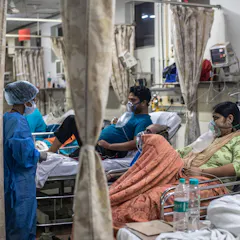
COVID-19 has overwhelmed India’s hospitals partly because decades of under-investment in public health have left the country with one of the most privatised health systems in the world.
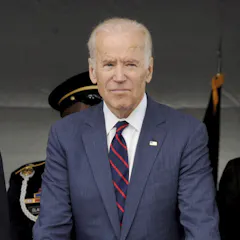
With the country’s vaccine rollout succeeding where pandemic management failed, and Biden moving boldly on climate and immigration, his presidency is off to a promising start.
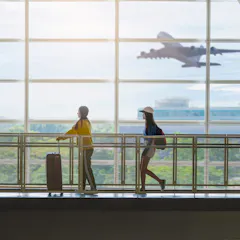
Our current quarantine capacity would take six months to handle the return of 150,000 existing students, but 70,000 new students every six months would also be needed to halt the fall in enrolments.
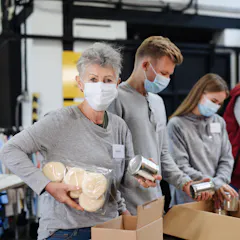
At one time more than one in three Australians did volunteer work. Only one in five are now doing so, but there are some positive signs as volunteering organisations adapt to changing times.

Another city, another snap lockdown, and another round of asking whether it will successfully prevent disaster this time, or whether the coronavirus has already spread undetected through the community.

Although most border workers are now vaccinated, regular testing remains essential to guard against the risk of a major outbreak in the community.
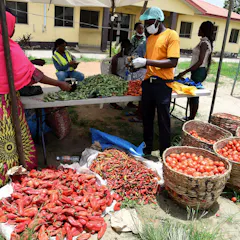
To overcome food insecurity, especially in a pandemic, Nigeria’s emergency preparedness requires a total overhaul of it’s agri-food supply chain.
New Zealand and Australia both had COVID-19 outbreaks originating from border facilities, but as frontline border workers are prioritised for vaccination, the risk of this happening again is lower.

Treating online education as a cheap alternative to lectures will be a mistake. At first universities will probably have to allow more preparation time and invest more in training and technology.

History tells us that the end of pandemics are rarely – if ever – neat, uncomplicated, or even easy to date.
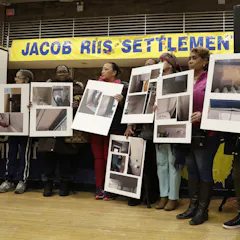
Building retrofits are no joke: They make dwellings healthier and more energy-efficient. And when they’re done in low-income housing, they also reduce inequality.

JobKeeper and the COVID Supplement to JobSeeker benefits will be gone in a week. The combined effect will be to halve some recipients’ incomes and the rent they can afford.
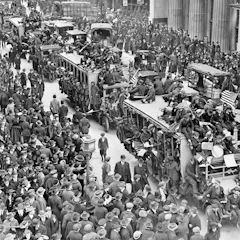
Americans were tired of social distancing and mask-wearing. At the first hint the virus was receding, people pushed to get life back to normal. Unfortunately another surge of the disease followed.

Many people prefer the status quo as they struggle to imagine the alternatives. The pandemic has been the catalyst for urban experiments that have opened our eyes to new possibilities.

Bike-share programs don’t just cater for residents. When tourists use them too, that greatly increases the value the whole community gets from these bikes.

Food insecurity affected many students even before the pandemic hit, with international students the worst hit. But students and universities have shown a lot can be done to end the problem.

Even a short walk in nature can relieve mental fatigue and anxiety. With most of us living in cities, we need urban parks more than ever to take care of our well-being during the pandemic.

Rolling out vaccines, sticking with public health measures, and keeping misinformation and complacency in check. These are just some of what to expect as the pandemic enters its second year.

The US was not ready for the coronavirus pandemic in 2020. What can public health leaders and policymakers do to make sure we don’t face another winter of rampant disease?
Top contributors
-

Professor in Applied Mathematics, University of Canterbury
-
Professor of Public Health, University of Otago
-
Adjunct professor, Te Herenga Waka — Victoria University of Wellington
-
Associate professor, University of Canterbury
-
Professor of Public Health, University of Otago
-
Research assistant, University of Auckland, Waipapa Taumata Rau
-
Research Associate Professor of Public Health, University of Otago
-
Senior Lecturer, University of Auckland, Waipapa Taumata Rau
-
Professor and Director, Mitchell Institute, Victoria University
-
Associate Professor, Epidemiology and Environmental Health, University of Canterbury
-
Assistant Professor of History, University of Pittsburgh
-
University Professor of Sociology, Syracuse University
-
Professor of Biostatistics and Epidemiology, Adelaide University
-
Research scientist in mathematical modelling, Manaaki Whenua - Landcare Research
-
Research scientist, Manaaki Whenua - Landcare Research