
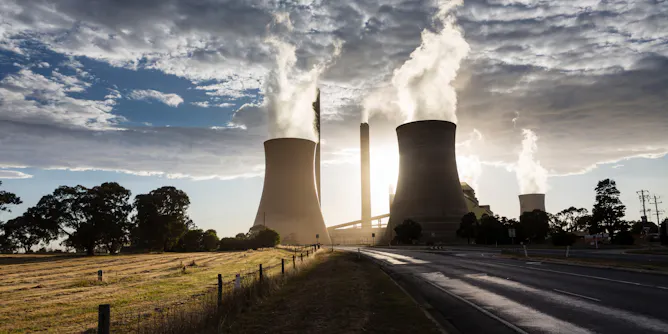
Some promising proposals have been put forward, but most suffer either from a lack of ambition or a lack of participation from key countries.
Articles on COP26
Displaying 81 - 100 of 278 articles
Uncertainty about carbon market rules will be problematic for New Zealand, given its reliance on overseas carbon trading to meet its new climate pledge.

Only in coming years will we know if COP26 was a real game-changer for the planet, or just empty promises and spin.

The Morrison government’s great refusal to take action on climate may come back to haunt Australia when we seek the cooperation of other countries.
Mainstream reporters not familiar with the topic may spin the summit as a huge success or devastating failure.
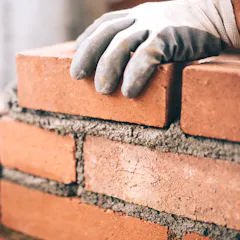
Embodied emissions in buildings could be a hidden setback for carbon reduction targets.
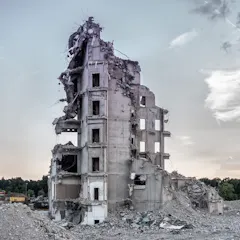
Embodied carbon - carbon produced during a building’s construction - urgently needs reducing, and reusing buildings could help.
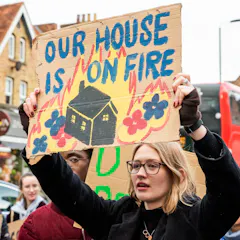
Experts explain the latest evidence on eco-anxiety in The Conversation Weekly.
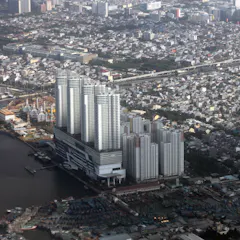
Multiple efforts to tackling the twin issues of sinking land surface and rising sea level are urgently needed.
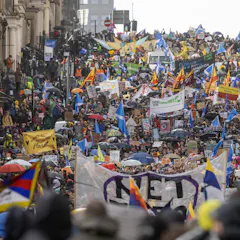
We cannot claim that inducing others to reduce emissions gives us a moral license to emit in their place.
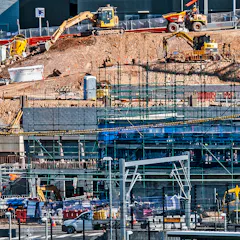
We must take significant and rapid action now, to ensure cities play their part in limiting dangerous global warming and withstand the climate challenges ahead.
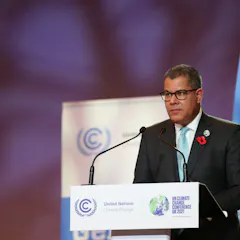
In Paris, the French drafted ambitious texts and dared the biggest emitters to oppose it. In Glasgow, it’s the least developed countries which will have to do the most work.

Heading into the final days of the Glasgow summit, the goal of limiting heating below 2°C looks attainable, and 1.5°C is still within reach. There is still room for hope.
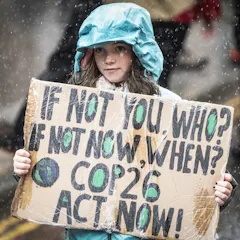
Our study shows that for most young people, worrying about climate change appears to be constructive and not associated with general mental health difficulties.

One-tenth of global emissions result from the production and supply of building materials – and the construction process itself.

Big corporations are under pressure to take real action on emissions or risk the wrath of protesters, investors and even shareholders.

Many of the temperatures presently being recorded in Africa, and those projected in the next decade, are already close to the limits of human survival, or “liveability”.

Misinformation about climate change has been spreading in other ways, and social media companies have been reluctant to stop it.
Some pollution is locked in for years to come, and there are no simple solutions.
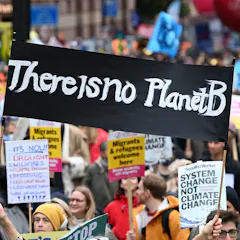
A new climate projection found Glasgow pledges leave the world off-track for limiting warming to 1.5°C. What needs to happen in the final days of frantic COP26 negotiations to close the ambition gap?
Top contributors
-

Professorial Fellow, University of Canberra
-
Environment + Energy Editor and Host of the Climate Fight podcast series, The Conversation
-
Research Associate, Institute for Climate Risk and Response, UNSW
-
Professor of Physical Climate Change; Director of the Priestley Centre for Climate Futures, University of Leeds
-
Professor of Practice in Climate Policy, University of Oxford
-
Visiting Fellow, Crawford School of Public Policy, Australian National University
-
Associate Professor of Law, University of Waikato
-
Head of Atmospheric, Oceanic and Planetary Physics, University of Oxford
-
Professor of International Relations, The University of Queensland
-
Professor, School of Economics, The University of Queensland
-
Professor Emerita, Department of Biological Sciences, Macquarie University
-
Professor of Political Philosophy, UNSW
-
Senior Research Fellow, School of Geography, Earth and Atmospheric Sciences, The University of Melbourne
-
Assistant Professor, Université Mohammed VI Polytechnique
-
Adjunct Professor of Energy, Murdoch University