
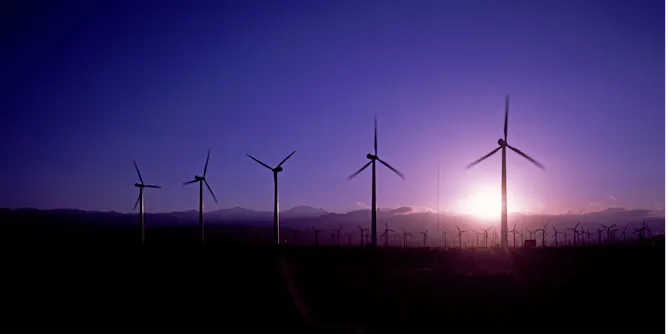
Providing government subsidies for emerging clean technologies could unlock their transformative potential.
Articles on COP26
Displaying 21 - 40 of 278 articles

What should climate scientists do in the face of ever rising emissions? They could continue providing more evidence, join climate activists – or stop work in protest against government inaction.
Oil and gas have been on a roller coaster these past two years – here’s why.

On the tail of yet another year of climate disasters, 2022 ushers in the final version of the Paris Agreement, making it a functioning global climate treaty. But it alone can’t save us.

Two Bangladeshi academics spoke to delegates at the Glasgow COP.

A scrapbook is a blank canvas upon which any activist can paint their story.
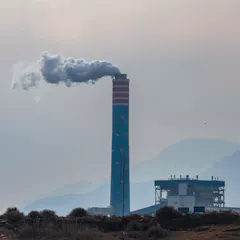
The dust has settled on COP26 and one of the summit’s few achievements looks decidedly less impressive.

Joining a protest doesn’t just help attract others to supporting important causes - it comes with personal and psychological benefits too.

A review of Australia’s illegal logging laws tests the Morrison government’s commitment to halting global forest loss.
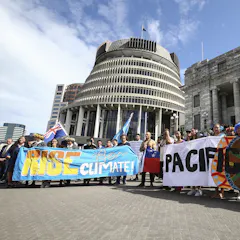
In several countries, court rulings have forced governments to make stronger cuts to emissions. But New Zealand courts have so far stayed clear of imposing legal steps, calling for regulation instead.

Specialist reporters are important, but climate coverage can no longer be left to them. Here’s what New Zealand journalists say about why climate should be part of every newsroom and every beat.
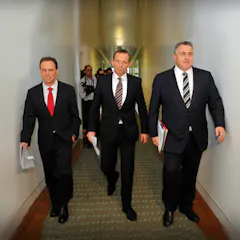
Greg Hunt is best known as Australia’s health minister. But before that he spent years thinking about mechanisms to get emissions down – and if elected, Labor plans to road test the one he introduced.
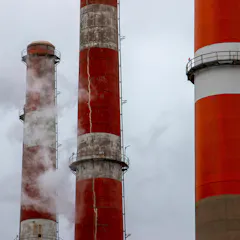
Soaking up and storing CO₂ is not just a question of technology.
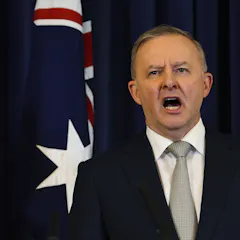
Labor’s 2030 emission reduction target of 43% is more ambitious than the Coalition, but still falls well below what the science says is needed.
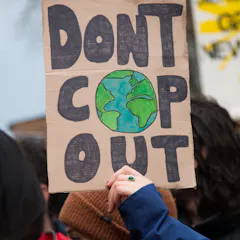
Strengthen commitments to reduce emissions by 2030, redouble efforts to raise climate finance and junk fossil fuel subsidies.

By introducing tactics of direct action and digital mobilisation, Fridays for Future and Extinction Rebellion have renewed the climate movement and accelerated climate action.

COP26 saw progress and announcements, but the commitments made by states — in addition to having to pass the test of implementation —fall far short of what the science requires.
The goal of the Glasgow Financial Alliance for Net Zero, or GFANZ, is to bring together the financial sector to accelerate the transition to a net-zero economy. Here’s why it might actually work.

It’s hypocritical for retailers to make carbon pledges with one hand and continue pushing consumerism with the other.

The ocean has been buffering us from the impacts of climate change, but it is reaching the limit of this capacity. Integrating ocean and climate policy will be crucial.
Top contributors
-

Professorial Fellow, University of Canberra
-
Environment + Energy Editor and Host of the Climate Fight podcast series, The Conversation
-
Research Associate, Institute for Climate Risk and Response, UNSW
-
Professor of Physical Climate Change; Director of the Priestley Centre for Climate Futures, University of Leeds
-
Professor of Practice in Climate Policy, University of Oxford
-
Visiting Fellow, Crawford School of Public Policy, Australian National University
-
Associate Professor of Law, University of Waikato
-
Head of Atmospheric, Oceanic and Planetary Physics, University of Oxford
-
Professor of International Relations, The University of Queensland
-
Professor, School of Economics, The University of Queensland
-
Professor Emerita, Department of Biological Sciences, Macquarie University
-
Professor of Political Philosophy, UNSW
-
Senior Research Fellow, School of Geography, Earth and Atmospheric Sciences, The University of Melbourne
-
Assistant Professor, Université Mohammed VI Polytechnique
-
Adjunct Professor of Energy, Murdoch University