

Beyond the monetary value of carbon credits sits something more complex: every restoration project involves trade-offs, and somebody carries them.
Articles on Climate finance
Displaying 1 - 20 of 135 articles

Pacific leaders are seeking support for regional climate-finance options that give communities better access and stronger input into global decision making.

Climate finance should not be separated from development funding.
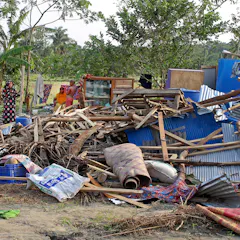
Most climate aid arrives after the disaster. A handful of countries are proving it doesn’t have to.

Africa has a chance to host a climate conference that makes an impact.
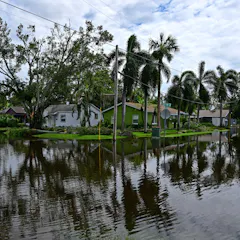
Florida’s current approach to insurance is forcing those who can least afford it to bear the cost of the climate crisis. But different approaches are available.

Mauritius is securing climate funding, but weak oversight and poor coordination risk leaving vital adaptation money mismanaged.

Behind the large numbers lies a mix of financial instruments that require Global South countries to repay government and private sector investors with interest.
Wealthy nations will need to help fund clean energy, green industrial growth and mineral processing.
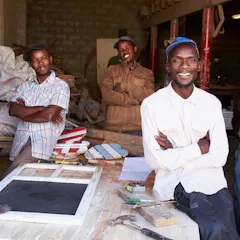
When up to 3.5 million small businesses go green, this will benefit South Africa’s environment and help the businesses survive in a changing climate.

While Africa and Latin America have dominated these deals, Asia has lagged behind with just 13% of total global ‘debt-for-nature’ swaps.
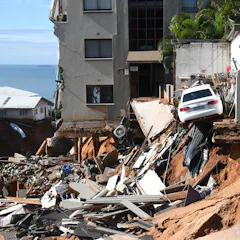
South Africa needs almost US$15 billion over a decade just to reach a basic level of climate adaptation, that protects water, food, health and infrastructure.

Africa holds key green energy minerals but exports them raw. If the continent had its own Green Bank, it could finance local manufacturing and green industry.
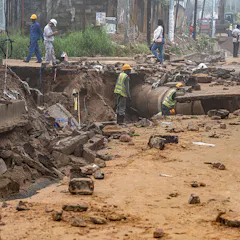
The most important thing to do is to lower the cost of capital for African countries.

It began with red paint at the UK Treasury, and ended in one of the most successful international climate initiatives.

If the benefit of long-term social projects to tackle climate change is heavily discounted, the investment appears less attractive.

Four essentials are crucial for establishing scientifically credible nature markets.

Most African climate-related financial policies remain voluntary, leaving climate risk as something to consider rather than a firm requirement.

Wealthy countries promised billions of dollars to help developing nations adapt to climate change, but the result rests on a shaky foundation of fuzzy accounting.
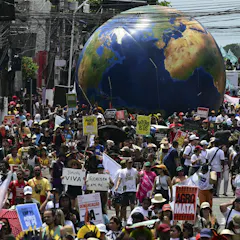
African countries need funding, skilled staff, and technology to make adaptation happen.
Top contributors
-

Professor of Practice in Climate Policy, University of Oxford
-
Professor of Political Science, UCL
-
Professor of Law, The University of Melbourne
-
Professor of International Relations, The University of Queensland
-
Professor of Earth System Science, UCL
-
PhD Candidate in Climate Justice Policy, University of Warwick
-
Research Fellow, Oxford Net Zero, Institute for Science, Innovation and Society (InSIS), University of Oxford
-
Environment + Energy Editor and Host of the Climate Fight podcast series, The Conversation
-
Senior Lecturer in Climate Justice, University of Bristol
-
Research Associate, Institute for Climate Risk and Response, UNSW
-
Director, Columbia Center on Sustainable Investment, Columbia University
-
Senior Lecturer in Social Sciences and Public Policy, Auckland University of Technology
-
Research fellow, Australian National University
-
Lecturer in International Development, UCL
-
Professor of Infrastructure Engineering and International Development, UCL