

Lack of competition regulation created outright dominance of a few players in some industries.
Articles on Consumer law
Displaying 21 - 40 of 43 articles

Builders compete for customers by touting the features of their homes. Some builders promote ‘six-star’ home energy ratings in ways that could mislead consumers and breach Australian Consumer Law.

At the moment, buying a house with a “history” falls under the “buyer beware” provision. But changes to Victorian law shift the onus to estate agents to disclose “stigmatised” property.

Plant-based meats are disrupting the food market and some companies.
Insights from behavioural (and traditional) economics help explain why discounting – both real and fake – is such an effective marketing ploy.
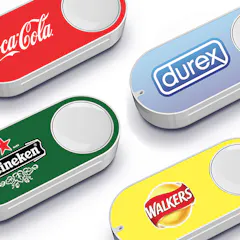
Dash Buttons have been ruled illegal under Germany’s consumer rights law. They might also contravene Australian consumer law.

Australian businesses will not be forced to comply with or fall foul of the new data regulation merely because they maintain websites accessible in the EU.

The digital world moves fast, and when it comes to digital products, Australia’s consumer laws haven’t kept up.
The ACCC’s inquiry into digital platforms should make it easier for users to identify advertising on Google.
Complaints about the NBN are growing quickly, but there’s limited options for recourse under Australian consumer law.

Do you know where your beer was brewed?
Many “imported beers” are actually made locally. Should we have clearer labelling for the origins of beer?

Business Briefing: the ‘get rich quick scheme’ influencing what you buy
The Conversation19.6 MB (download)
Even though online influencers might not be overtly endorsing a product, advertisers will still pay a lot to have something featured, even subtly, in a post.

The rise of the middle class in Africa is fuelling consumer economies and protection policies. But they tend to be disconnected from sustainability issues.

‘Internet of Things’ devices come with many risks, but current laws may not protect us. Until they do, it may be best to steer clear.

The Productivity Commission’s report on data availability and use is disappointing for consumers, who won’t be able to stop firms collecting their data or challenge automated decisions made using it.

Australians’ confidence in charities would be strengthened if any compliance action taken against them was made public.

Customers who make purchases under pressure don’t use the usual 10-day cooling-off period given under law, new research finds.

Most Australians do not understand how the Google search engine works and what is paid or free content in any search results.

New standards for free-range eggs will limit stocking densities and mean hens must have access to outdoors.

Those annoying fees at the end of your online booking? They should be disclosed early.
Top contributors
-

Professor of Law (consumer protections and credit law), The University of Melbourne
-
Associate Professor, Faculty of Law & Justice; Lead, UNSW Public Interest Law & Tech Initiative, UNSW
-
Professor of Law, University of Newcastle
-
Senior Lecturer in Law, Adelaide University
-
Director, Master of Business Administration Program (MBA); Co-Director, Better Consumption Lab, Deakin University
-
Senior Lecturer, Department Chair, Swinburne Law School, Swinburne University of Technology
-
Director of Sydney Executive Plus, Business School, University of Sydney
-
Adjunct Industry Fellow, Centre for Social Impact, Swinburne University of Technology
-
Senior Lecturer in Law
-
Associate Professor of Food Politics and Policy, The University of Melbourne
-
Director of UWA Centre for Software Practice, The University of Western Australia
-
Professor specialising in Internet law, Bond University
-
Professor of Information Technology and Organisation, University of Sydney
-
Associate Professor, Melbourne Law School, The University of Melbourne
-
Special Assistant to the Vice-Chancellor of the Nelson Mandela University, Nelson Mandela University