

AI can work for you while you sleep. But if your chatbot or AI agent gets it wrong, you could be the one who pays the price.
Articles on Consumer law
Displaying 1 - 20 of 43 articles
A legal expert explains the allegations against Amazon Australia and US – and why the new case is already making global headlines.

Two experts explain what the new Virgin rules mean, the options for chasing a refund – and how to make it simpler for consumers in future.

Fashion brands promise sustainability. But a formal investigation into Lululemon reveals a deeper problem: green claims that no one is required to prove.
More than 8 million customers could have a stake in this upcoming court case. The clock is now ticking for them to decide if they want to be involved, or opt out.
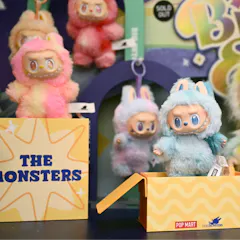
Blind boxes rely on the same mechanisms of seduction as loot boxes in video games – and so demand the same scrutiny.

Before you box up your unwanted presents and head to the shops, here’s what Australia’s consumer law says about asking for a return, exchange or refund.

The consumer watchdog has warned retailers it will be on the lookout for a range of misleading sales tactics, from fake countdown clocks to hard-to-read fine print.

None of the analyzed bags of lump charcoal gave buyers as much effective grilling fuel as their labels promised.

In Australia, clothing doesn’t have to carry a label with its fibre contents. That means we don’t always know how flammable a garment might be.

Class actions are a growing trend in the ways consumers access justice. That’s important, as many avenues for consumer protection are too difficult for individuals to pursue.

Woolworths and Coles face potentially massive fines if they are found guilty of misleading shoppers over the price of hundreds of products.

The High Court has found that consumers can be protected even if they haven’t fully read their terms and even if they were outside of Australia when they accepted them.
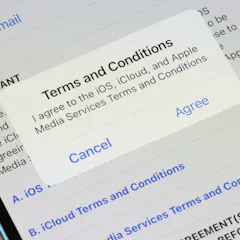
Despite our best intentions, most of us rarely read the fine print and simply agree to terms and conditions while ignoring the consequences.

Whether or not Bill C-27 moves companies away from deceptive design in apps and websites depends on how, and if, the Canadian government holds companies accountable for their actions.

Younger people aged 18 to 28 were more likely to be negatively impacted by manipulative designs on websites and apps.
Companies are allowed to track users as much as they like — as long as they spell it out in the fine print. But a ground-breaking Australian legal judgement should give them pause.
To deter Google and other big tech companies from misleading users about data collection, the Federal Court should impose heavy fines.
A new study suggests the Commerce Commission needs to get tougher with New Zealand businesses over their general terms and conditions.

Australian needs a ‘general safety provision’ that obliges firms to be proactive, not reactive, in ensuring they supply safe consumer products.
Top contributors
-

Professor of Law (consumer protections and credit law), The University of Melbourne
-
Associate Professor, Faculty of Law & Justice; Lead, UNSW Public Interest Law & Tech Initiative, UNSW
-
Professor of Law, University of Newcastle
-
Senior Lecturer in Law, Adelaide University
-
Director, Master of Business Administration Program (MBA); Co-Director, Better Consumption Lab, Deakin University
-
Senior Lecturer, Department Chair, Swinburne Law School, Swinburne University of Technology
-
Director of Sydney Executive Plus, Business School, University of Sydney
-
Adjunct Industry Fellow, Centre for Social Impact, Swinburne University of Technology
-
Senior Lecturer in Law
-
Associate Professor of Food Politics and Policy, The University of Melbourne
-
Director of UWA Centre for Software Practice, The University of Western Australia
-
Professor specialising in Internet law, Bond University
-
Professor of Information Technology and Organisation, University of Sydney
-
Associate Professor, Melbourne Law School, The University of Melbourne
-
Special Assistant to the Vice-Chancellor of the Nelson Mandela University, Nelson Mandela University