

New research suggests municipalities could improve recycling and composting rates by changing how often they collect garbage and organics.
Articles on Compost
Displaying 1 - 20 of 24 articles

Around 40 to 50 times more energy goes into producing, transporting and selling food than can be recovered from recycling it.
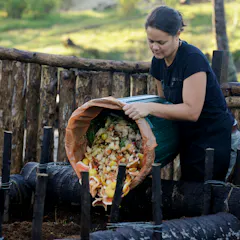
Is your compost a veritable Vesuvius of foul-smelling, putrescible plant waste? You might be doing everything wrong. Fear not; you can learn from your mistakes.
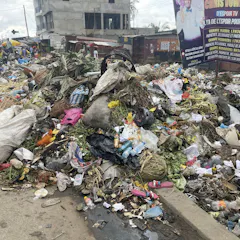
Only 43% of Cameroon’s urban residents have their garbage removed from their homes. Other garbage ends up dumped, burned or placed in overflowing communal bins.
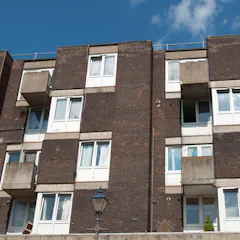
So many cities with densely populated communities living in flats without gardens struggle to find sustainable solutions to food waste.
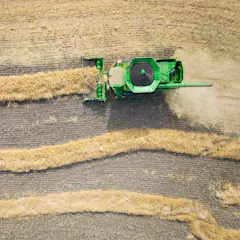
Without swift and effective action, composting may become an environmental crisis, rather than a solution.
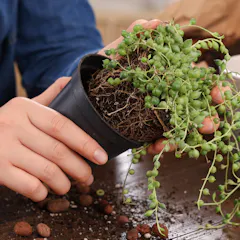
Hidden Peat, a new campaign from The Wildlife Trusts, encourages people to look out for peat-free alternatives and support their wider use.
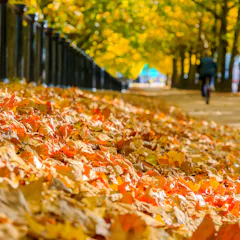
Garden leaves make good compost, but street leaves are too polluted.
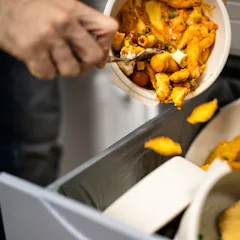
A household survey has revealed three distinct patterns of consumer behaviour around food waste.
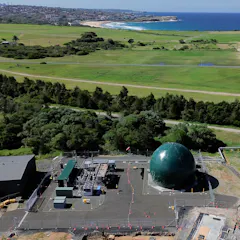
Sydney’s 14 wastewater treatment plants could be modified to also accept food waste, research shows. The ‘anaerobic digestion’ process would produce energy as well as nutrients for reuse.

Canada is seen as leading the way in banning single-use plastics. But how comprehensive are these actions, and how realistic is the dream of a zero-waste future?
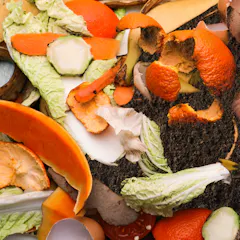
When food scraps and garden clippings are sent to landfill, it’s not just a waste of nutrients and water. The rotting organic matter trapped in landfill produces methane, a potent greenhouse gas.

Humans generate a lot of trash, but there are cheaper and safer ways to handle it than loading it on rockets.
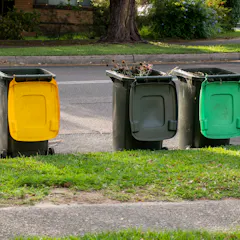
Most food waste still goes into red bins of mixed waste bound for landfill. It’s using up precious landfill space and harming the environment when it could produce valuable compost and biogas instead.
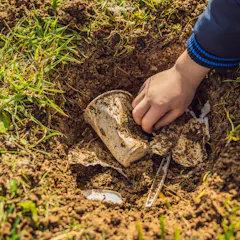
Biodegradable plastics have great potential to replace problematic plastics that don’t break down. But we, and the environment, need greater clarity on how to dispose of them.
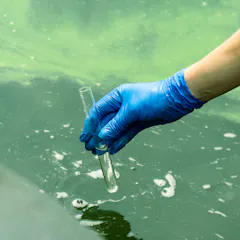
Getting involved in citizen science projects can be a great way to have a positive impact on the world.
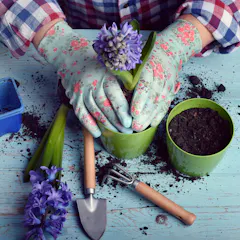
What can gardeners use that isn’t so bad for the climate?
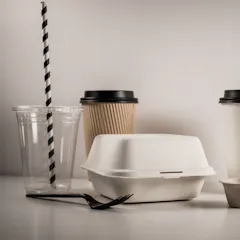
Plastic products that claim to be ‘compostable’ aren’t great either.
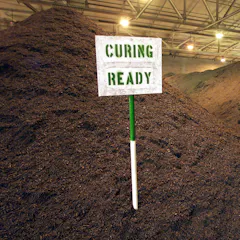
Turning food scraps and yard trimmings into compost improves soil, making it easier for people to grow their own food. City composting programs spread those benefits more widely.

Every year the US burns more than 34 million tons of garbage in incinerators. These plants are major pollution sources, and most are clustered in disadvantaged communities.
Top contributors
-

Associate Professor, Centre for Creative and Cultural Research, Faculty of Arts and Design, University of Canberra
-
Research Scientist and Lecturer, Institute for Science, Technology, and Public Policy. Bush School of Government and Public Service, Texas A&M University
-
Research Director at the Institute for Sustainable Futures, University of Technology Sydney
-
Associate Professor in Hospitality, Food and Tourism Management, University of Guelph
-
Assistant Professor of Animal and Veterinary Sciences, University of Maine
-
Research Fellow, School of Agriculture and Food Sciences, The University of Queensland
-
Associate Professor in Materials and Environmental Innovation, University of Portsmouth
-
Senior Lecturer, School of Earth Sciences, University of Bristol
-
Associate Professor and Research Director, Institute for Sustainable Futures, University of Technology Sydney
-
Research Fellow at BehaviourWorks Australia, Monash Sustainable Development Institute, Monash University
-
Professor of Chemical Engineering, The University of Queensland
-
Associate Professor of Microbiology, UMass Amherst
-
Professor of Global Environmental Politics, University of California, Berkeley
-
Senior Research Fellow, BehaviourWorks Australia, Monash University
-
Associate Professor, School of Sciences, RMIT University