

New research suggests municipalities could improve recycling and composting rates by changing how often they collect garbage and organics.
Articles on Zero waste
Displaying 1 - 20 of 25 articles
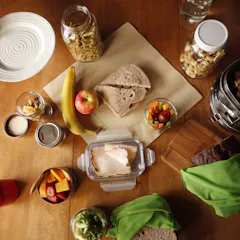
Any large-scale policy affecting schools, like Montréal’s ambitious transition to zero waste, needs to reflect that success relies on the labour and care of students and education workers.
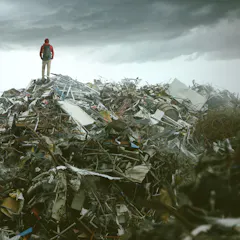
Waste, as a thing, an idea, a problem, has always been wholly determined from a human standpoint.

Canada is seen as leading the way in banning single-use plastics. But how comprehensive are these actions, and how realistic is the dream of a zero-waste future?

Humans generate a lot of trash, but there are cheaper and safer ways to handle it than loading it on rockets.
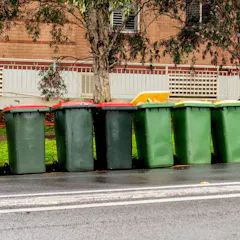
Apartments have lower waste recycling rates than houses, which means the growing numbers of apartment dwellers could add to Australia’s waste management crisis. But there are solutions to the problem.
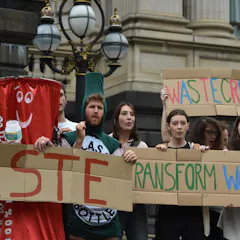
Experimenting with low-waste living shows it’s not easy being green. But householders can help policymakers design better waste management systems.
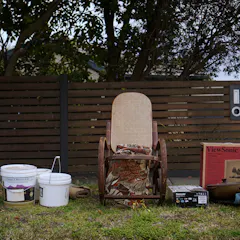
Not everything needs to be Marie Kondo-ed just because it doesn’t ‘spark joy’. Ask yourself if there’s a less wasteful option.
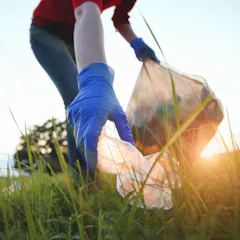
Making it easier for people to refill containers is key to slowing the tide of packaging waste.

The inside of story of a pioneering programme to convert nitrogen into microalgae that can generate sustainable animal feed.
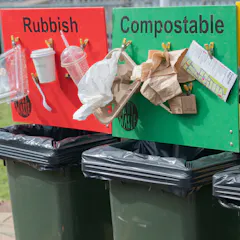
New Zealand plans to shift to a circular economy but planning is split between agencies, is inconsistent and and contradictory, and it perpetuates a business-as-usual approach.
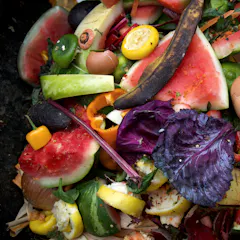
Wasting food feeds climate change but relatively small changes can make a big difference. Here are 6 to try.
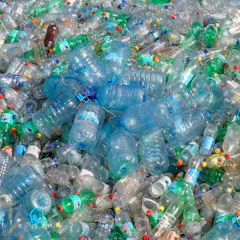
Life-cycle assessments of food packaging often omit the impact and possible toxicity of plastics leaking into the environment. Excluding these factors gives plastics an unjustified advantage.
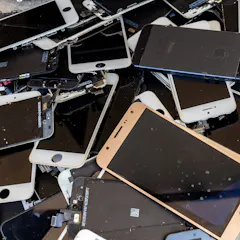
Right to Repair laws make it easier for consumers, repairers and tinkerers to fix their broken goods. It’s an attractive alternative to the dangers of overflowing e-waste.
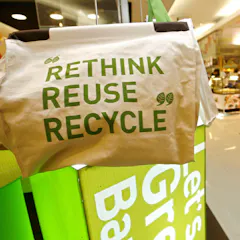
A new business is skipping recycling in favour of returning, washing and reusing sturdy containers for common groceries.
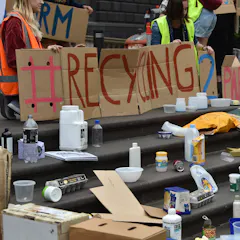
Australia’s recycling woes belong to everyone, from households to government to business. It’s time to stop pointing fingers and get to work on a solution.
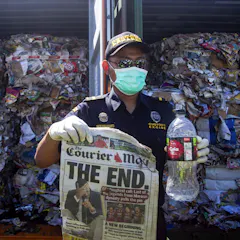
Australia doesn’t want to deal with its own recycling waste, so why do we think other countries should do it for us?

Every year the US burns more than 34 million tons of garbage in incinerators. These plants are major pollution sources, and most are clustered in disadvantaged communities.
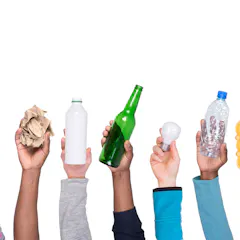
Recycling is a messy system at the moment. Here’s how we can clean up our act.
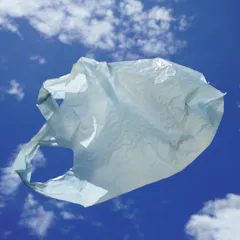
New types of biodegradable or compostable plastic products seem to offer an alternative to conventional plastics. But they may be no better for the environment.
Top contributors
-

Lecturer, School of Life and Environmental Sciences, Deakin University
-
Senior Associate at the Institute of Governance and Policy Studies, Te Herenga Waka — Victoria University of Wellington
-
Senior Research Fellow, BehaviourWorks Australia, Monash University
-
Professor emeritus, Auckland University of Technology
-
Visiting Scholar: School of Architecture and School of Engineering, University of Technology Sydney
-
Senior Lecturer, School of Art & Design, Australian National University
-
ARC DECRA Senior Research Fellow in Environmental Sociology, RMIT University
-
Associate Professor, Griffith University
-
Research Fellow, BehaviourWorks Australia, Monash University
-
Professor of Economics, The University of Queensland
-
Professor of Global Environmental Politics, University of California, Berkeley
-
Professor of Law, Griffith University, Griffith University
-
Research Fellow, Nottingham Trent University
-
Senior Research Consultant, Institute for Sustainable Futures, University of Technology Sydney
-
Professor of Economic Geography, Institute for Culture and Society, Western Sydney University