

Communications networks are a crucial part of any disaster planning. Resilient communications systems determine how effective emergency responses can be.
Articles on Communication
Displaying 201 - 220 of 322 articles

The human scream – a response we share with our primate relatives – is more nuanced than you might think.

Interruptions are inevitable – but how they happen matters.

Will there ever be an electronic equivalent of Martin Luther King Jr.’s ‘Letter from Birmingham Jail’ or Émile Zola’s ‘J’Accuse!’?

Social media make it easier to push information out quickly during disasters, but also create challenges for public information officers, who have to judge which reports are credible enough to share.

Whether it frustrates or motivates your opponent can depend on the situation.

Linguists have a lot of largely untested theories. Borrowing a tool from ecology, researchers built a model that didn’t look for one worldwide explanation.

Specialists offer a series of tips on how parents of children with autism spectrum disorder can help their children communicate with more people and in different places.

We haven’t heard anything from alien civilisations, but perhaps they’ve heard us.

For many people, the gentle blinks of fireflies flashing are a favorite part of summer evenings. An entomologist explains some lightning bug basics.

Instead of worrying that emoji is replacing competent language use, we can celebrate that emoji are creating a richer form of online communication that returns the features of gesture to language.

Successful communication is about understanding feelings.

To solve our global problems we must learn to think beyond our tribes.
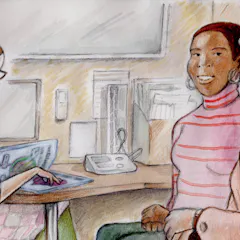
How intrusive can you be when helping someone speak to a doctor?

Research suggests that parents and babies communicate in remarkably similar ways despite striking variation in cultural practices.

Connecting with an audience in a productive way can mean first figuring out what they think, feel and believe before you start sharing your message.
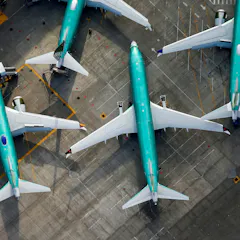
Boeing’s response to the crisis over its 737 Max planes has made the company seem defensive and passive. A crisis management expert explains how Boeing could reclaim the narrative.

If you’re in a competitive environment, be wary of people looking you directly in the eyes.

A century ago, a three-minute call from New York City to San Francisco on a landline cost $500. Today, you can make the same call on a cellphone for a few cents.

To prepare for future Mars missions, scientists collect samples and simulate communications conditions from volcano parks on Earth.
Top contributors
-

Senior Lecturer and Coordinator, Health and Medical Humanities, University of Sydney
-
Senior Research Scientist at the Australian E-Health Research Centre, CSIRO
-
Adjunct professor, professional communication, University of Canberra
-
Director of Behavioral Science & Policy Initiative, Schaeffer Institute of Public Policy & Government Service, USC Price School of Public Policy, USC Dornsife College of Letters, Arts and Sciences
-
Science Communication Researcher, Stellenbosch University
-
Professor of Public Relations, Michigan State University
-
Postdoctoral research fellow, The University of Queensland
-
Senior Lecturer, Australian National Centre for the Public Awareness of Science, Australian National University
-
Professor of Speech Pathology, University of Technology Sydney
-
Professor in Ageing and Health, University of Sydney
-
Associate Professor, Emerging Media Studies, Boston University
-
Quality of life researcher and occupational therapist, The University of Queensland
-
Anatomy & Physiology Lecturer, Charles Sturt University
-
Associate Professor of Organisational Behaviour, Bond Business School, Bond University
-
Associate Professor (hon) at the Centre for Public Awareness of Science, Australian National University