

Communicators must listen to the frustrations, fears and concerns of young people about COVID-19. Then they need to speak to them like human beings, rather than talk at them.
Articles on Communication
Displaying 161 - 180 of 322 articles

Equipping parents with the right information on what to talk about, and how to talk about it, is a key step in addressing challenges to sexual health.

Differentiating between bad jargon and good jargon.
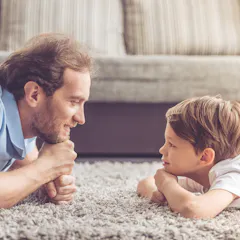
While some adults see implicit meaning in sentences, children can miss it. Two linguists explain how this can happen, and why it matters in communication.

In the age of masks, improve your interactions by using all aspects of human communication.

Research and a recent campaign rally show how political leaders’ rhetoric can shape risk perceptions among their loyal followers.

Because dramatic tension fuels attention, Trump’s words work to generate tension, anxiety and conflict. We need to react with civility, care and calm to undo the cycle of attention and persuasion.
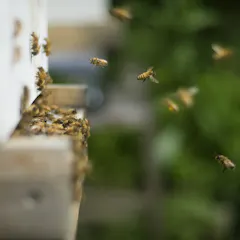
New research suggests individual bees are born with one of two learning styles – either curious or focused. Their genetic tendency has implications for how the hive works together.
Social media is the refined sugar of human communication.
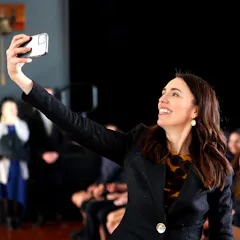
Jacinda Ardern’s command of social media and her celebrity-level engagement rates make her a formidable campaigner in the digital age.
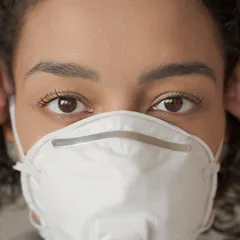
Your mouth might be obscured, but science shows you say a huge amount with your eyes.
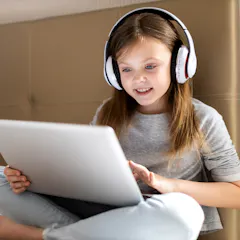
Children need the opportunity to ask questions and have them answered by experts in ways they can understand. A briefing may reduce children’s anxiety and increase their understanding of the pandemic.

Teaching deaf babies sign language improves the success of cochlear implants – and also safeguards their long-term physical and mental health.
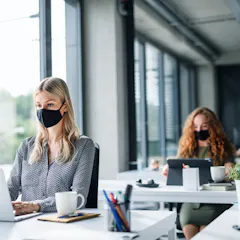
There’s an important distinction between planned and unplanned communication.
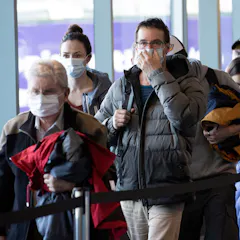
The centralised system that made NZ’s initial pandemic response so successful also explains the recent failures at the border.

As workplace meetings move from offices to living rooms in the wake of the coronavirus pandemic, what people say – absent nonverbal communication – is more important than ever.

Some animals demonstrate an ability for mathematics that reflects a more sophisticated understanding of language.
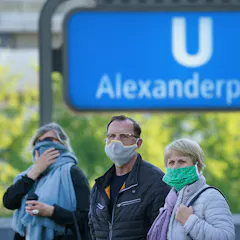
Countries across the globe responded differently to the pandemic, and results show a difference in effectiveness as well.

Since the lockdown went into effect, new signs responding to the government’s directions have been noticeably visible, created by both the government and private businesses.

Lots of research shows why video calls are mentally and emotionally taxing.
Top contributors
-

Senior Lecturer and Coordinator, Health and Medical Humanities, University of Sydney
-
Senior Research Scientist at the Australian E-Health Research Centre, CSIRO
-
Adjunct professor, professional communication, University of Canberra
-
Director of Behavioral Science & Policy Initiative, Schaeffer Institute of Public Policy & Government Service, USC Price School of Public Policy, USC Dornsife College of Letters, Arts and Sciences
-
Science Communication Researcher, Stellenbosch University
-
Professor of Public Relations, Michigan State University
-
Postdoctoral research fellow, The University of Queensland
-
Senior Lecturer, Australian National Centre for the Public Awareness of Science, Australian National University
-
Professor of Speech Pathology, University of Technology Sydney
-
Professor in Ageing and Health, University of Sydney
-
Associate Professor, Emerging Media Studies, Boston University
-
Quality of life researcher and occupational therapist, The University of Queensland
-
Anatomy & Physiology Lecturer, Charles Sturt University
-
Associate Professor of Organisational Behaviour, Bond Business School, Bond University
-
Associate Professor (hon) at the Centre for Public Awareness of Science, Australian National University