
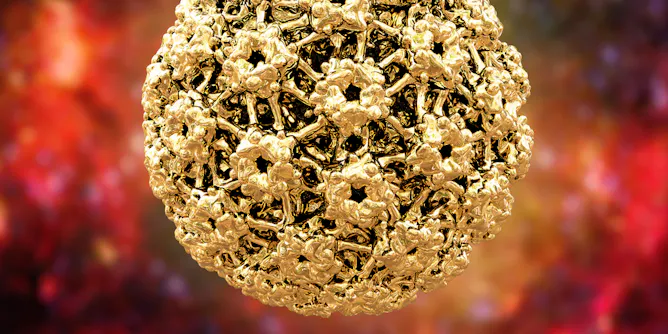
The roll-out of a new screening program for cervical cancer has been delayed, leaving Australian women understandably confused about if or when they need Pap smears. Here’s what they need to know.
Articles on Communication
Displaying 261 - 280 of 322 articles

Reassuring people “not to worry” about public health issues like vaccination or fluoridated water doesn’t work. Nor does telling people “don’t panic”. So, what does?
The world has lost a fantastic statistician at a time when the communication of facts is crucial.
We humans are capable of vocalising many different words in a range of languages. But what is it that gives us a remakable and variable voice?
What gets in the way of a productive conversation about risk communication? Being a normal human, that’s what.
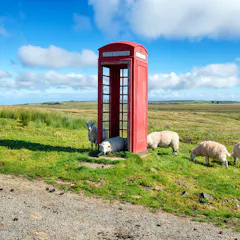
It’s a British icon that is loved by many but used by very, very few – it’s time for an upgrade.
We seem prepared to share our opinions on almost any subject today thanks to social media and other mass communication. But who is really listening?

After such a difficult political experience, empathy is the key not only to feeling connected, but feeling understood – and understanding others.
The Micius satellite will encrypt data using fundamental laws of physics rather than crackable codes.

Flying is known to be the safest mode of transport, but many accidents could be avoided with better communication.
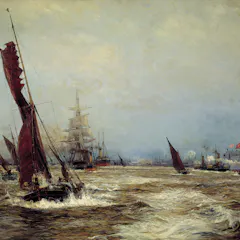
Laying the first telegraphy cable under the Atlantic was the Victorians’ version of the Apollo mission – it caught the imagination of a generation.
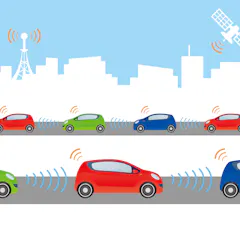
There is a way to improve safety across a rapidly evolving range of advanced mobility technologies and vehicles. The answer is connectivity.

Relationship education programs are meant to strengthen low-income couples, with the idea children would benefit. But focusing on communication skills overlooks what really matters to these Americans.
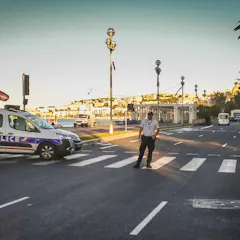
The solution to emergency communications: redundancy, redundancy, redundancy.
A “passion” was once thought of as a love or desire so irresistible as to take one to the threshold of death. What are we to make, then, of a passion for innovation or management consulting? What’s happening to our words?
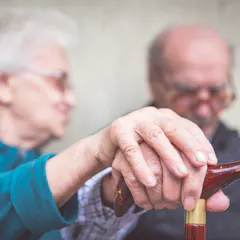
If you care for or know someone with dementia, they’ve probably asked you “what are we doing today?” “who are you?” or “when are we going home?”

Could their affinity for a certain type of television drama help explain why they’re drawn to his rhetoric?

Social media is a great way to spread science information, fast. But the online echo chamber isn’t always good at separating what’s valid from what’s not, and being prolific doesn’t make you right.
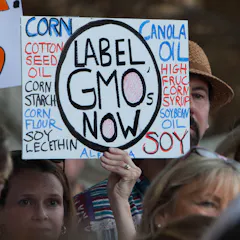
The Senate has just reached an agreement for a national system to label foods with genetically modified ingredients. What do consumers actually want from GM food labeling?

What happens when the face is no longer the primary means of expression?
Top contributors
-

Senior Lecturer and Coordinator, Health and Medical Humanities, University of Sydney
-
Senior Research Scientist at the Australian E-Health Research Centre, CSIRO
-
Adjunct professor, professional communication, University of Canberra
-
Director of Behavioral Science & Policy Initiative, Schaeffer Institute of Public Policy & Government Service, USC Price School of Public Policy, USC Dornsife College of Letters, Arts and Sciences
-
Science Communication Researcher, Stellenbosch University
-
Professor of Public Relations, Michigan State University
-
Postdoctoral research fellow, The University of Queensland
-
Senior Lecturer, Australian National Centre for the Public Awareness of Science, Australian National University
-
Professor of Speech Pathology, University of Technology Sydney
-
Professor in Ageing and Health, University of Sydney
-
Associate Professor, Emerging Media Studies, Boston University
-
Quality of life researcher and occupational therapist, The University of Queensland
-
Anatomy & Physiology Lecturer, Charles Sturt University
-
Associate Professor of Organisational Behaviour, Bond Business School, Bond University
-
Associate Professor (hon) at the Centre for Public Awareness of Science, Australian National University