

Colombians go to the polls on June 19 to elect a new president. The vote comes at a delicate time in the country’s politics.
Articles on Colombia
Displaying 61 - 80 of 177 articles
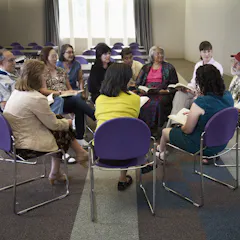
People penalized for violating a group’s shared rules could go on to disrupt its functioning, out of revenge. Two scholars suggest a way of imposing rules.

The outcome of Colombia’s presidential election has major implications for the survival of its historic peace deal, and the prospects of former combatants who have committed to a life without conflict
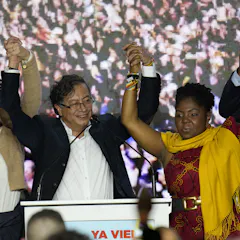
The strong showing of left-wing presidential candidate Gustavo Petro in the Colombian elections suggests the country’s left-right divide is moving from armed confrontation to democratic disagreement.

Critics who are irritated by a lack of an apparent villain in ‘Encanto’ need to take a closer look at the effects of colonial displacement.

More than half of the world’s best growing land could become less suited for coffee.
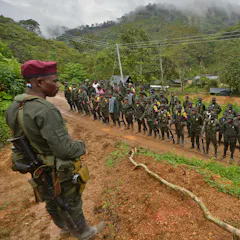
The U.S. State Department rarely removes terrorist groups from its Foreign Terrorist Organizations list. Most terrorist groups, unlike the Colombian FARC, don’t want to put down their weapons.

A fossil record in central Colombia reveals how marine animals evolved during a period of environmental change.
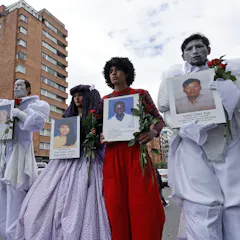
Researchers are using modern forensic techniques to find the bodies of victims of civil conflict in Latin America.
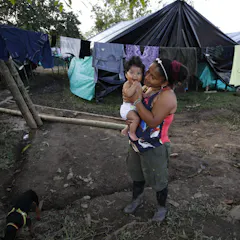
Reintegration is a gendered phenomenon — women, men and LGBTQ+ people experience it differently.
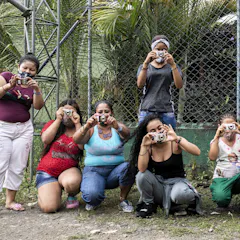
People wanted to use photography not only to document the aftermath of war and violence, but also to actively support peace.
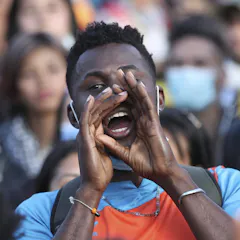
Canada should be doing everything it can to ensure human rights are upheld in Colombia. Instead, its response to the ongoing violence has been tepid.
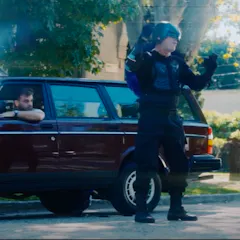
In Latin America, common citizens have often donned outlandish outfits and comic book-inspired personas to lead demonstrations and promote social change.

The Colombian government responded violently to a general strike over tax reforms that primarily affected working-class citizens. It has fueled calls for police reform.

A lethal turf war between drug traffickers has terrorized Buenaventura, Colombia for months. Now protesters are demanding the government’s help to protect people in this mostly Black city.
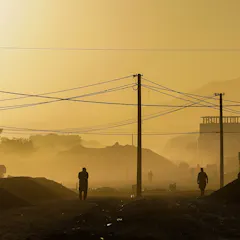
The infrastructure and levels of deprivation in poorer countries have prevented them from benefiting from containment measures as much as richer nations.
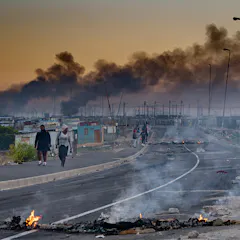
Two social impact bonds that have concluded in South Africa showed that they got innovation going where it was desperately needed.
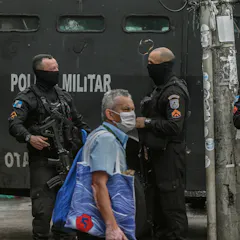
Attempts to wage war on drugs in developing countries which don’t take into account the needs of local people are doomed to fail. Here’s why.

Though not a rich country, Colombia is unusually well equipped to handle mass migration because of its own history with political strife and displacement.
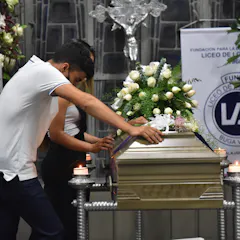
Despite a landmark deal in 2016 which brought an end to five decades of conflict, an upsurge in mass killings is threatening peace in Colombia.
Top contributors
-

Honorary Research Associate, Department of Political and International Studies, Rhodes University
-
Visiting Scholar, Weatherhead Center for International Affairs, Harvard University; Director of Studies at the Changing Character of War Centre, and Senior Research Fellow, Dept. of Politics and International Relations, University of Oxford
-
Research fellow at the International Development Department, University of Birmingham
-
Teaching Fellow in Law, University of Birmingham
-
Professor of Management and Co-director of the Centre for Latin American & Caribbean Studies, University of Essex
-
Research assistant professor, Universidad de los Andes
-
Reader, University of Huddersfield; Independent Social Research Foundation
-
Research and Communications Officer, University of Oxford
-
Associate professor, Universidad Externado de Colombia
-
Assistant Professor, Universidad Católica de Chile
-
Senior Lecturer in Spanish, Manchester Metropolitan University
-
Professor in Human Rights and International Law, University of Newcastle
-
Teaching Fellow in Defence, Development and Diplomacy, Durham University
-
Lecturer in Politics and International Relations, Monash University
-
Professor of Political Science, Georgia State University; Institute for Humane Studies