
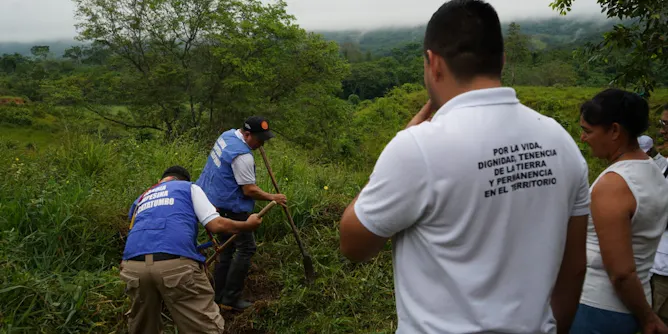
In Colombia’s coca-cultivating Catatumbo region on the border with Venezuela, community care and survival efforts amid escalating violence are in a state of emergency.
Articles on Colombian peace process
Displaying 1 - 20 of 36 articles
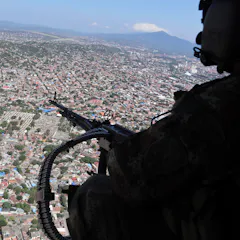
Colombia, the location of Latin America’s longest-running insurgency, is seeing a new wave of violence.
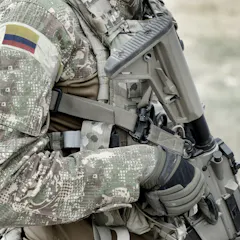
Disarmament programs rarely collect all weapons, but handing them over is a deeply symbolic gesture.

A nationally mandated quarantine isn’t keeping Colombia’s armed groups at home. Despite calls for a ceasefire, they are still killing activists, threatening humanitarian workers and seizing aid.
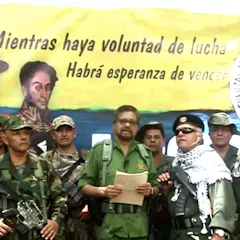
Dissidents in Colombia’s FARC guerrillas are threatening to renew armed struggle three years after signing a landmark peace deal. Here, experts explain the history of Colombia’s fragile peace process.
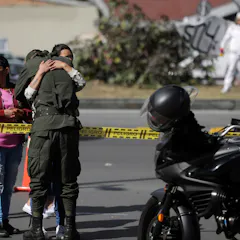
A 2016 accord with the FARC guerrillas was supposed to end Colombia’s 52-year civil war. But a deadly car bomb in Bogotá shows that armed insurgents still threaten the South American country.

Post-conflict processes are often slowed down or even halted by fear. Can Colombia buck the trend?
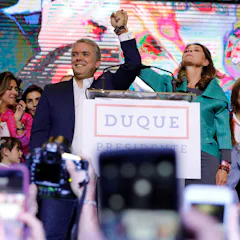
In the most peaceful election in their modern history, Colombians have elected as their next president a conservative who will renegotiate the country’s fragile 2016 accord with the FARC guerrillas.
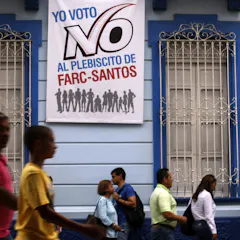
The Colombian government has learned the hard way that simply explaining a complex deal to people won’t win them over.
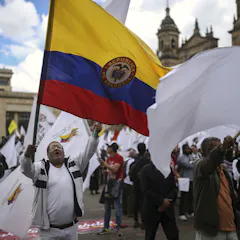
Two candidates from Colombia’s May 27 presidential vote will face off on June 17. One is a former guerrilla. The other is a hard-liner. Their views for the nation’s future couldn’t be more different.
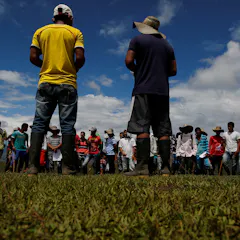
Nearly 300 community organizers and activists have been killed in Colombia since the country’s 2016 peace accord. Who’s behind these targeted assassinations?
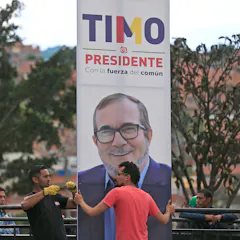
A former FARC rebel commander-turned- presidential candidate has withdrawn from Colombia’s 2018 election. Despite increased violence, the peace accord he signed will probably survive this setback.
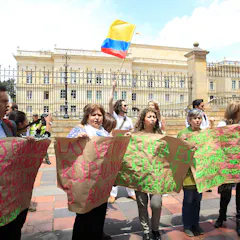
Some of the crucial mechanisms meant to deliver peace in Colombia have yet to be set up.
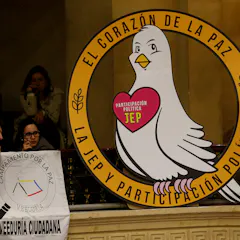
Conservative congressional reps in Colombia have been stalling votes on key parts of the country’s peace accords through endless petitions and nonstop debate. In short, they’re filibustering.
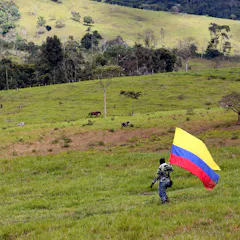
Now the war is over, academia has a special role to play in securing the peace.
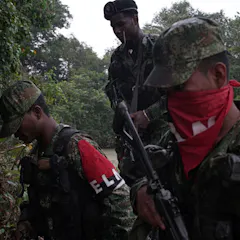
A court decision securing last year’s peace deal and a new ceasefire have invigorated Colombia’s peace process, but there are plenty of ways it could still go wrong.
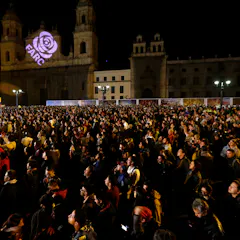
Meet the Commoners’ Alternative Revolutionary Force, Colombia’s newest political party. To move beyond its violent past, the new FARC will need a charismatic leader who can win over voters.
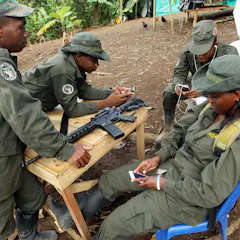
The last time the FARC joined in democratic politics, thousands of its members and leaders were murdered. Will this time be different?
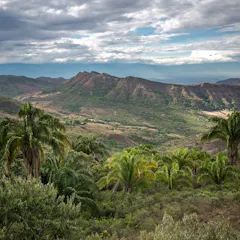
As Colombia seeks to rebuild after fifty years of armed conflict, an emerging conservationist movement is linking lasting peace to healthy habitats.
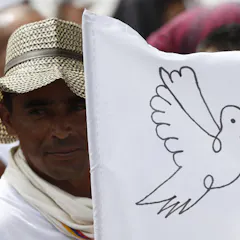
Ending violence is only a first step. Research from Colombian universities sheds light on the role of education in peace-building.
Top contributors
-

Honorary Research Associate, Department of Political and International Studies, Rhodes University
-
Associate professor, Universidad Externado de Colombia
-
Professor of Constitutional Law & Human Rights, Universidad de Palermo
-
Visiting Scholar, Weatherhead Center for International Affairs, Harvard University; Director of Studies at the Changing Character of War Centre, and Senior Research Fellow, Dept. of Politics and International Relations, University of Oxford
-
Professor and Director, International Centre for Higher Education Management, School of Management, University of Bath
-
Research Professor, University of Michigan
-
Teaching Fellow in Law, University of Birmingham
-
Professor of Latin American Literature, Universidad Nacional de Colombia
-
Research fellow at the International Development Department, University of Birmingham
-
Professor of Global Politics and Anti-Slavery, University of Nottingham
-
Postdoctoral Research Fellow, Freie Universität Berlin, Global Security Programme, University of Oxford, University of Oxford
-
Teaching Fellow in Defence, Development and Diplomacy, Durham University
-
Co-Director, Institute for Genocide and Mass Atrocity Prevention, and Professor of Public Administration, Binghamton University, State University of New York
-
Doctoral Researcher, Centre on Conflict, Development and Peacebuilding, Graduate Institute – Institut de hautes études internationales et du développement (IHEID)
-
Professor of Post Conflict Studies, Queen's University Belfast