

Overconfidence and other cognitive biases help to drive up real estate prices. Here are three techniques used by real estate agents to exploit those biases.
Articles on Cognitive bias
Displaying 21 - 40 of 87 articles

Ultimately, our brains are lazy and it takes a lot of cognitive effort to change the script and these shortcuts that we have already built up.

Jurors can perceive events in a video in different ways – one of which depends on how the evidence is presented in court, a media scholar explains.

We need to understand our brains to achieve true change.
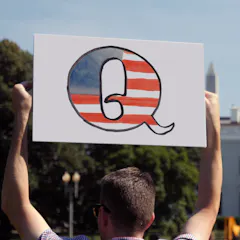
Many of those who believe conspiracy theories do not necessarily act on those beliefs. Nevertheless, conspiracy theories can still spread dangerous misinformation that can cause harm.

Here are some reasons for the natural human tendency to avoid or reject new information that runs counter to what you already know – and some tips on how to do better.

Fluent expression is not always evidence of a mind at work, but the human brain is primed to believe so. A pair of cognitive linguistics experts explain why language is not a good test of sentience.

Social psychology researchers found that people commonly exaggerate the presence of certain groups – including ethnic and sexual minorities – because they perceive them as ideologically threatening.

People tend to dislike uncertainty and risk – two things that are hard to avoid completely during a pandemic. That’s part of why it can feel especially draining to make even small decisions these days.
Finding out what goes on behind jury decisions and the biases that influence them is hugely important if the criminal justice system is to work properly.

Anchoring bias meant we found it hard to get rid of the first bit of information we heard.
It can be easy to despair about the problem of misinformation. But the problem is smaller than you might think.

Many drivers still use mobile phones despite the fact that it’s illegal.
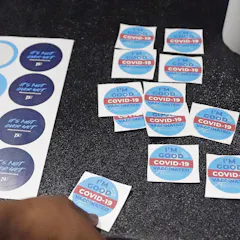
To help increase trust in vaccines, researchers analyzed data on adverse events to address safety concerns, and then used cognitive science to show how cognitive biases feed vaccine hesitancy.

It’s human nature to unconsciously rely on quick rules to help make spur-of-the-moment decisions. New research finds physicians use these shortcuts, too, which can be bad news for some patients.
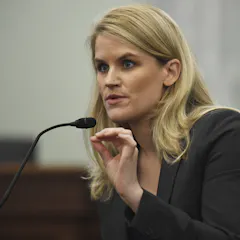
You have evolved to tap into the wisdom of the crowds. But on social media, your cognitive biases can lead you astray, something organized disinformation campaigns count on.
You have evolved to tap into the wisdom of the crowds. But on social media your cognitive biases can lead you astray, something organized disinformation campaigns count on.

You have evolved to tap into the wisdom of the crowds. But on social media your cognitive biases can lead you astray.

A society in crisis is more than the sum of its flawed parts.

Discrimination against job applicants with ethnic minority, “foreign” names is still endemic.
Top contributors
-

Professor of Informatics and Computer Science, Indiana University
-
Visiting Professor of Social Inequities and Injustice, Loughborough University
-
Assistant Professor, University College Dublin
-
Professor of Psychology, University of Chicago
-
Lecturer in Psychology, Glasgow Caledonian University
-
Scientia Professor of Evolution, UNSW
-
Visiting Fellow, Australian National University
-
Director of the African Mental Health Research iInitiative, University of Zimbabwe
-
Associate Lecturer, School of Psychology, University of Wollongong
-
Lecturer in Psychology and Cognitive Science, University of Sheffield
-
Associate Professor (hon) at the Centre for Public Awareness of Science, Australian National University
-
Associate Professor, Social Innovation, CQUniversity Australia
-
Senior Research Fellow, Uehiro Centre for Practical Ethics, University of Oxford
-
Doctoral Candidate in Evolutionary Anthropology, University of California, Davis
-
Director/Psychologist, The Oaks Health & Psychology; Adjunct Fellow, Institute for Health and Sport, Victoria University