

People use cognitive shortcuts to make choices that sometimes have outcomes that don’t serve their own interests or preferences. But to call these choices irrational might be missing the big picture.
Articles on Cognitive bias
Displaying 1 - 20 of 87 articles

Do you dry your hair before going out to avoid catching a cold? That’s even if you know viruses are the real cause? Here’s what’s going on.

Conspiracy thinking, supernatural beliefs and pseudoscience can seem impervious to evidence. An anthropologist suggests the opposite: Extraordinary beliefs may be supported by an individual’s experience.

Can we move from algorithmic discrimination to inclusive finance?

Adding “green” products to your food basket doesn’t reduce its carbon footprint – even though we think it does.

The US and other countries have a legal definition of citizenship, yet human psychology and identity politics result in ingrained biases over who truly belongs.
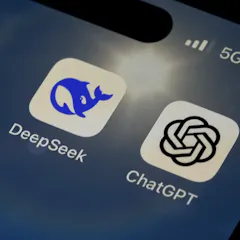
In medical research, precision matters. But both humans and machines tend to overgeneralize the results of health studies, saying more than what the data allows.

During scrolling, the brain processes visuals quickly not critically, making it easy to miss details that reveal a fake. As technology advances, slow down, look closer and think critically.

We’re told we need to think critically, to not fall for misinformation. Thankfully, it’s a skill we can practise and become better at.

By prioritising good sleep we may be able to boost our ability to think critically and resist misinformation.

If you’re an unhappy voter and want other unhappy voters to hold their noses and vote for the major candidate they least dislike, think about the Golden Rule.

People are socially conditioned to think such heinous acts are committed by outsiders.

People are drawn to human interest stories and negative information.

Cancel culture leads to educational detriments that can harm democracy.

Truly ignorant individuals lack introspection and stubbornly cling to their irrational opinions.

It has long been thought one couldn’t bend one’s intuition. Recent research reveals it is in fact possible to reduce bias through training.
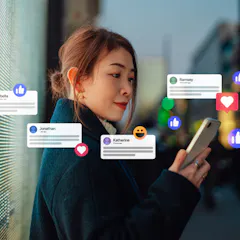
New research shows that scrolling through Instagram can effect our processing and language capabilities. Listen to The Conversation Weekly podcast.

When we invest money, time or another resource we can’t get back, factoring that sunk cost into our future decisions can be a trap.

Faces hold crucial clues on what others are thinking and feeling. So, does missing that key social information impact children’s unkind behaviour?
A psychologist explains how opponents of climate policies use a common thinking error to manipulate the public – and why people are so susceptible.
Top contributors
-

Professor of Informatics and Computer Science, Indiana University
-
Visiting Professor of Social Inequities and Injustice, Loughborough University
-
Assistant Professor, University College Dublin
-
Professor of Psychology, University of Chicago
-
Lecturer in Psychology, Glasgow Caledonian University
-
Scientia Professor of Evolution, UNSW
-
Affiliate
-
Director of the African Mental Health Research iInitiative, University of Zimbabwe
-
Associate Lecturer, School of Psychology, University of Wollongong
-
Lecturer in Psychology and Cognitive Science, University of Sheffield
-
Associate Professor (hon) at the Centre for Public Awareness of Science, Australian National University
-
Associate Professor, Social Innovation, CQUniversity Australia
-
Senior Research Fellow, Uehiro Centre for Practical Ethics, University of Oxford
-
Doctoral Candidate in Evolutionary Anthropology, University of California, Davis
-
Director/Psychologist, The Oaks Health & Psychology; Adjunct Fellow, Institute for Health and Sport, Victoria University