
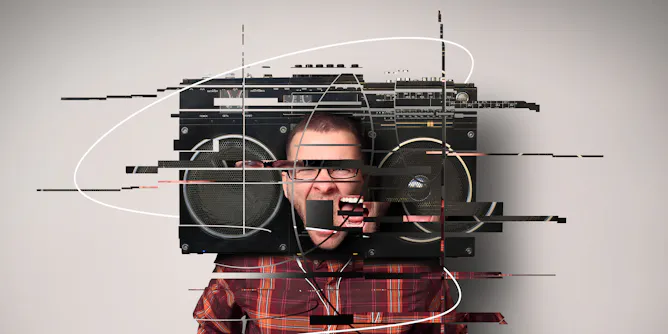
Bias is a psychological process detectable in individual judgements. Noise is a different phenomenon affecting human decisions.
Articles on Cognitive bias
Displaying 41 - 60 of 87 articles

Whenever you hear about a new bit of science news, these suggestions will help you assess whether it’s more fact or fiction.

Philosophy can help us see how some of the implicit beliefs we hold about work are mere myths. Success isn’t always due to effort, and the idea some jobs are more shameful to have than others.
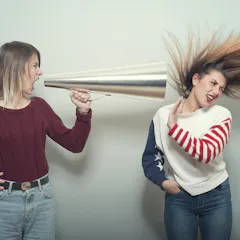
Cognitive shortcuts help you efficiently move through a complicated world. But they come with an unwelcome side effect: Facts aren’t necessarily enough to change your mind.

If you’re struggling to cut back on the booze, your subconscious brain may be over-riding your conscious brain. A new form of brain training targets our subconscious tendencies towards alcohol.

Shakespeare was wrong when he wrote ‘all’s well that ends well’.

Framing cats as responsible for declines in biodiversity is based on faulty scientific logic and fails to account for the real culprit – human activity.
To fight climate change, we need to take people’s cognitive biases into account.

Recognising our cognitive biases and avoid them will help us make sounder decisions, and therefore, a better decision for our country!
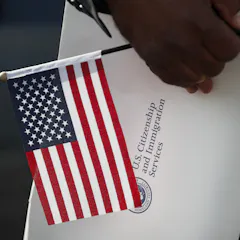
The US and other countries have a legal definition of citizenship, yet human psychology and identity politics result in ingrained biases over who truly belongs.

Cognitive biases often lead us to irrational behaviours such as hoarding toilet paper.

Instead of debunking false claims, psychology shows promoting the facts is a more effective way to fight the spread of misinformation.
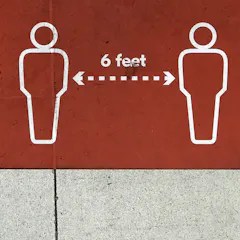
Right now, physical distancing is the most important preventive strategy we have against COVID-19. So why is it so hard for us to do what’s right?
Was the government correct to think that adherence would fall over time? Perhaps.
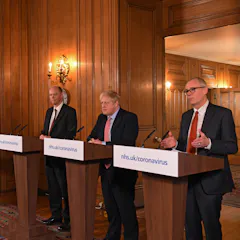
The only way around psychological biases is more transparency.
Is making sense of a story more important than getting at its truth? Looking at the treatment of myth in ancient Greece may help us navigate what is true, and whether that matters.

Neither jurors nor judges can be relied upon to put aside their incorrect beliefs about rape. What’s the answer?
Self-proclaimed gluten sensitivity is on the rise, and so is the stereotype that it goes along with being a politically correct progressive. But is gluten actually a good proxy for social values?
Research into contextual bias needs to be more rigorous so recommendations can be made about its effect on forensic analysis.

Sports fans see it all the time: two people arguing about a split-second difference in who did what. New research suggests human beings have a bias to perceive their own actions as happening sooner.
Top contributors
-

Professor of Informatics and Computer Science, Indiana University
-
Visiting Professor of Social Inequities and Injustice, Loughborough University
-
Assistant Professor, University College Dublin
-
Professor of Psychology, University of Chicago
-
Lecturer in Psychology, Glasgow Caledonian University
-
Scientia Professor of Evolution, UNSW
-
Visiting Fellow, Australian National University
-
Director of the African Mental Health Research iInitiative, University of Zimbabwe
-
Associate Lecturer, School of Psychology, University of Wollongong
-
Lecturer in Psychology and Cognitive Science, University of Sheffield
-
Associate Professor (hon) at the Centre for Public Awareness of Science, Australian National University
-
Associate Professor, Social Innovation, CQUniversity Australia
-
Senior Research Fellow, Uehiro Centre for Practical Ethics, University of Oxford
-
Doctoral Candidate in Evolutionary Anthropology, University of California, Davis
-
Director/Psychologist, The Oaks Health & Psychology; Adjunct Fellow, Institute for Health and Sport, Victoria University