
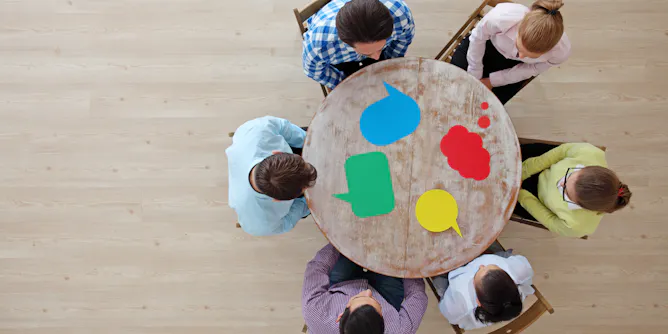
Research shows that humans are susceptible to simple stories and biased toward arguments that fit their current perspectives. Here’s how to confront those tendencies.
Articles on Confirmation bias
Displaying 1 - 20 of 46 articles

In 1979, Wood Sherif wrote my favourite psychological paper of all time.

A ‘domestic terrorism’ label that comes before the facts teaches the public to treat the term as propaganda rather than factual diagnosis.
When compared to how common it is for the Google search engine to boost misinformation, changing the name of a body of water might not seem like a big deal. It is.

Who are the 10 per cent of Canadians who support Trump and his annexation threats? They are likely people afflicted with cognitive biases that prevent them from accurately assessing risk.
Two social psychologists explain the ways unconscious biases influence how people think and can fuel discrimination against transgender people and other minority groups.

Students learn skills to help them distinguish fact from fiction in the world of AI.

Truly ignorant individuals lack introspection and stubbornly cling to their irrational opinions.

Recent media coverage mostly confirms the role of faulty threat assessments, Hamas’ improved operational security, and confirmation bias.

Justifying purchases can make parting with money easier but a viral TikTok trend could leave girls spending more than they have.
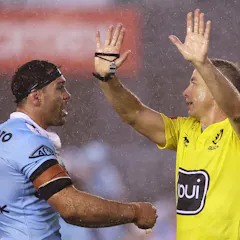
Referees would need to be superhuman to be immune to the risk of bias – maybe that’s something all sports fans could agree on.

A university course teaches students why people believe false and evidence-starved claims, to show them how to determine what’s accurate and real and what’s neither.
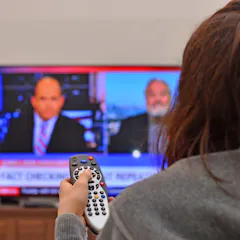
Teaching students about information literacy can help them determine what kinds of practices make news reports trustworthy.

As elections approach – and even after they’re done – there’s a lot of confusing, and deliberately misleading, information out there. Learn how to protect yourself.

Here are some reasons for the natural human tendency to avoid or reject new information that runs counter to what you already know – and some tips on how to do better.

Preclinical studies are an important part of biomedical research, often guiding future trials in humans. Failure to replicate research results suggests a need to increase the quality of studies.

We’ve all heard an exasperated “do your research!” from people who want to persuade us to accept their claim or point of view. The problem is it’s not likely to convince anyone.
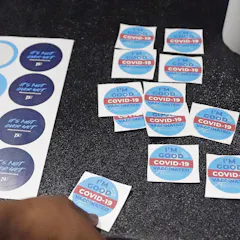
To help increase trust in vaccines, researchers analyzed data on adverse events to address safety concerns, and then used cognitive science to show how cognitive biases feed vaccine hesitancy.

Science denial is not new, but researchers have learned a lot about it. Here’s why it exists, how everyone is susceptible to it in one way or another and steps to take to overcome it.
A social psychologist explains how to avoid being misled, and how to prevent yourself – and others – from spreading inaccurate information.
Top contributors
-

Senior Research Fellow, Melbourne School of Psychological Sciences, The University of Melbourne
-
Associate Research Professor of Social Psychology, Louisiana State University
-
Director of External Research for frank, College of Journalism and Communications, University of Florida
-
Associate Lecturer, School of Psychology, University of Wollongong
-
Reader in Astrophysics, UCL
-
Adjunct Instructor in Cybersecurity, Johns Hopkins University
-
Associate Professor of Philosophy, Director of Center for Professional and Applied Ethics, University of North Carolina – Charlotte
-
Professor of Psychology, University of Michigan
-
Professor of Mathematics and Statistics, University of Maryland, Baltimore County
-
Postdoctoral Research Associate, University of Maryland
-
Professor of Biological Sciences, University of Maryland, Baltimore County
-
Lecturer in Psychology and Cognitive Science, University of Sheffield
-
PhD Psychology / Public Health, Australian College of Applied Psychology
-
Associate Professor at the Institute for Social Neuroscience in Melbourne, Australia, The University of Melbourne
-
Research Professor of Psychology, Tufts University