

Ethiopian communities are cheaply filling destructive gullies with soil, stones and branches and replanting them to stop erosion and restore farmland.
Articles on Climate solutions
Displaying 21 - 40 of 152 articles
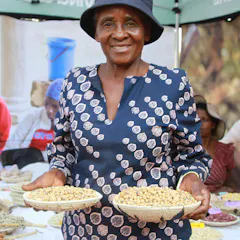
As climate crises deepen, Africa must turn its hard-won experience and local knowledge into global leadership on climate, health, food systems and clean energy.
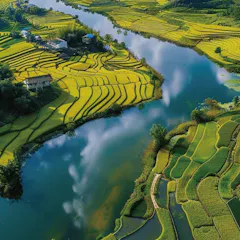
There are ways to reduce emissions without sacrificing yield. A new study shows how, and looks at a technique billed as ‘climate-friendly’ that makes emissions worse.
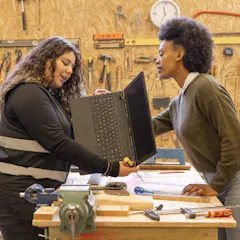
Circular economies don’t follow the ‘take, make and dispose’ model but try to keep products in use for as long as possible by reusing and recycling them.
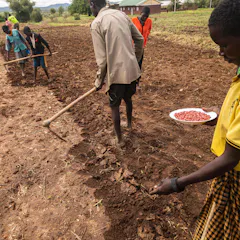
Figuring out how climate change will cause plant disease and pests to spread across Africa’s Great Lakes farms is critical for future food supplies.
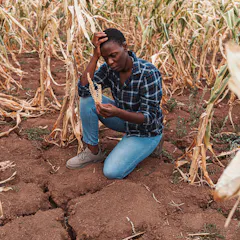
Extreme heat is a huge threat to health, work and food security across southern Africa.

Climate risk assessments guide how much funding is available to support climate impacts and need to work out which women are worst affected.
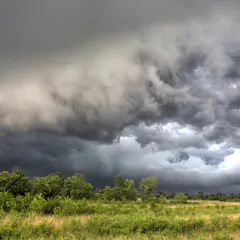
Don’t blame the weatherman. A meteorologist explains where your local weather forecasts really come from, and what storm scientists are doing to bring them closer to home.
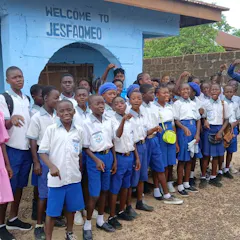
Young people in Bo City, Sierra Leone became youth climate leaders after turning a low-cost Climate Science Hub into a space for science-informed action.
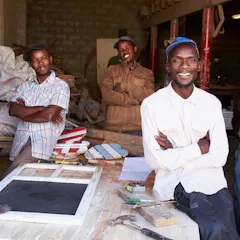
When up to 3.5 million small businesses go green, this will benefit South Africa’s environment and help the businesses survive in a changing climate.

Solar energy can cut costs and pollution for South African households, but fear of theft holds people back. Shared mini-grids offer a safer, affordable alternative.
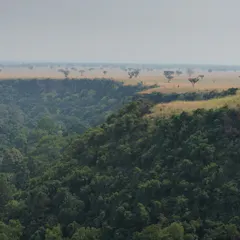
Carbon removal strategies may conflict with biodiversity conservation, but careful choices could bring benefits.
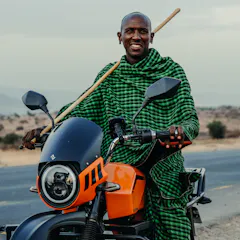
Research suggests a shift to electric mobility is technically and economically feasible.

In eastern DRC, a hydropower mini-grid shows how access to electricity happens through public-private partnerships and community programmes.
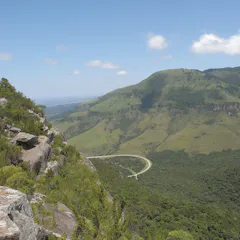
Carbon capture projects could provide the funds needed to restore land degraded by commercial farming and forestry.
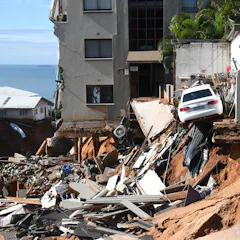
South Africa needs almost US$15 billion over a decade just to reach a basic level of climate adaptation, that protects water, food, health and infrastructure.
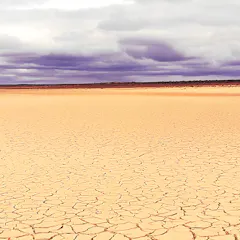
South Africa’s driest regions rely on groundwater, which dries up as the climate warms. Replenishing aquifers with excess rainfall may be a solution.
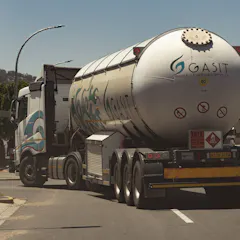
Gas from Mozambique is running out, leaving South African industry facing a supply crisis. Imported propane gas could offer a workable solution.
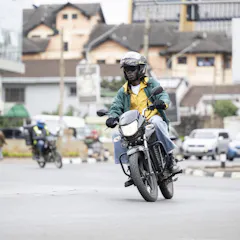
Africa doesn’t need a technological breakthrough to scale EV adoption. It needs cheaper capital and supportive policy environments.
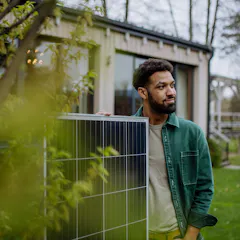
With cement production driving 8% of greenhouse gas emissions, green housing is needed urgently.
Top contributors
-

Senior Lecturer at Oyo State College of Agriculture and Technology, Igboora, Nigeria and Extraordinary Senior Lecturer at Indigenous Knowledge Systems Centre, North-West University, Mafikeng, South Africa, North-West University
-
Professor of Climate Change, Food Systems and Health and Director of The Lancet Countdown in Africa, London School of Hygiene & Tropical Medicine
-
Professor and Head of the Department of Geography, Geoinformatics & Meteorology, University of Pretoria
-
Professor of Environmental Medicine, University of Wisconsin-Madison
-
Senior research officer: Climate Adaptation in the African Climate and Development Initiative (ACDI), University of Cape Town
-
Director of African Climate and Development Initiative, Professor in Environmental and Geographical Science, University of Cape Town
-
Associate Professor of Climate Change, Technology and Policy, Carleton University
-
Professor of Policy Analysis, RAND School of Public Policy
-
Adjunct Associate Professor of Population Health Sciences, University of Wisconsin-Madison
-
Professor Emeritus of Environmental and Occupational Health Sciences, University of Washington
-
Professor and Chair, Department of Environmental Health, Boston University
-
Professor in Engineering, Stellenbosch University
-
Professor of Environmental Science, Rhodes University
-
Researcher in Environmental Science, Rhodes University
-
Professor in Mechanical and Mechatronic Engineering, Stellenbosch University