
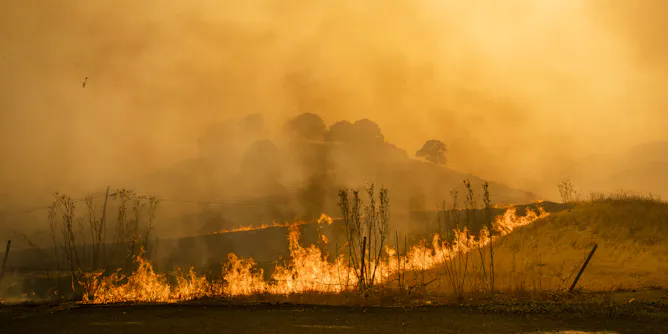
Pollution from more frequent floods and wildfires – exacerbated by the warming climate – is threatening human health and poses particular risks to the brain.
Articles on Climate risk
Displaying 41 - 60 of 84 articles
The rules around risk reporting are changing, but there’s still a long way to go.
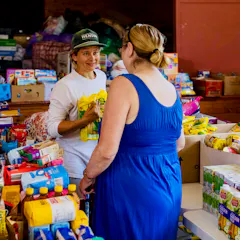
Australia can take great strides forward in climate policy and action. A reactionary, incremental approach to adaptation will fall short. Now is the time to think big.

Businesses have long been a big part of the climate problem. They shouldn’t scale back environmental initiatives when it all feels too hard.
History shows how the states and territories can step into a policy breach when the federal government fails. It’s time they band together on electric vehicles.
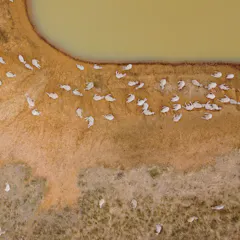
This is not an imaginary future dystopia. It’s a scientific projection of Australia under 3°C of global warming – a future we must both strenuously try to avoid, but also prepare for.
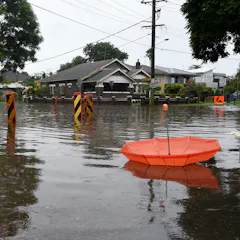
One interviewee in our study described having compiled a database of more than 150 interactions with insurers or their representatives over the two months since they were caught up in a disaster.

Permanently protecting large, mature forests is a faster and cheaper way to stabilize Earth’s climate than complex carbon capture and storage schemes, and more effective than planting new trees.

Instead of telling people to buy more of the right type of insurance, we should be asking how insurance can work better for people.

There’s a growing push among businesses, including the finance sector, to protect the climate and nature.
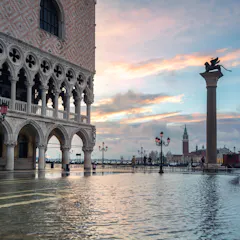
With growing drought, rising seas and heavier storms, how do we protect Venice and other world treasures? The answer: creative, proactive measures that may alter them in important ways.

The groundbreaking legal case has changed the game for how Australia’s $3 trillion superannuation industry invests, and how members are protected from climate risk.
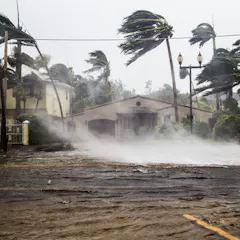
Can maps of people’s flooded properties convince them that rising sea level is a threat?
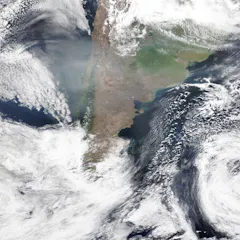
The idea that central banks should shift their mandates to take account of climate risks confuses ends and means.

World Heritage globally is threatened by climate change, in all sorts of ways. A new tool identifies the key risks and best strategies for both natural and cultural wonders.
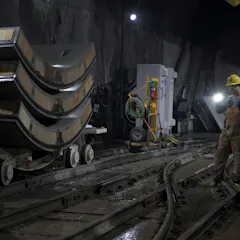
Climate change science was driven by curiosity in the past. Now climate researchers need to focus on managing the risk of global warming’s ill effects.
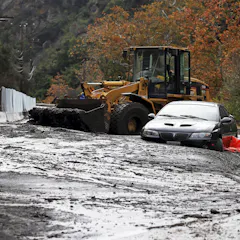
One natural disaster can exacerbate the effects of others – think landslides after wildfires. This means engineers and planners need to rethink how they assess and prepare for risk.

Company directors have been put on notice about their duty to consider and disclose climate change risks. And to do that properly they need to call on the expertise of accountants.
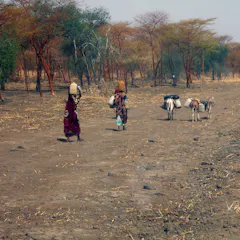
The failure of political systems is the main cause of conflict and displacement but climate change can exacerbate this.
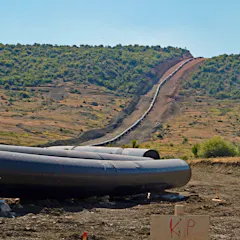
The European Investment Bank’s funding of the Trans Adriatic Pipeline will harm the climate and makes little financial sense.
Top contributors
-

Professor of Earth Sciences, Rutgers University
-
Adjunct Professor (Practice) in the School of Earth, Atmosphere and Environment, Monash University
-
Lecturer and Research Fellow, School of Geography, Planning, and Spatial Sciences. Coordinator, Education for Sustainability Tasmania, University of Tasmania
-
Research Fellow, Public Economics, The Parkland Institute, University of Alberta
-
Associate Professor & Global Challenge Lead, Urban Transformations Research Centre, Western Sydney University; University of British Columbia
-
Professor, School of the Environment, The University of Queensland
-
Professor of Accounting, Durham University
-
Honorary Associate Professor, Australian National University
-
Professor of Economics and Environmental Studies, Wesleyan University
-
Emeritus Professor, Australian National University
-
Director of the Master of Bioethics degree program at the Berman Institute of Bioethics, Johns Hopkins University
-
Honorary Professor, School of Earth and Environmental Science, University of Wollongong
-
Former Postdoctoral Research Associate
-
Professor of Civil and Environmental Engineering, Tufts University
-
Professor in School of Earth, Atmospheric and Life Sciences; and Director of Environmental Futures Research Centre, University of Wollongong