
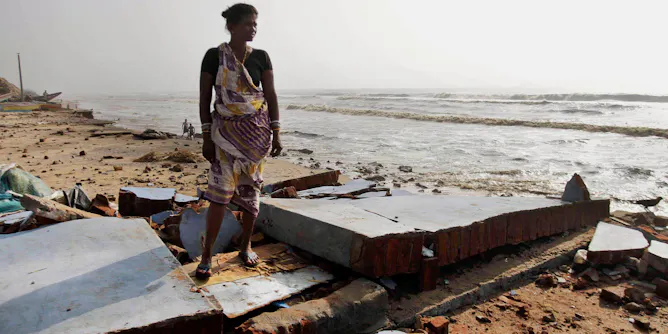
Researchers spoke to relocated people in India and Bangladesh to find out what worked.
Articles on Climate refugees
Displaying 1 - 20 of 46 articles
Global warming is moving faster than the policy decisions that could protect vulnerable populations.

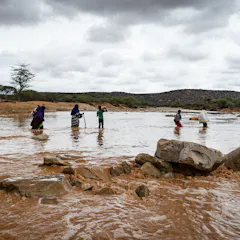
Kenya faces extreme weather crises. Humanitarian aid must be part of the solution.
Climate change is already linked to mass deportation – and the worst is still to come.
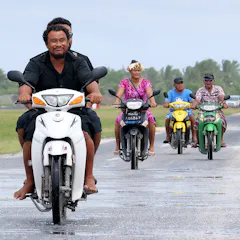
The rush for ‘climate visas’ to escape Tuvalu shows the extraordinary need for schemes that enable people to migrate in a warmer world.

As climate change leads to more extreme weather, temporary climate displacement could become permanent migration.
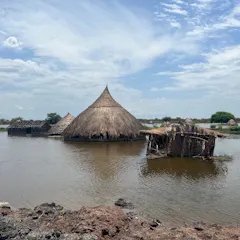
Hundreds of thousands of people have been forced from their homes and might never return.
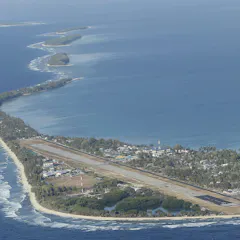
The climate migration deal has been dubbed as offering Tuvaluans a lifeline, but others say it is a neocolonial arrangement that does not tackle rising ocean levels.

A recently signed Australia-Tuvalu citizenship agreement offers people displaced by climate change a chance to ‘move with dignity’. But staying with dignity has to be an option too.
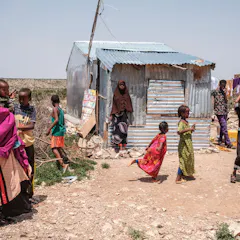
Exploring the potential intersections between climate change and violence against children is crucial.

Fairbourne on the west coast of Wales is at risk from both rising sea levels and river flooding.
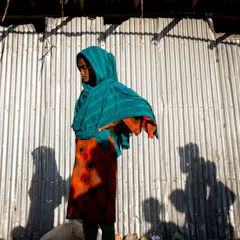
Why the UN Refugee Convention should be updated to protect climate migrants.
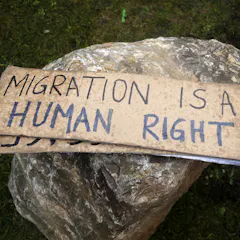
Recognizing the challenges posed by climate-induced displacement is important. But officials must avoid rhetoric about displaced people that can fuel xenophobia.

The European Union is a confederation of states, each with its own agenda and perspective. As a result, the EU’s responses to migration crises are critically flawed.
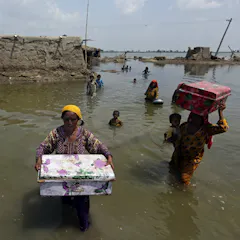
Does the Global North have a moral responsibility to protect and compensate those in the Global South that disproportionately bear the brunt of climate change devastation?
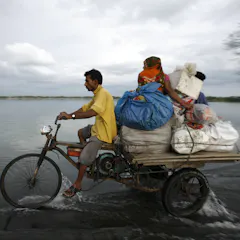
When climate change is used to explain migration, social inequality is naturalised.
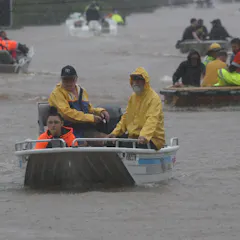
We can’t let communities face climate change alone. We must get better at adapting to the new climate, and do it before disasters not during.

International refugee law must be overhauled to consider climate change and include “deadly environments” as a form of persecution.

If rural communities plan carefully – and some already are – they can reinvent themselves as the perfect homes for people fleeing wildfire and hurricane zones.
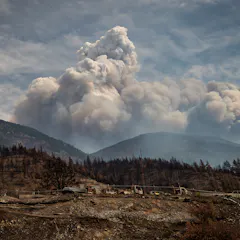
76 per cent of Canadians say environmental policy and sustainability is a priority when considering where to live.
Top contributors
-

Visiting professor, Harvard University
-
Professor of Intersectional Justice, UCL
-
Scientia Professor and ARC Laureate Fellow, Kaldor Centre for International Refugee Law, UNSW
-
Postdoctoral Fellow, Institute for Environment and Human Security (UNU-EHS), United Nations University
-
Professor in Human Rights and International Law, University of Newcastle
-
Postdoctoral Research Associate, Institute on the Environment, University of Minnesota
-
Professor in Organisation & Sustainability, University of Exeter
-
Professor of Earth System Science, UCL
-
Research Fellow, American University School of Public Affairs
-
ARC Research Associate, Adelaide University
-
Chief Scientific Advisor, Notre Dame Global Adaptation Initiative, University of Notre Dame
-
Professor, School of Geography, The University of Melbourne
-
Ph.D. Candidate, RAND School of Public Policy
-
Chercheuse postdoctorale - Postdoctoral fellow, Université du Québec à Montréal (UQAM)
-
Associate professor, Johns Hopkins University