
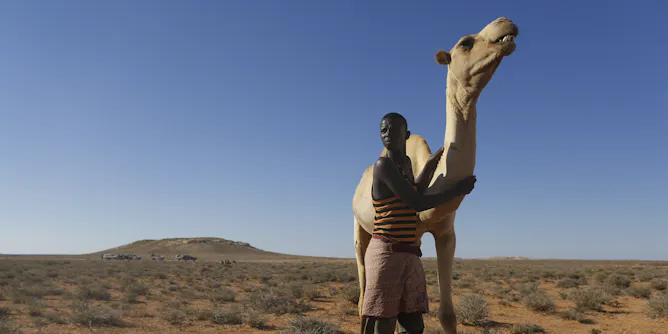
Climate migrants still tend to move to places they know or have connections to through their social networks.
Articles on Climate refugees
Displaying 21 - 40 of 46 articles
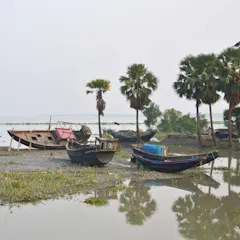
Rising sea levels are as likely to trap people as they are to force them to move.
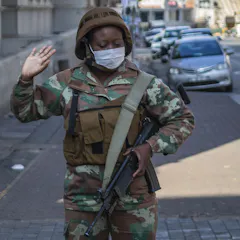
If the pandemic is a sort of climate ‘stress-test’, the world is failing it.
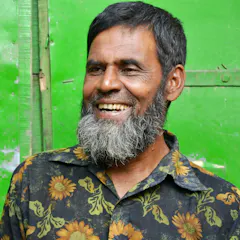
Directly linking climate change with aggression and mass migration risks dehumanising those vulnerable to environmental stresses. Mufazzar’s story does the opposite.
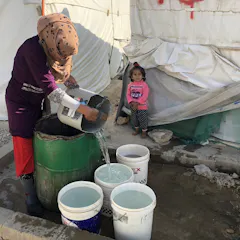
Both drought and violence drove many Syrians out of their homes; even if the war ends, the continuing difficulty of farming will make it hard for them to return.

Beware those who say it is a solved problem.
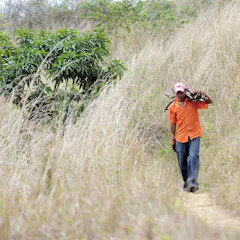
Poverty and violence are often cited as the reasons people emigrate from Central America, but factors such as drought, exacerbated by climate change, are driving people to leave too.
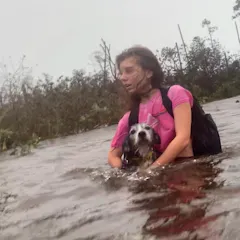
The effects of climate change will disproportionately affect the world’s poorest, risking the lives and health of millions of people located mainly in the Global South.

Migration offers a fix for the islands ‘drowning’ as a consequence of the climate crisis – but are there better alternatives?

In the face of climate change, the poorest are suffering from the excess emissions of CO₂ linked to the lifestyle of the richest. It is time to act, in the name of climate and social justice.
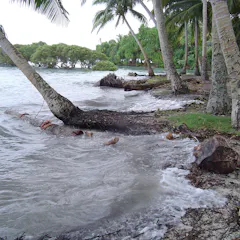
Rising sea levels and tectonic activity have eroded the coastlines of the low-lying Carteret Islands in the South Pacific.
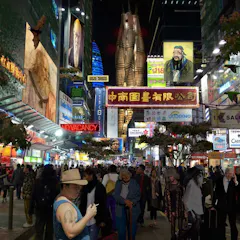
By adapting the charter city model to create a new city on the northern coast, Australia could be the world’s great 21st-century refuge.

Donald Trump portrays migrants as a foreign problem ‘dumped’ on America’s doorstep. That view ignores the global forces that bind nations together, including trade, climate change and colonization.
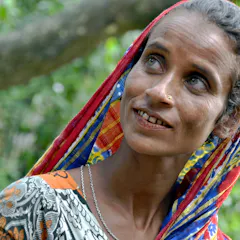
Sahia and her husband hoped to start a life in Singpur, a village in Bangladesh. But the riverside community found climate change made putting down roots impossible.

The $4 billion that foundations are pledging to spend within five years amounts to less than 1 percent of what businesses and governments spend on global warming every year.
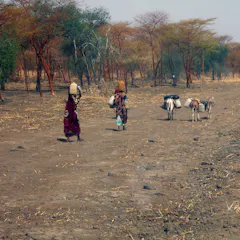
The failure of political systems is the main cause of conflict and displacement but climate change can exacerbate this.
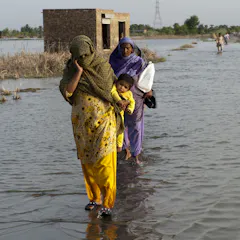
To address environmental degradation, including climate change, it is essential to take into account human rights and migration. Hybrid international law and regional thinking are both essential.
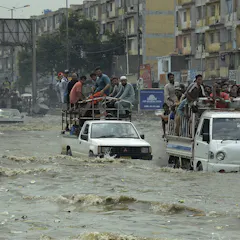
By 2050, climate change impacts such as storms and drought could displace up to 300 million people worldwide. Nations should recognize ‘climate migrants’ and make plans for aiding and resettling them.
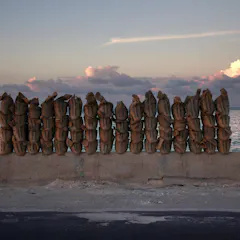
New Zealand’s plan to create the world’s first humanitarian visa for climate refugees has to consider ways people from Pacific Island nations actually want to be assisted.

Although climate change threatens the world’s small island nations, many can find ways to adapt and preserve their homes and cultures – especially if wealthy countries cut emissions and provide support.
Top contributors
-

Visiting professor, Harvard University
-
Professor of Intersectional Justice, UCL
-
Scientia Professor and ARC Laureate Fellow, Kaldor Centre for International Refugee Law, UNSW
-
Postdoctoral Fellow, Institute for Environment and Human Security (UNU-EHS), United Nations University
-
Professor in Human Rights and International Law, University of Newcastle
-
Postdoctoral Research Associate, Institute on the Environment, University of Minnesota
-
Professor in Organisation & Sustainability, University of Exeter
-
Professor of Earth System Science, UCL
-
Research Fellow, American University School of Public Affairs
-
ARC Research Associate, Adelaide University
-
Chief Scientific Advisor, Notre Dame Global Adaptation Initiative, University of Notre Dame
-
Professor, School of Geography, The University of Melbourne
-
Ph.D. Candidate, RAND School of Public Policy
-
Chercheuse postdoctorale - Postdoctoral fellow, Université du Québec à Montréal (UQAM)
-
Associate professor, Johns Hopkins University