
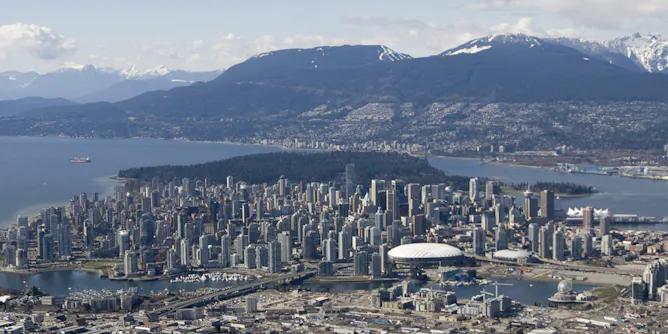
Vancouver may be one of the most beautiful cities in the world, but the president of Emily Carr University says the city could benefit from the discipline of design.
Articles on City planning
Displaying 101 - 120 of 145 articles
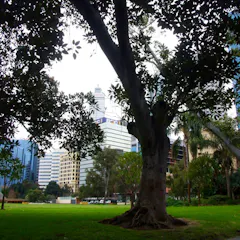
A new study shows major Australian cities are suffering an overall loss of green space –
although some areas are doing better than others.
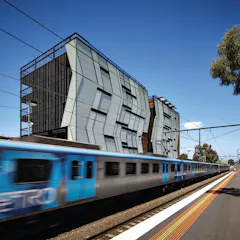
New South Wales is the only state that has made meaningful progress on legislation and enforcement of standards capable of creating a sustainable built environment.
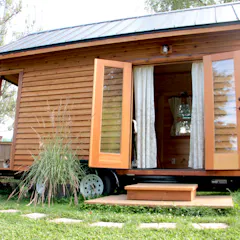
New research has found a marked increase in people, particularly among women over 50, who are building or want to build a tiny house. However, inflexible planning rules often stand in their way.

Planners wish to correct past errors by increasing densities, discouraging car dependency and mixing land uses. But imposing imported strategies on Australian cities is producing unhappy results.

A new project documents who uses urban industrial lands slated for redevelopment. It reveals a vibrant but largely hidden sector at the interface between creative industries and small manufacturing.

Successful parks and urban green spaces encourage us to linger, to rest, to walk for longer. That, in turn, provides the time to maximise the restorative mental benefits.
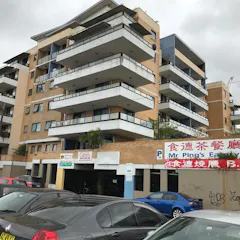
The inexorable logic of the market will create suburban concentrations of lower-income households on a scale hitherto only experienced in the legacy inner-city high-rise public housing estates.

For the first time in Australia, more higher-density housing than detached housing was being built last year. Compact cities have pros and cons, but the downsides fall more heavily on the poor.

In the push for more compact cities, don’t forget the ways apartment living is different. And often the downsides of these differences weigh heavily on low-income and disadvantaged households.
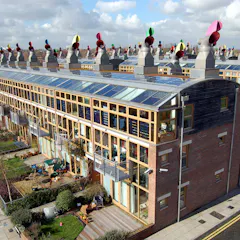
Traditional urban planning is being stretched by the pace at which renewable energy systems are being installed. New codes and guidelines are needed to manage emerging conflicts over land use.

While many talk about 30-minute cities, some aim for residents to be able to get to most services within 20 minutes. But cities like Melbourne have an awful lot of work to do to achieve their goal.

Australians are losing the backyards that once served as retreats from the stresses of city living. Our health is likely to suffer as cities become less green and much hotter.
Research shows planners and built environment professionals have surprisingly poor knowledge about how cities might harm mental health. The good news is that simple steps can make a big difference.
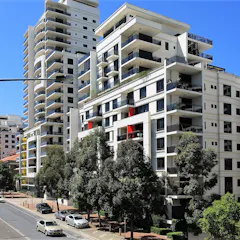
Many new housing developments are being built along busy roads and rail lines, but lack design features that would reduce occupants’ exposure to harmful traffic pollution.
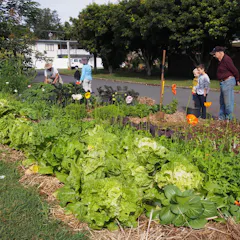
Urban residents are increasingly keen to farm verges, parks, rooftops and backyards, but planning rules sometimes stand in the way.
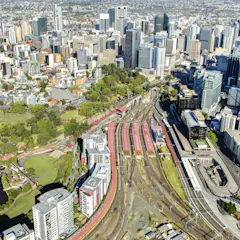
The rail project may well help get more commuters into the CBD, but offers few benefits for the parts of the broader metro area where most population growth is occurring.
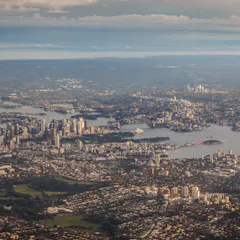
Financial benefits are behind the development industry’s push for a continuous rapid population growth. But our poorly planned cities are ill-prepared and already struggling.
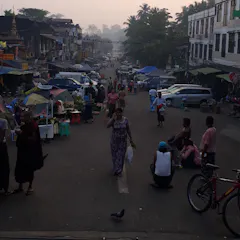
Yangon’s traffic woes are set to last.
There are very few approaches that examine all aspects of the complexity of urban design and development. Ergonomics, human factors and sociotechnical systems methods offer a way forward.
Top contributors
-

Professor of Human Geography and Planning, University of Tasmania
-
Senior Lecturer in Urban and Environmental Planning, Griffith University
-
Professor of International Planning, Centre for Urban Research, RMIT University
-
Associate Professor in Urban Planning, The University of Queensland
-
Professor of Planning, School of Built Environment, UNSW
-
Associate Professor of Urban Planning, The University of Melbourne
-
Head of Urbanism and Associate Professor of Urban Studies, School of Architecture, Design and Planning, University of Sydney
-
Associate Professor in Urban and Regional Planning, University of Sydney
-
Senior Lecturer in Urban Planning & Design, Monash University
-
Honorary Professor of Planning, The University of Queensland
-
Postdoctoral Research Fellow, The University of Queensland
-
Professor, City Futures Research Centre, Faculty of the Built Environment, UNSW
-
Professor Spatial Transformation, Hanze University of Applied Sciences, Groningen
-
Professor, Sustainability and Urban Planning, RMIT University
-
Deputy Director, Australian Urban Design Research Centre, The University of Western Australia