
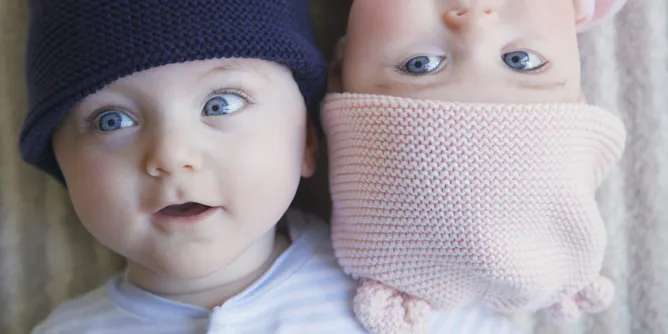
Pulling together the results of 40 experiments done by different teams over decades, researchers found that infant boys and girls equally tune in to human faces and voices.
Articles on Child development
Displaying 21 - 40 of 390 articles
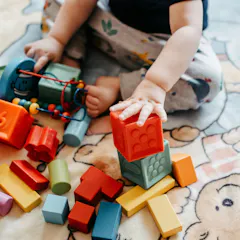
A major Australian study found kids who spend 40 hours or more in childcare may struggle more with social skills and emotions than those who attend for less time.
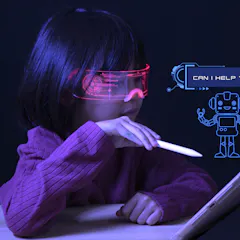
Young children’s brains develop through interaction with others. Throwing AI into the mix could make it more difficult for them to navigate real-world relationships.

Punch’s attachment to his plushie isn’t just the subject of a heart-wrenching video. It harks back to the story of a very famous set of 1950s psychology experiments.
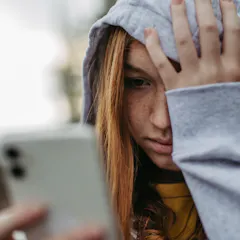
Tik Tok, Instagram, Youtube… Social Media is driving offline disorders among teenagers, suggests a large-scale report by French Agency for Food, Environmental and Occupational Health & Safety (Anses).
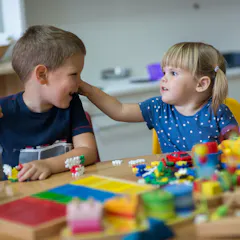
Children with DLD show problems across all their languages and need specialist help.

The youngest chimpanzees are the biggest risk-takers. Would humans show the same pattern if adults weren’t keeping such a close watch on little kids?
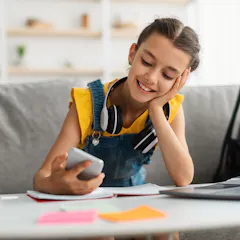
Short videos entertain, but constant scrolling is reshaping how children think, sleep and feel.

New research shows caregivers don’t get advice on smartphone use, even though we know it can affect a baby’s feeding, language development and attachment.
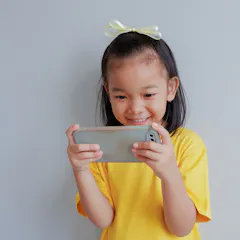
As adults interact with kids, they share views and create new knowledge. So what happens if screens take over that interaction?

With its mixture of bloody costumes and scary themes, it can often feel like Halloween is luring kids into topics they are not ready to grapple with.
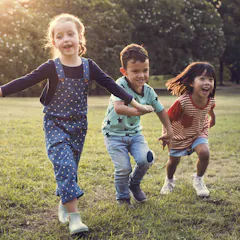
Children need physical play to develop their strength, coordination, and motor skills.
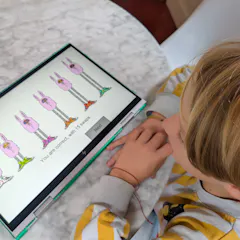
By cranking up the difficulty on the test task, researchers found that children are capable of finding systematic solutions to complex problems far earlier than psychologists had believed.
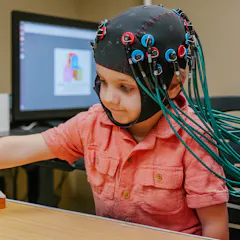
Kids with good executive function tend to grow up to be financially stable, healthy, productive adults. Past attempts to teach these skills have flopped. New brain research on language may change that.
New bulk-billed health checks for three-year-olds would refer them for additional support – including psychosocial therapy.
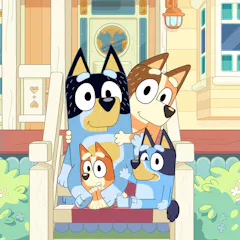
She’s six years old, lives in Brisbane and might just be one of the best resilience coaches on television.

Play is a big part of early childhood education. But once kids start school, play is frequently dismissed as something fun, that is not part of learning.
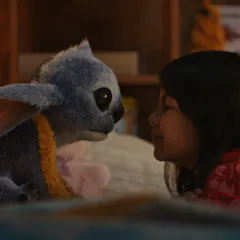
The Disney film offers powerful lessons about helping children who are navigating grief.
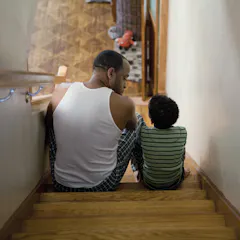
These conversations don’t have to be frightening. There are age-appropriate ways to teach kids shame-free language about bodies and boundaries.

NZ playgrounds are often separated from city life, constraining children’s spontaneous play. Planners can learn from car-free urban spaces where children are free to roam.
Top contributors
-

Professor, Canada Research Chair in Determinants of Child Development, Owerko Centre at the Alberta Children’s Hospital Research Institute, University of Calgary
-
Deputy Director, The Kids Research Institute Australia, Professor of Autism Research, The University of Western Australia
-
Associate Professor in Psychology, Deakin University
-
Professor of Clinical Neuropsychology, University of Cambridge
-
Postdoctoral Research Associate, Cognitive Neuroscience, University of Cambridge
-
Associate Professor of Developmental Psychology & Psychopathology, University of Leeds
-
Professor of Educational Psychology, University of Wollongong
-
Associate Professor, School of Psychology, Scientist, Children's Hospital of Eastern Ontario Research Institute, L’Université d’Ottawa/University of Ottawa
-
Professor of Science and Technology for Brain-Inspired Intelligence/ Computer Science, Fudan University
-
Director, Center for Community Child Health Royal Children's Hospital; Professor, Department of Paediatrics, University of Melbourne; Theme Director Population Health, Murdoch Children's Research Institute
-
Associate Professor, Department of Psychology, University of Essex
-
Assistant Professor in Psychology, Bond University
-
Senior Industry Fellow, School of Education, RMIT University
-
Associate professor, Monash University
-
Inaugural Roberta Holmes Professor, La Trobe University