

Australia is about to trial CCTV in hundreds of early childhood services. A UK nursery data hack shows how vulnerable their information can be.
Articles on CCTV
Displaying 1 - 20 of 34 articles

All Australia’s education ministers met in Sydney to agree on a new package of measures to improve safety in childcare.
A new study shows that simply knowing we are being watched can unconsciously heighten our awareness of other people’s gaze.

Biometrics can help companies to be more efficient and to improve their products but there’s a growing need for transparency.
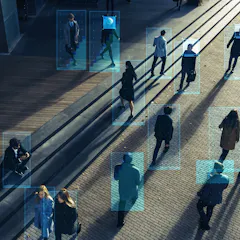
CCTV is a popular form of digital evidence but it can be unreliable and problematic.

Security companies suggest that criminals take advantage of the fact that many home and business security systems get compromised during power outages.

When researchers look at CCTV footage of how people really react during earthquakes – as opposed to what they report after the fact – it looks like alerts aren’t yet inspiring protective action.
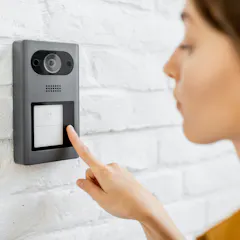
A UK court recently ruled that a man’s smart doorbell invaded his neighbour’s privacy, and he now faces being required to pay damages. But this kind of situation is avoidable.

The CCTV ecosystem is evolving – but it’s still a sparse patchwork with limited efficacy in reducing or prosecuting crime.
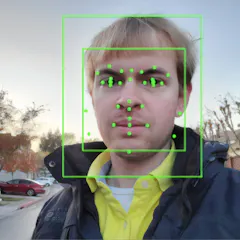
There are questions being raised about the legality of scanning, storing and sharing facial images. The law currently doesn’t prohibit even highly intrusive levels of surveillance by private entities.
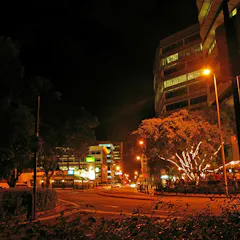
‘Smart cities’, featuring networks of automatic lights, video cameras and environmental sensors, have been hailed as an enhancement to urban life. But they are also tools of surveillance and control.

Surveillance software that identifies people from CCTV is eroding human rights and democracy.
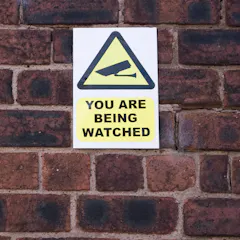
Most people follow some form of moral code, but to what extent they abide by these rules does differ in various situations.

If you thought police surveillance was mere CCTV, it’s time to catch up on what’s happening on the other side of the lens.

Darwin is one of the aspiring ‘smart cities’ that is adopting Chinese technology that can identify and track individuals. Add changes in Australian law, and we have the makings of a surveillance state.
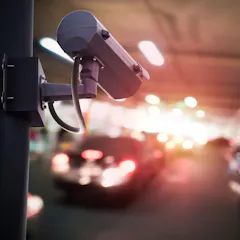
These days surveillance isn’t just CCTV. Police now have access to body cams, drones and facial recognition systems – and it’s helping police not only solve crime, but prevent it too.
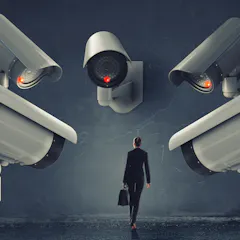
As CCTV cameras become more widespread, it’s becoming more difficult for people to protect their locational privacy in public.

China’s offensive ‘blackface’ skit intended to highlight the positive aspects of China-Africa relations, has done the opposite.

The COAG agreement to share our biometric data - including some photo ID - is an erosion of our privacy and will give people a false sense of comfort.

Family violence will not always be ‘obvious’ to CCTV. Therefore measures must be put in place to ensure that footage cannot be used against victims should circumstances of violence be challenged.
Top contributors
-

Emeritus Professor in Law and Criminal Justice, Adelaide University
-
Professor and Director, Centre for Research into Information, Surveillance and Privacy, University of Stirling
-
PhD Candidate in Criminology, The University of Melbourne
-
Research Director of the Security and Surveillance Research group; Professor, The University of Queensland
-
Jerry Lee Fellow in Experimental Criminology and Lecturer in Evidence Based Policing, University of Cambridge
-
Lecturer and Tutor in Critical and Cultural Studies, City Campus., Macquarie University
-
Researcher, Western Sydney University
-
Lecturer in Psychology, University of Strathclyde
-
Professor of Digital Society, University of Glasgow
-
Professor of Economics, Manchester Metropolitan University
-
Teaching Fellow and Consultant in Applied Ethics, University of Leeds
-
Associate Professor, School of Law, University of Canberra
-
Professor of the Practice and Faculty Director of the Master's in Applied Intelligence, Georgetown University
-
Assistant Professor in Cultural Studies, Lingnan University
-
Senior Lecturer of Wellbeing Science, The University of Melbourne