

Canada’s three main political parties — the Liberals, Conservatives and NDP — have banded together to avoid privacy laws aimed at protecting voter data.
Articles on Privacy rights
Displaying 1 - 20 of 50 articles
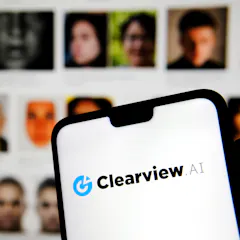
The decision underscores the importance of strengthening privacy laws and enforcement powers of regulators.

OpenAI has said it will take down the ChatGPT voice of Sky, which left Scarlett Johansson in ‘disbelief’. The actor previously played the role of an AI in the 2013 film Her.

Meta’s decision to charge users for an ad-free experience still requires that people have their information collected.

Vlogging has emerged as a new source of intimate entertainment, and for creators, potential income. However, they also raise serious questions about exploitation and the privacy rights of children.

The terms of the Australian Privacy Principle 3.6 are quite clear. So why is there not a single published case of this law being enforced?

Both Macron and Madonna have expressed concerns about genetic privacy. As DNA collection and sequencing becomes increasingly commonplace, what may seem paranoid may instead be prescient.
Governments are purposefully using laws that lack clarity, or ignore laws completely, to carry out illegal surveillance of their citizens.

Canada needs to overhaul its approach to addressing online harms if it wants to remain a human rights leader and champion of internet freedom.

Parties who design the technologies and platforms on which mobile apps are built and marketed must be brought within the legal accountability framework to close the privacy loop.

A health law expert explains what the regulation does and doesn’t protect.

The voices of recreational cannabis users are curiously missing from the official debate about legalisation.
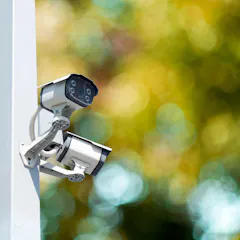
Surveillance tools such as these are perfectly legal in Australia, despite privacy concerns. But safeguards should still be put into place.

With face masks now compulsory or recommended in various parts of the country, how are facial recognition systems functioning?
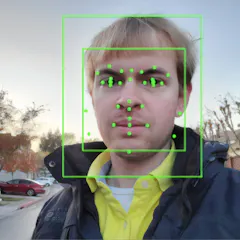
There are questions being raised about the legality of scanning, storing and sharing facial images. The law currently doesn’t prohibit even highly intrusive levels of surveillance by private entities.

South Africa is taking seriously concerns about the risks that monitoring can pose for human rights. But there are still loopholes.
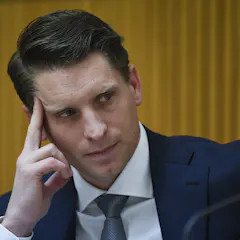
Human rights groups say the bill is an attempt to introduce mass surveillance to Australia and an egregious breach of individual privacy.

Privacy starts with the body and extends to digital data. There are few rules governing what companies can do – yet people can’t effectively protect their own privacy.

Surveillance software that identifies people from CCTV is eroding human rights and democracy.

Darwin is one of the aspiring ‘smart cities’ that is adopting Chinese technology that can identify and track individuals. Add changes in Australian law, and we have the makings of a surveillance state.
Top contributors
-

Professor of Business Law and Ethics, Indiana University
-
Associate Professor of Information; Associate Professor of Electrical Engineering and Computer Science, University of Michigan
-
Professor and Canada Research Chair in Communication Policy and Governance, McMaster University
-
Professor of law and ethics, Georgia State University
-
Emeritus Professor in Law and Criminal Justice, Adelaide University
-
Ph.D. Student in Electrical Engineering, University of Washington
-
Professor of Teacher Education, University of Toronto
-
Associate Professor in Law, Australian National University
-
Director, Tas Law Reform Institue / Associate Professor, University of Tasmania, University of Tasmania
-
Professor of Social Work, CQUniversity Australia
-
Researcher at Microsoft Research, Cambridge UK. Previously, The University of Queensland
-
Director of UWA Centre for Software Practice, The University of Western Australia
-
Legal researcher, KU Leuven
-
Bernard A. Galler Collegiate Professor of Electrical Engineering and Computer Science, University of Michigan
-
Professor of Law, Wayne State University