
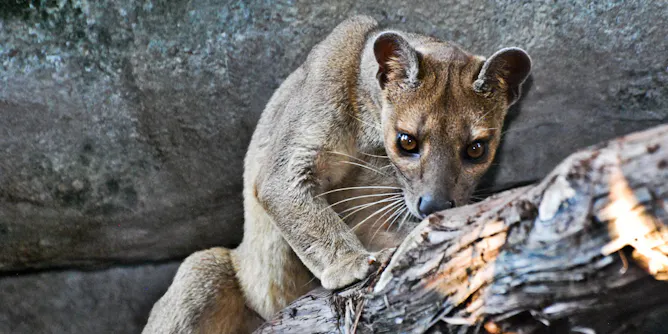
The fossa, Madagascar’s largest predator, is a cat-like carnivore that eats everything from insects to lemurs. Because they are rare and elusive, scientists know very little about them, including how many there are.
Articles on Carnivores
Displaying 41 - 50 of 50 articles
The coworking company, WeWork, has banned meat, citing an attempt to reduce its carbon footprint. For centuries, philosophers have made a moral case against meat-eating.

There have been an increasing number of reported anti-meat incidents around the world as more consumers second-guess their relationship with animal proteins. How can the meat industry adjust?
An attack on a WA mine worker has highlighted the danger of wild dingoes, particularly when attracted by humans’ food - one of the factors that can make an attack by wild predators much more likely.
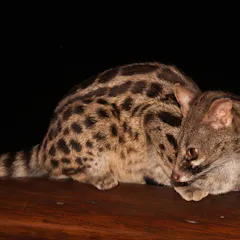
Instead of causing problems for farmers, carnivores could actually be beneficial by controlling rodent pests.
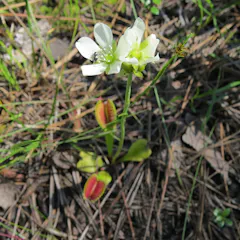
Venus flytrap plants have ‘traps’ that snap shut on insect prey. But they also rely on insects for pollination. New research suggests how the plant avoids eating its allies.
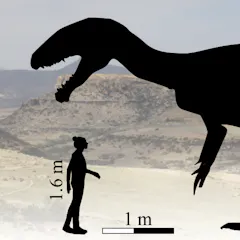
Until this discovery, theropod dinosaurs were thought to be considerably smaller, at three to five metres in body length, during the Early Jurassic.
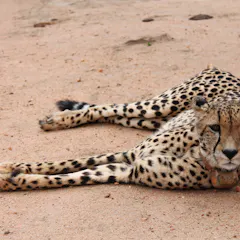
The land reform programme in Zimbabwe has come at the cost of wildlife and opens up the debate on people versus nature. But there is a way forward.
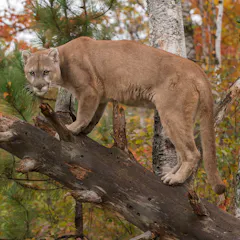
Carnivorous predators play an important, and until now unknown, role in preserving plant populations in the territories they inhabit.
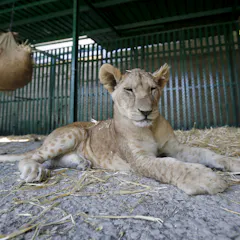
Some say that keeping wild animals in captivity is cruel. Others believe they promote conservation and give people a link to nature.
Top contributors
-

Professor in Wildlife Ecology and Conservation, School of Life & Environmental Sciences, Deakin University
-
Postdoctoral Research Fellow in the Department of Zoology, University of Venda, Researcher at IGDORE, and Honorary Research Fellow in the Department of Anthropology, Durham University
-
Professor of Fish, Wildlife, and Conservation Biology and Director, Center for Human-Carnivore Coexistence, Colorado State University
-
Associate lecturer, University of Venda
-
Assistant Professor in the Human Dimensions of Natural Resources, Colorado State University
-
Professor of Entomology, North Carolina State University
-
Professor of Environmental Studies, University of Wisconsin-Madison
-
PhD candidate, Penn State
-
Lecturer in the School of Applied Sciences, Edinburgh Napier University
-
Lecturer, RMIT University
-
Research Associate, North Carolina State University
-
Associate Professor of Applied Ecology, North Carolina State University
-
Adjunct professor, Universidad Nacional de La Pampa
-
Professor of Ecology, Natural Resources Institute, University of Greenwich
-
Professor of Philosophy, Arizona State University