
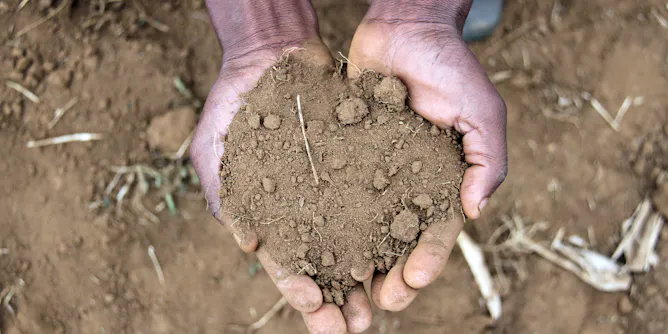
Microbial ecology helps explain how ecosystems respond to environmental pressures.
Articles on Carbon cycle
Displaying 1 - 20 of 57 articles
Peatlands are central to climate change, yet basic questions remain unanswered. A global research community has mapped out what we most urgently need to know.
Earth has experienced many icehouse and greenhouse climates. A new study shows how they connect to plate tectonics.

The environmental cost of fast fashion purchasing could be reduced with some industry changes.

The project collects troves of data from the best climate models around the world – and the newest update to it is now underway.
The US is set to shut down a crucial satellite that monitors how much carbon is in the atmosphere.
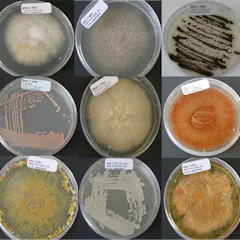
A culture collection of more than 500 fungal strains from seawater, sediments and seaweeds is helping scientists better understand marine fungi.
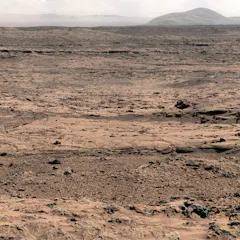
NASA’s Curiosity rover has spotted carbon-containing minerals that can tell scientists more about what ancient Mars’ atmosphere may have looked like.
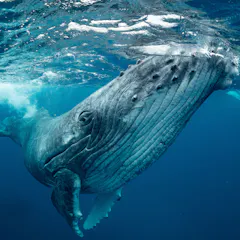
Their carcasses and faeces are also important to the ocean.
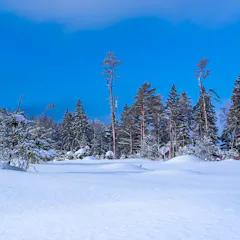
Tree planting can help address the climate and biodiversity crises – but only in the right circumstances.
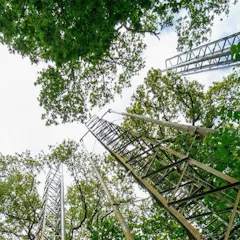
But this is no long-term solution for storing carbon.

New research shows carbon in soil minerals is much more important than anybody realised.
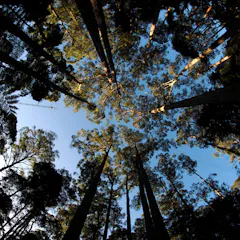
Our tallest trees are world champions when it comes to capturing and storing carbon, but they don’t like the heat. Climate change will trigger mass tree deaths in Tasmania. Here’s what can be done.
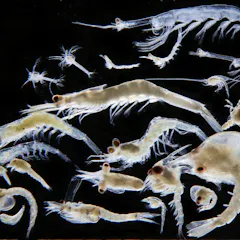
Marine life known as zooplankton might be the biggest problem with getting carbon cycling right in climate models. The potential variations in carbon uptake are greater than global transport emissions.
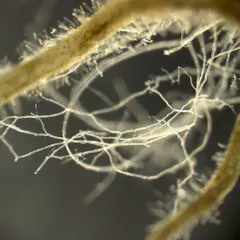
New research about underground fungal filaments suggests these networks store a vast amount of carbon. All the more reason to preserve them.
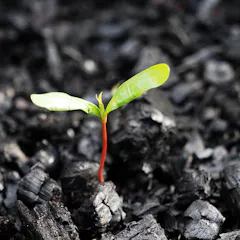
Labor must resist the false promise of carbon offsets in its safeguard mechanism. The only thing that matters is actually cutting emissions
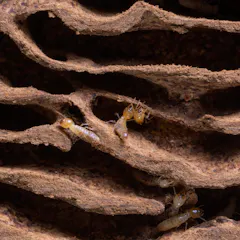
Termites are about to experience a significant global expansion in their prime habitat, thanks to climate change. Here’s what that means for deadwood.
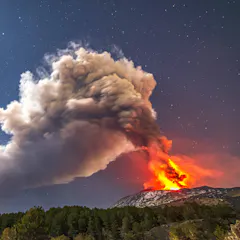
New modelling shows how tectonic plate movements, carbon-rich deep-sea sediment, and mountain weathering have regulated Earth’s climate.
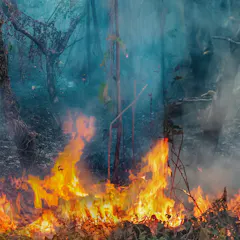
Scientists are studying fires in Africa at different times of year to see how the smoke from these fires changes over the year.

Here’s what to look out for.
Top contributors
-

Chief Research Scientist, CSIRO Environment; Executive Director, Global Carbon Project, CSIRO
-
Professorial Fellow, The University of Melbourne
-
Senior Research Scientist, CSIRO
-
Professor and Canada Research Chair, Trent University; University of Cambridge
-
ARC DECRA Fellow, School of Geosciences, University of Sydney
-
ARC Early Career Industry Fellow, School of Geography, Earth and Atmospheric Sciences, The University of Melbourne
-
ARC Future Fellow, Sedimentology, University of Sydney
-
Research scientist, NASA
-
University of Technology Sydney
-
Emeritus Professor, Advanced Wellbeing Research Centre, Sheffield Hallam University
-
Snr research fellow in environmental sciences, James Cook University
-
Professor of Geophysics, University of Sydney
-
Science Writer, University of Pennsylvania
-
Visiting Researcher, National Oceanography Centre, University of Southampton
-
Principal research scientist, CSIRO