
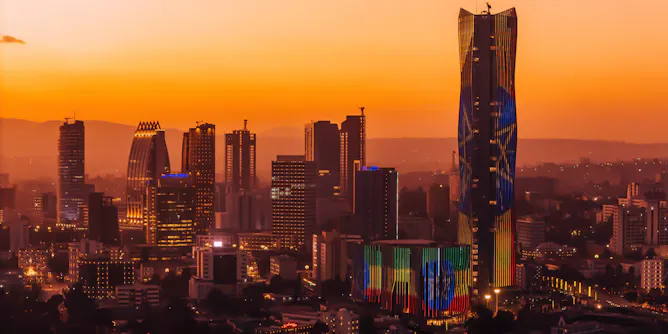
Africa has a chance to host a climate conference that makes an impact.
Articles on Carbon markets
Displaying 1 - 20 of 53 articles
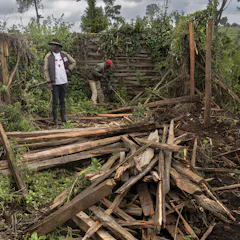
Efforts to protect land and environmental resources, including fighting climate change, often end up displacing people who have lived in those places for generations.

A well-designed carbon market can support Ukraine’s recovery and strengthen its ability to withstand future conflict.
Africa is heavily dependent on agriculture. At this year’s COP30 conference, the continent needs to secure more funding to adapt land to climate disasters.
A long-time leader of California’s climate efforts explains how governors from Brazil to Indonesia have become the leading edge in fighting climate change. Several are meeting this week in Brazil.

Trump has pulled the US out of the Paris Climate Agreement and vowed to increase fossil fuel extraction.

There are lessons from the EU’s highly financialised cap-and-trade market.
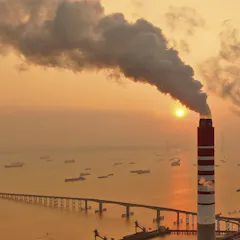
The new system may essentially give countries and companies permission to keep polluting.
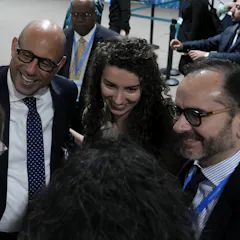
Expectations were low for the latest UN climate summit. But climate law expert Jacqueline Peel – who was at the talks – explains what progress was made.
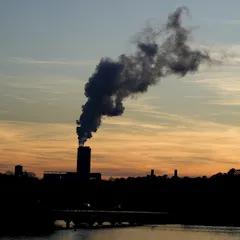
The time has come to develop Canada’s participation in international carbon markets.

A deep dive into 866 public companies and 1,413 carbon projects reveals some twists in who relies on cheap offsets and who chooses to cut their own emissions instead.
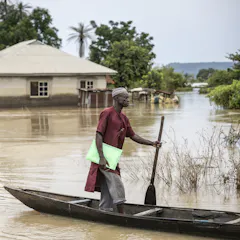
Nigeria’s representative at COP29 must realise that an unimpressive outing will leave citizens more at the mercy of climate change impacts.

Crofters who have managed the land for centuries are being offered dubious rewards to risk their rights.

Sometimes when taking these actions, however, carbon storage is prioritised at the expense of biodiversity. But that need not be the case.

The UN climate conference brought some progress. A former UN official who has been involved in international climate policy for years explains what has to happen now for that progress to pay off.
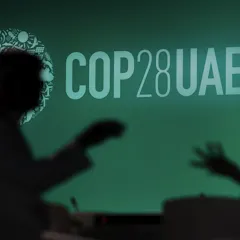
A veteran of UN climate talks lays out the top themes and their sticking points, including concerns about the host country’s oil interests.
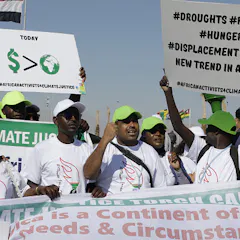
Kenya, Malawi, Gabon, Nigeria and Togo are already interested in scaling carbon credit production.
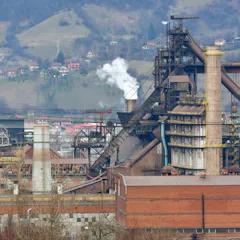
Already lacking the means to decarbonise their industry or turn to greener alternatives, poor countries could also be deprived of revenues from exports to Europe.
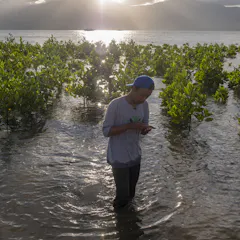
As the world’s largest archipelagic state, Indonesia has great potential to earn carbon credits to protect its endangered mangroves and seagrass – which now store around 17% of global “blue carbon”.
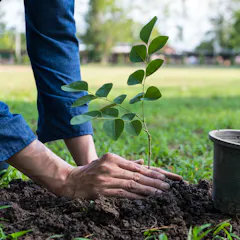
Carbon offsetting is often met with scepticism, but a new report suggests that if correctly designed it can be an important part of the net zero transition.
Top contributors
-

Professor of Practice in Climate Policy, University of Oxford
-
Academic position - Research Associate at the Centre for Resources, Energy and Environmental Law, The University of Melbourne
-
Research Fellow, London School of Economics and Political Science
-
Professor in Organisation & Sustainability, University of Exeter
-
Resilient Agriculture Coordinator, Drake University
-
Professor of Resources and Environmental Policy, UCL
-
Chief Economist, Te Herenga Waka — Victoria University of Wellington
-
Research Officer, Grantham Research Institute, London School of Economics and Political Science
-
Researcher in Ecology, Environment and Sustainable Development,, Tata Institute of Social Sciences
-
Senior Lecturer in Political Economy, University of Sydney
-
Research Associate, Centre for Climate Economics and POlicy
-
Professor, Environment and Development Sociology, The University of Queensland
-
The University of Melbourne
-
Minter Ellison Climate Change Scholar, Queensland University of Technology
-
Professor of Environmental Economics, University of Oxford