

Beyond the monetary value of carbon credits sits something more complex: every restoration project involves trade-offs, and somebody carries them.
Articles on Carbon credits
Displaying 1 - 20 of 51 articles
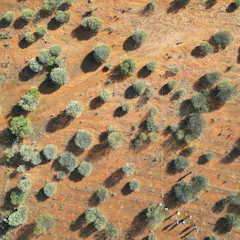
Critics have taken aim at an Australian scheme meant to encourage forest regrowth. But independent assessments show the regeneration schemes are working

Nature-based solutions like mangrove restoration are key to climate action, but weak monitoring can overstate carbon storage, creating ‘ghost carbon’.

Many Formula 1 innovations have made their way from the racetrack to regular roads. But technological improvements can only go so far toward limiting greenhouse gas emissions.

Four essentials are crucial for establishing scientifically credible nature markets.

A well-designed carbon market can support Ukraine’s recovery and strengthen its ability to withstand future conflict.

75% of Mount Kilimanjaro’s indigenous plants have been wiped out over the last century.

Setting up the world’s biggest giant tropical forest reserve in the Congo Basin is a step towards conserving the area and creating jobs for local communities.

Australia has long relied on super-cheap carbon credit, despite well-established concerns about their integrity.

We are turning ever more nature into a product we buy and sell.

There are lessons from the EU’s highly financialised cap-and-trade market.

Getting carbon credit regulations right has the potential to protect the climate, and the rights of the people whose livelihoods and lands are often directly affected by carbon offsets.

Your organisation should probably ditch offsets too.

Australia’s carbon credit scheme largely fails to protect threatened species, despite assumptions to the contrary. The findings provide cautionary lessons for the nature repair scheme.

Australia cannot risk any further declines in its biodiversity resulting from harvesting native forests, or actions that bring further risks to its emissions-reduction goal.

Carbon credits aren’t inherently bad – the system needs greater transparency and better monitoring to ensure credibility.
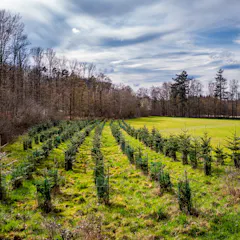
Offsetting greenhouse gas emissions can be an effective tool for limiting global warming. But many offset projects fail to meet their GHG reduction targets.

The global carbon removal industry must be drastically scaled up to avert climate breakdown.

Incentives have so far benefited large landowners and created lifeless plantations.

Crofters who have managed the land for centuries are being offered dubious rewards to risk their rights.
Top contributors
-

Professor and Director of Research, ANU Law School, Australian National University
-
Professor, Australian National University
-
Senior lecturer, Australian National University
-
Assistant Director of the Global Systems Institute, University of Exeter
-
Senior Lecturer, Public Sector Management, School of Business, UNSW
-
Programme Manager at the Smith School of Enterprise and the Environment, University of Oxford
-
Professor of Sustainable Agriculture, University of Tasmania
-
Senior lecturer, Te Kunenga ki Pūrehuroa – Massey University
-
Assistant Professor of Economics, University of Virginia
-
Senior Lecturer in Environmental Economics & Policy, Bangor University
-
University of the Sunshine Coast
-
Senior Research Scientist, Physical Geography and Ecosystem Science, Lund University
-
Professor, Menzies Institute for Medical Research, University of Tasmania
-
Professor of Ecology, Charles Darwin University
-
Professor & Director, Primary Industries Climate Challenges Centre, The University of Melbourne