
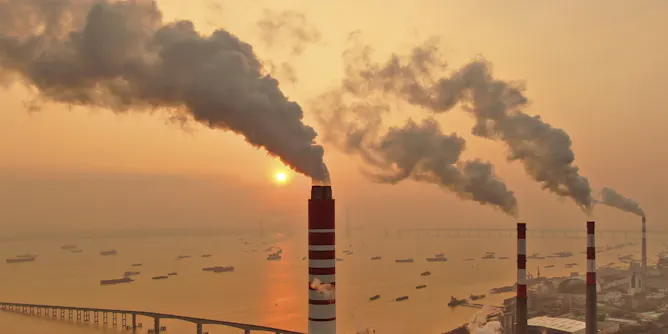
The new system may essentially give countries and companies permission to keep polluting.
Articles on Carbon trading
Displaying 1 - 20 of 32 articles
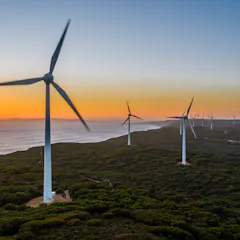
The system operating in Australia from 2012 to 2014 was economically and environmentally efficient.
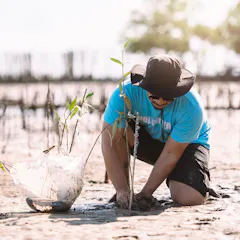
Carbon credits aren’t inherently bad – the system needs greater transparency and better monitoring to ensure credibility.
Internal carbon prices – also known as shadow carbon pricing – could prod companies into taking decisions that are good for both business and the planet.
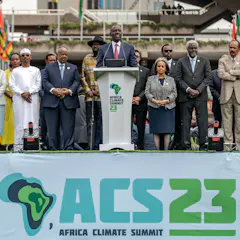
There were three important moments in Africa this year which highlight a mix of progress, priorities and potential pitfalls in the fight against climate change.
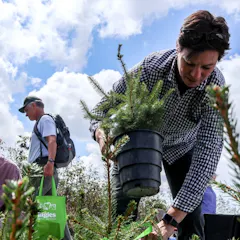
Any smart climate strategy will need to simultaneously move away from fossil fuels and protect biodiversity, including through carbon sink preservation and a shift toward sustainable agriculture.
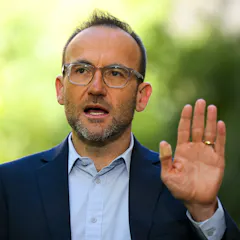
Labor has ruled out banning new fossil fuel developments. Even so, there are many climate deals the government and the Greens could strike
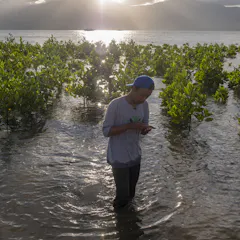
As the world’s largest archipelagic state, Indonesia has great potential to earn carbon credits to protect its endangered mangroves and seagrass – which now store around 17% of global “blue carbon”.
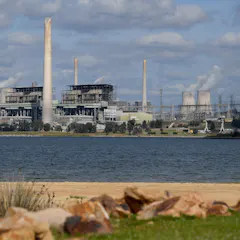
The safeguard mechanism is supposed to stop Australia’s largest polluters from emitting over a certain threshold. It’s been widely criticised for lacking teeth, and is finally under review.
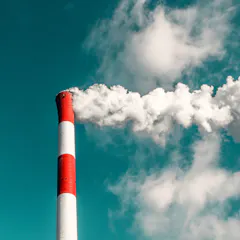
Right now, the safeguard mechanism meant to reduce emissions is not fit for purpose. Labor is exploring ways to fix it - and create a proper pollution market.
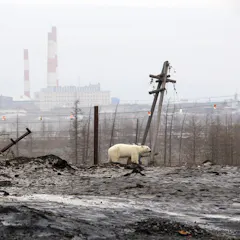
The war in Ukraine threatens to turn back the clock on Russia’s climate progress, with some calling on the country to leave the Paris Agreement and roll back environmental regulations.
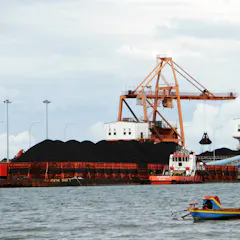
What should be done to enhance Indonesia’s emission trading scheme’s accountability? We list three points to consider to further enhance the scheme’s transparency.
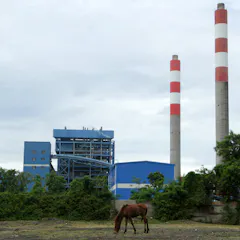
Indonesia has embarked on its carbon-pricing journey. However, many elements regarding the scheme remain unknown. Here’s what we need to know before the pilot project commenced.
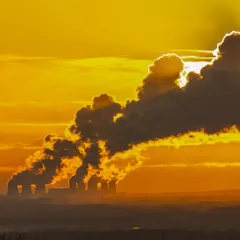
Emissions trading systems are supposed to speed up decarbonisation, but they are not yet capable of doing so in practice.
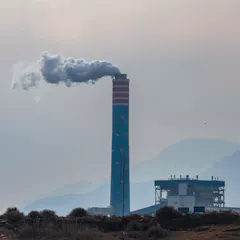
The dust has settled on COP26 and one of the summit’s few achievements looks decidedly less impressive.
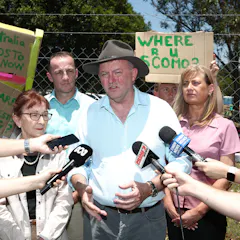
The Australian Labor Party has options on emissions reduction targets, but it is still running scared from the best mechanism to achieve them.
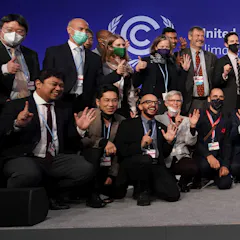
Stabilising Earth’s climate depends on a lot more than deals struck at conferences like Glasgow. But those agreements set a frame for real-world decisions.

Uncertainty about carbon market rules will be problematic for New Zealand, given its reliance on overseas carbon trading to meet its new climate pledge.
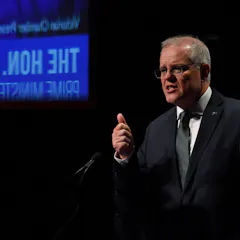
The prime minister road-tested an avalanche of slogans on Wednesday, some of them clearly false.
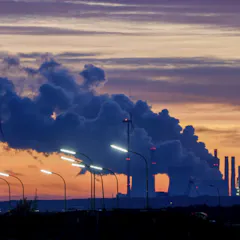
A global emissions-credit trading system could bring an end to the production of coal-fired electricity, spur innovation and help countries meet their greenhouse gas emissions goals.
Top contributors
-

Professor, Crawford School of Public Policy and Director, Centre for Climate and Energy Policy, Australian National University
-
Professor in Organisation & Sustainability, University of Exeter
-
Senior lecturer, Australian National University
-
Manager, International Research & Projects, Climateworks Centre
-
Senior Analyst, Climateworks Centre
-
Senior Research Fellow, School of Geography, Earth and Atmospheric Sciences, The University of Melbourne
-
Scientia Professor of Economics, UNSW
-
Adjunct Senior Research Fellow, University of New England
-
Visiting Fellow, Crawford School of Public Policy, Australian National University
-
Professor in International Relations, Royal Holloway, University of London
-
Professor, S.J. Hall Chair in Forest Economics, University of California, Berkeley
-
Ph.D. Candidate in Environmental Economics, The University of Melbourne
-
Research Assistant Environmental Governance Lab, PhD Student in Political Science, University of Toronto
-
Senior Research Officer, Center for International Forestry Research – World Agroforestry (CIFOR-ICRAF)
-
Geographer, University of Bern