

Polluting companies in South Africa have had to pay a tax on their carbon emissions since 2019. This gives them a good incentive to reduce emissions.
Articles on Carbon price
Displaying 1 - 20 of 233 articles
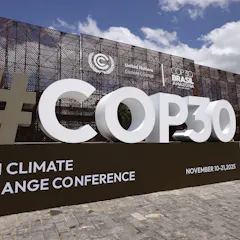
Proposed changes to New Zealand’s landmark climate law amount to a “soft renege” on the Paris Agreement, with potentially significant consequences for the economy.

To cut emissions fast, the Australian government will have to dial back its command-and-control approach – and put a price on carbon.

Australia killed off its world-leading carbon price. As budget pressure mounts, economists want it back on the table.

Despite the Canada Carbon Rebate’s effectiveness, Canada’s major political parties are willing to scrap it because it’s not politically rewarding.
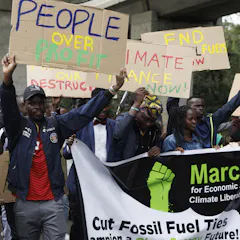
COP29 should end subsidies to fossil fuel companies, compel large-scale emitters to compensate affected regions and ensure that carbon taxes reflect the true cost of cleaning up pollution.
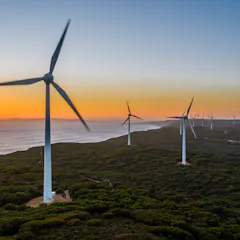
The system operating in Australia from 2012 to 2014 was economically and environmentally efficient.

The researchers found most emissions reduction relied on a mix of policies, rather than a single solution.
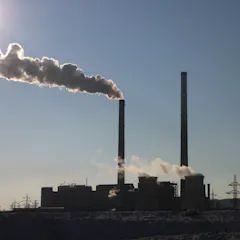
Internal carbon prices – also known as shadow carbon pricing – could prod companies into taking decisions that are good for both business and the planet.

While governments are often blamed for a perceived ‘unjust transition,’ it is actually the industry itself which poses the biggest threat to the future of oil and gas workers.

For two years, Australia had a carbon price. Now we have a shadow price which won’t be paid by any emitter.

Mainstream economics has been complicit in the climate change crisis as it falsely treats climate change as a mere side-effect of production or a minor aberration.

Why the public resistance to carbon tax policies? New research suggests a few key factors that may play a role in influencing popular support for carbon tax efforts in Canada.

Governments that publicly commit to carbon pricing are compelled to get their own house in order.

Carbon pricing can be a powerful tool to combat climate change and reduce emissions, but it needs to be accompanied by improved regulations, clean technology subsidies and financing mechanisms.
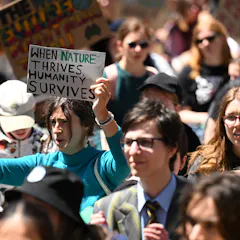
One set of ideas runs counter to the mainstream consensus that technology will save us from climate change. Can degrowth ever win enough converts to persuade humanity to change course?

A little more than five years ago, there was a strong federal-provincial consensus around climate action. With the election of several Conservative premiers since then, that consensus has vanished.

30 of the 50 economists surveyed want a carbon price of the kind introduced by Julia Gillard in 2012 and abolished by Tony Abbott in 2014. Several say there’s little “time left to act seriously”.
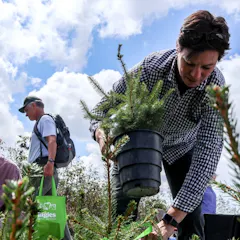
Any smart climate strategy will need to simultaneously move away from fossil fuels and protect biodiversity, including through carbon sink preservation and a shift toward sustainable agriculture.

Taxing consumption that contributes to climate change hits the poor the hardest, while overlooking the huge profits tied to greenhouse gas emissions.
Top contributors
-

Professor, Crawford School of Public Policy and Director, Centre for Climate and Energy Policy, Australian National University
-
Scientia Professor of Economics, UNSW
-
Senior Industry Fellow, Environment and Planning, RMIT University
-
Professor, Environmental and Urban Change, York University, Canada
-
Senior Fellow in Energy and Climate Change, Grattan Institute
-
Academic position - Research Associate at the Centre for Resources, Energy and Environmental Law, The University of Melbourne
-
Professor, School of Economics, The University of Queensland
-
Senior Research Associate, Renewable Energy & Energy Systems Analyst, UNSW
-
Climateworks Centre CEO, Monash University
-
Emeritus professor, Australian National University
-
Research Fellow, Curtin University
-
Senior Research Fellow and Associate Professor, Melbourne Climate Futures initiative, The University of Melbourne
-
Professor and Director, Centre for Environmental Economics and Policy, The University of Western Australia
-
Professor of International Relations, The University of Queensland
-
Director of the Climate Change Institute, Australian National University