
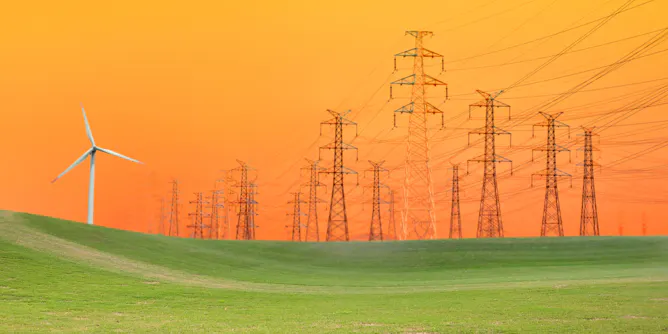
Environment groups are pushing the Greens to accept Labor’s emissions target. What do these tensions mean for climate action?
Articles on Carbon markets
Displaying 21 - 40 of 53 articles
The dust has settled on COP26 and one of the summit’s few achievements looks decidedly less impressive.

Removing carbon from the atmosphere raises political questions that should be addressed by democratic institutions.

Uncertainty about carbon market rules will be problematic for New Zealand, given its reliance on overseas carbon trading to meet its new climate pledge.

President Joe Biden needed a Plan B, one that Congress could approve, to take to the UN climate conference. But his new strategy is unlikely to meet the country’s emissions reduction goals for 2030.
The world isn’t on track to avoid dangerous climate change, and this year’s climate conference, COP26, is crucial, a former senior UN official writes.

Countries are expected to commit to more ambitious targets for 2030, but how they will achieve them is still up for debate.

Energy and climate policies aren’t always headed in the same direction, but if they work together they can tackle two of the biggest challenges of our time.

CEOs, including at oil companies and airlines, are relying on trees and oceans to capture and store carbon for them, but the numbers don’t add up.

Companies are using these credits to offset their emissions, though many projects won’t meaningfully reduce carbon in the atmosphere.

Activists wanted nations to make bigger climate commitments at the Madrid COP-25 meeting, but the meeting’s real goal was agreeing on rules for pricing carbon pollution.

Who wins, who loses and whose natures are being talked about when nature-based solutions are proposed?
California’s new plan to fight global climate change is innovative. But it raises tricky ethical questions with no easy answers.

Under the current rules, the federal government takes the most responsibility for buying carbon credits. A blockchain-driven market would be faster, smarter, and much more open.
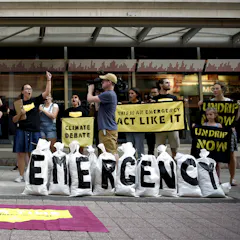
Climate change could take centre stage during Canada’s federal election.

New Zealand is a trailblazer for emissions trading, which could help drive a low-emission transformation, both domestically and overseas, in a post-Paris world.

Whether or not farmers believe human activities are changing the climate (many don’t), an agriculture specialist urges them to pursue payments for techniques that return carbon to the soil.
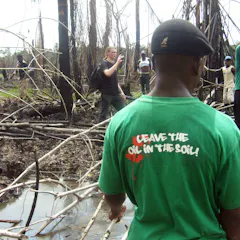
Global indigenous and human rights movements that oppose the oil, coal and gas industries are charting a path for a fair and just transition to a low carbon energy future.
For the Paris deal to succeed we’ll need some effective carbon matchmaking.

The climate agreement is littered with references to a whole range of new and expanded market-based tools.
Top contributors
-

Professor of Practice in Climate Policy, University of Oxford
-
Academic position - Research Associate at the Centre for Resources, Energy and Environmental Law, The University of Melbourne
-
Research Fellow, London School of Economics and Political Science
-
Professor in Organisation & Sustainability, University of Exeter
-
Resilient Agriculture Coordinator, Drake University
-
Professor of Resources and Environmental Policy, UCL
-
Chief Economist, Te Herenga Waka — Victoria University of Wellington
-
Research Officer, Grantham Research Institute, London School of Economics and Political Science
-
Researcher in Ecology, Environment and Sustainable Development,, Tata Institute of Social Sciences
-
Senior Lecturer in Political Economy, University of Sydney
-
Research Associate, Centre for Climate Economics and POlicy
-
Professor, Environment and Development Sociology, The University of Queensland
-
The University of Melbourne
-
Minter Ellison Climate Change Scholar, Queensland University of Technology
-
Professor of Environmental Economics, University of Oxford