
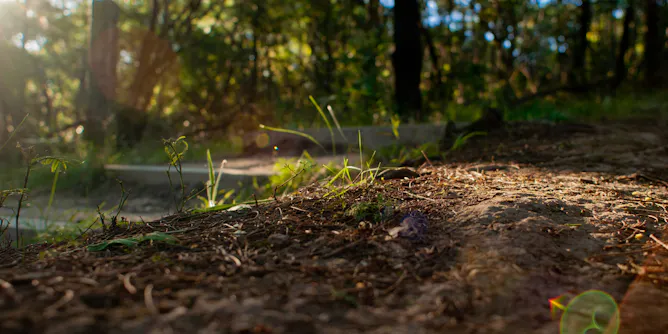
Pollution has increased carbon in our soils - which is good for climate change. But this carbon may not stay there for long.
Articles on Carbon cycle
Displaying 41 - 57 of 57 articles
Scientists want to exploit a natural process of carbon storage.

Extreme wet years are getting wetter and more common. This means Australia’s terrestrial ecosystems will play a larger role in the global carbon cycle.
When temperatures dipped between 1500 and 1750, the world’s landscapes responded by storing more carbon. Now, with temperatures climbing, it’s possible they will do the opposite and release even more.
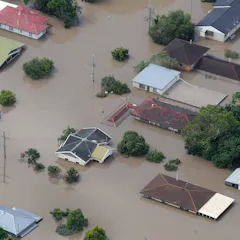
Since 1999, Australia has swung between drought and deluge with surprising speed, because El Niño has fallen into sync with similar patterns in the Indian and Southern Oceans.
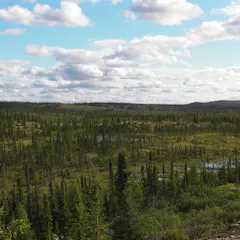
Global warming is changing the movement of carbon within northern ecosystems to the point where the Arctic could become a net source, rather than sink, of greenhouse gas emissions.
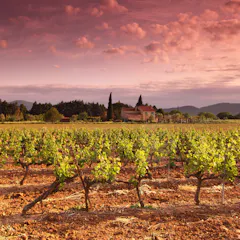
Plans to store more carbon in French soil could have a massive impact on the country’s emissions – if they can pull it off.
Dr Mike Raupach died earlier this week after a brief illness. He passed away peacefully at home with his family in Canberra, Australia. He was 64. Mike was a brilliant and outstanding scientist. He was…
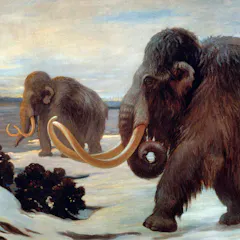
It’s well known that carbon in the atmosphere is causing global warming. What is less well known, outside of scientific circles at least, is the role oceans have to play in this. Our seas contain 60 times…
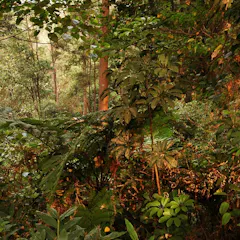
It’s no exaggeration to say the tropics drive our planet’s carbon cycle – the constant transfer of carbon back and forth, on a global scale, between living things and the environment. Understanding the…
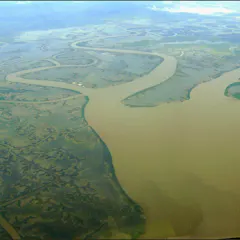
Record-breaking rains triggered so much new growth across Australia that the continent turned into a giant green carbon sink to rival tropical rainforests including the Amazon, our new research shows…
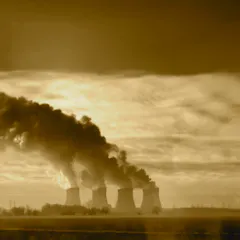
Growth in global carbon emissions is slowing, but is still more than enough to increase global temperatures by more than 2C, according to a report released today by the Global Carbon Project. Carbon emissions…
A study conducted by researchers at the Yale School of Forestry and Environmental Studies has shown the effect that the relationship…
While it was previously thought that charcoal remained in the soil where it was formed, a new discovery has been made that…
The most abundant bacteria on record are also the hosts of the most abundant viruses, a result found by researchers from…
Bacteria that live in seabeds could provide vital knowledge about the global carbon cycle. The bacteria deep in the ocean…
Diamonds from 700 kilometres below the earth’s surface show the carbon cycle extends deep into the planet’s interior. The…
Top contributors
-

Chief Research Scientist, CSIRO Environment; Executive Director, Global Carbon Project, CSIRO
-
Professorial Fellow, The University of Melbourne
-
Senior Research Scientist, CSIRO
-
Professor and Canada Research Chair, Trent University; University of Cambridge
-
ARC DECRA Fellow, School of Geosciences, University of Sydney
-
ARC Early Career Industry Fellow, School of Geography, Earth and Atmospheric Sciences, The University of Melbourne
-
ARC Future Fellow, Sedimentology, University of Sydney
-
Research scientist, NASA
-
University of Technology Sydney
-
Emeritus Professor, Advanced Wellbeing Research Centre, Sheffield Hallam University
-
Snr research fellow in environmental sciences, James Cook University
-
Professor of Geophysics, University of Sydney
-
Science Writer, University of Pennsylvania
-
Visiting Researcher, National Oceanography Centre, University of Southampton
-
Principal research scientist, CSIRO