

As environmental engineers, invasive caterpillars can have remarkable effects on water quality and soil conditions. But from a climate perspective they’re pretty much a nuisance.
Articles on Carbon cycle
Displaying 21 - 40 of 57 articles
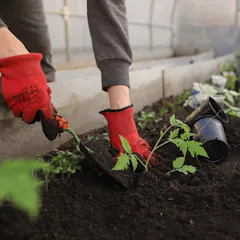
If we want to reduce carbon emissions and preserve planetary ecosystems, we need to protect our soils.
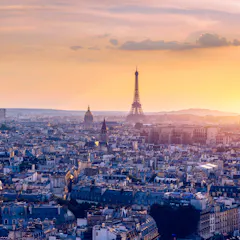
New research has found that low-rise urban environments are more space and carbon efficient than high-rise buildings which have a drastically higher carbon impact.
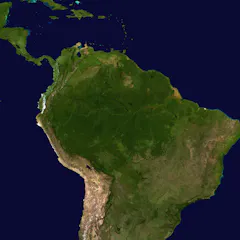
Even this radical scenario wouldn’t be as effective as it may first seem.

Plastic has become a major part of the carbon cycle, a discovery that has implications for how we tackle climate change.
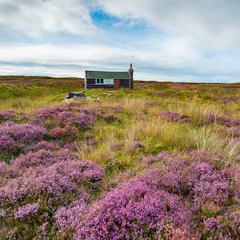
The UK’s marshes, bogs and fens provided the bare necessities of daily life for many centuries.

It depends on where and how it’s grown, and how it is disposed of or recycled.

Warmer temperatures cannot increase the amount of carbon deciduous trees absorb in each growing season, a new study suggests.
The updated methods are providing a clearer picture of how Earth and its inhabitants evolved over the past 60,000 years - and thus, providing new insight into its future.

The age of a forest can influence how effectively it offsets our emissions.
To avoid global warming on a catastrophic scale, nations need to reduce emissions and find ways to pull carbon from the air. One promising solution: spreading rock dust on farm fields.
Tree planting projects that use non-native trees risk releasing more carbon back into the atmosphere, undermining efforts to fight climate change.
Earth’s has gone through major climate changes in the past. They happened on time scales of millions of years and triggered mass extinctions. Our emissions are changing the climate much faster.
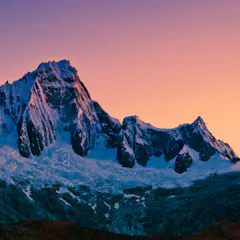
‘Black carbon’ from rainforest fires is settling on glaciers and making them melt faster, according to new research.
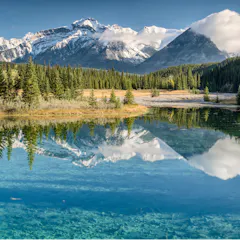
Lakes are the final resting place for many of the Earth’s plants – and these organic graveyards are about to get a whole lot busier.

Discussions about climate change often skirt around the issue of population growth, but it is the main driver of rising carbon dioxide levels and many other environmental changes on a planetary scale.
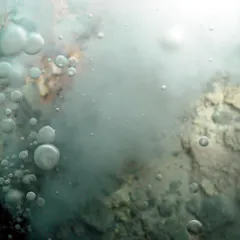
Thousands of years ago, carbon gases trapped on the seafloor escaped, causing drastic warming that helped end the last ice age. A scientist says climate change could cause this process to repeat.
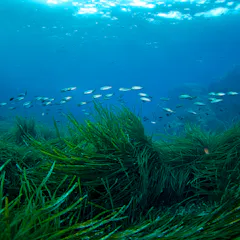
Vast ‘underwater meadows’ would lock up lots of carbon.
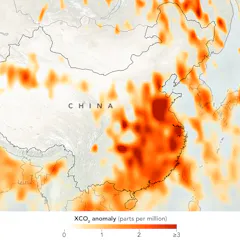
New data from a NASA satellite show in unprecedented detail the flow of carbon dioxide into the atmosphere. Future satellites should even be able to detect the signatures of individual power stations.
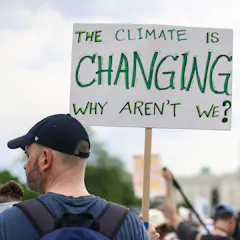
Why is it so hard to reach consensus about how to slow climate change? Multiple time lags get in the way: some make it hard to convey the risk, while others prolong the search for solutions.
Top contributors
-

Chief Research Scientist, CSIRO Environment; Executive Director, Global Carbon Project, CSIRO
-
Professorial Fellow, The University of Melbourne
-
Senior Research Scientist, CSIRO
-
Professor and Canada Research Chair, Trent University; University of Cambridge
-
ARC DECRA Fellow, School of Geosciences, University of Sydney
-
ARC Early Career Industry Fellow, School of Geography, Earth and Atmospheric Sciences, The University of Melbourne
-
ARC Future Fellow, Sedimentology, University of Sydney
-
Research scientist, NASA
-
University of Technology Sydney
-
Emeritus Professor, Advanced Wellbeing Research Centre, Sheffield Hallam University
-
Snr research fellow in environmental sciences, James Cook University
-
Professor of Geophysics, University of Sydney
-
Science Writer, University of Pennsylvania
-
Visiting Researcher, National Oceanography Centre, University of Southampton
-
Principal research scientist, CSIRO