
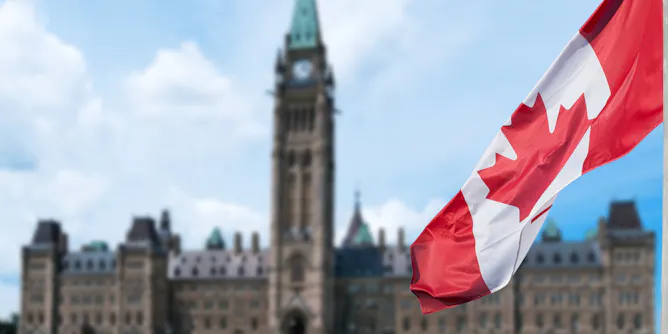
Utilizing carbon contracts for difference mechanisms could help the federal government maintain its climate policies. But overly relying on these tools brings its own risks.
Articles on Carbon
Displaying 21 - 40 of 178 articles

While it’s too early to say whether graphene will live up to the hype, it’s now appearing in everything from motorcycle helmets to aircon units.

The rise of ‘pyrokaryotes’ could reduce the availability of fish humans eat, and hamper the ocean’s ability to absorb carbon emissions.
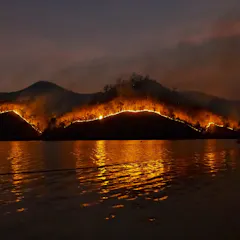
The record-breaking and destructive forest fires of the summer of 2023 made headlines. But how did they affect the millions of lakes in the burned catchment areas?
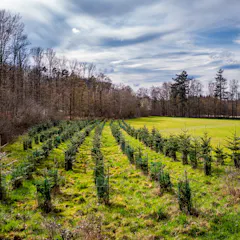
Offsetting greenhouse gas emissions can be an effective tool for limiting global warming. But many offset projects fail to meet their GHG reduction targets.

A tonne of carbon dioxide is released for every tonne of cement manufactured from limestone.

Blue carbon is stored in mangroves, seagrass and sediments. Discussions at the UN Ocean Decade conference reiterate the importance of preserving existing sea floor habitats, before it’s too late.
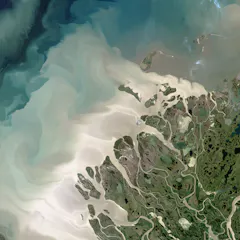
A new study shows how thawing permafrost and intensifying storms will change how water moves into and through Arctic rivers.
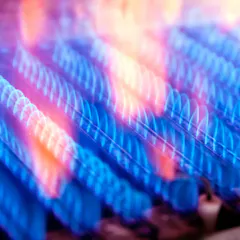
Underground thermal networks have the potential to revolutionize how Canadians heat their homes while helping to reduce carbon emissions.
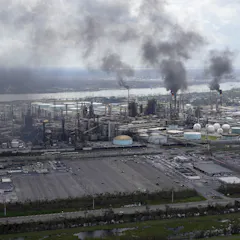
Human societies produce huge amounts of excess heat. Turning it into electricity could play a key role in achieving a net-zero society.

Hidden Peat, a new campaign from The Wildlife Trusts, encourages people to look out for peat-free alternatives and support their wider use.

Over two billion years from now, Earth will no longer be able to sustain life. A new study looks at how much life has ever existed and what this means for the discovery of new life-supporting planets.
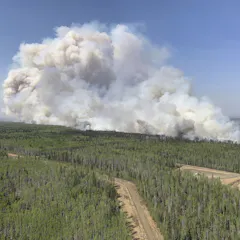
Current greenhouse gas inventories in Canada only consider “managed” lands. This must change before we can truly understand the scale of Canada’s carbon emissions.
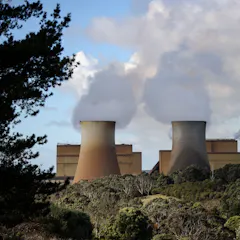
The deal is a global aspiration, not a legally binding agreement. But it should end the idea that burning carbon – in Australia and elsewhere – can continue on a significant scale beyond 2050.
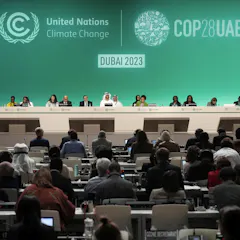
Does the science support the need for a fossil fuel phase out to reach 1.5 C? The answer depends on whether we believe that carbon capture and removal technologies can be deployed safely at scale.

New Zealand’s new government has vowed to explore ‘blue carbon’ options for removing atmospheric CO₂ to meet net zero goals. But first we need a national strategy for this developing field of science.
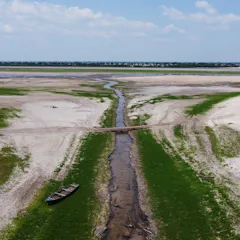
Brazil’s rainforest is a massive carbon store, so its severe drought could be a tipping point for the global climate. Listen to The Conversation Weekly podcast.
Carbon capture and sequestration can play a role in limiting warming but the nuances of its application are far more complicated than just planting trees. Getting it wrong could make warming worse.

Electric arc furnaces can use up to 100% scrap steel as its raw material, resulting in a significant reduction in emissions.
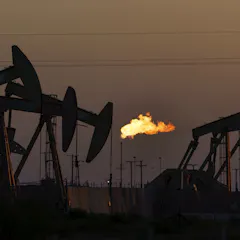
Tackling the climate crisis starts with breaking our addiction to fuel. A task complicated by fuels essential role in both promoting and threatening global human security.
Top contributors
-

Adjunct professor, Carbone boréal, Université du Québec à Chicoutimi (UQAC)
-
Chief Research Scientist, CSIRO Environment; Executive Director, Global Carbon Project, CSIRO
-
Professor and Climate Scientist, Department of Geography, Planning and Environment, Concordia University
-
Professor Emeritus of International Environmental Policy, Tufts University
-
Distinguished Professor of Climate Science, Simon Fraser University
-
Professor - Industrial ecology and climate change mitigation, Université du Québec à Chicoutimi (UQAC)
-
Royal Society Research Professor of Climate Change Science, University of East Anglia
-
Professor of Environmental Policy and Associate Pro-Vice-Chancellor (Interdisciplinary Research), University of Leeds
-
Professor of Communication, Public Policy & Urban Affairs, Northeastern University, Northeastern University
-
Professor, School of Economics, The University of Queensland
-
PhD candidate and research Fellow in the Economics of Climate Smart Cities research programme, University of Leeds
-
Professor of Science Communication and Chemistry, University of Hull
-
Associate Professor of Ecology, School Of Biological Sciences, University of Utah
-
Géochronologue et paléoclimatologue, chargé de recherches CNRS - Centre de recherches pétrographiques et géochimiques (Nancy) et Laboratoire de glaciologie (Bruxelles), Université de Lorraine
-
Distinguished Professor of Marine Science, King Abdullah University of Science and Technology